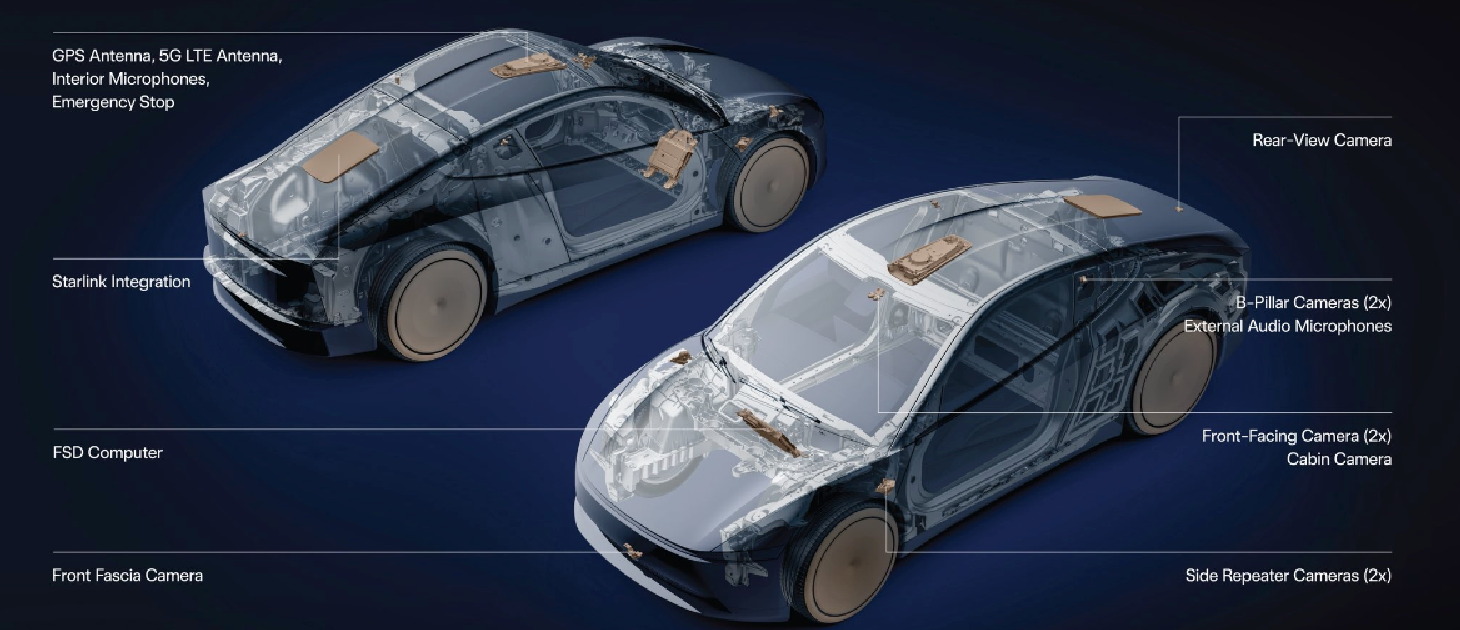
Tesla and Starlink have integrated SpaceX's satellite internet directly into the Cybercab, Tesla's dedicated robotaxi platform. The companies announced the partnership through posts on X on Monday, with images showing a Starlink antenna mounted in the vehicle's roof.
The integration raises questions about autonomous vehicle connectivity requirements. Tesla's Full Self-Driving system operates primarily on local computing through the Cybercab's onboard neural networks and cameras. The company has not disclosed why satellite internet becomes necessary for a vehicle designed to navigate and make driving decisions independently.
Potential applications include real-time traffic data updates, remote diagnostics, and cloud-based fleet management across Tesla's robotaxi network. Starlink connectivity could enable continuous communication between vehicles and Tesla's operations centers, supporting coordination of shared autonomous vehicles across cities. Satellite internet also provides redundancy in areas with poor cellular coverage, ensuring reliable connections regardless of geographic location.
The move reflects broader industry trends toward connected autonomous vehicles. Competitors like Waymo and Cruise have similarly emphasized cloud connectivity for their robotaxi services. However, the explicit need for SpaceX's satellite system suggests Tesla anticipates deployment in regions where terrestrial networks prove inadequate.
The integration also positions Starlink as infrastructure for autonomous mobility, expanding its market beyond consumer and enterprise broadband. This partnership strengthens the connection between Tesla's robotaxi ambitions and Elon Musk's broader ecosystem, which includes SpaceX, Neuralink, and xAI.
Tesla has not announced a Cybercab launch timeline, though CEO Elon Musk previously targeted late 2024 for initial production. The company faces regulatory hurdles in deploying fully autonomous vehicles at scale in major U.S. markets. Starlink's satellite connectivity could prove valuable once robotaxis operate across dispersed geographic areas, but the companies remain opaque about specific use