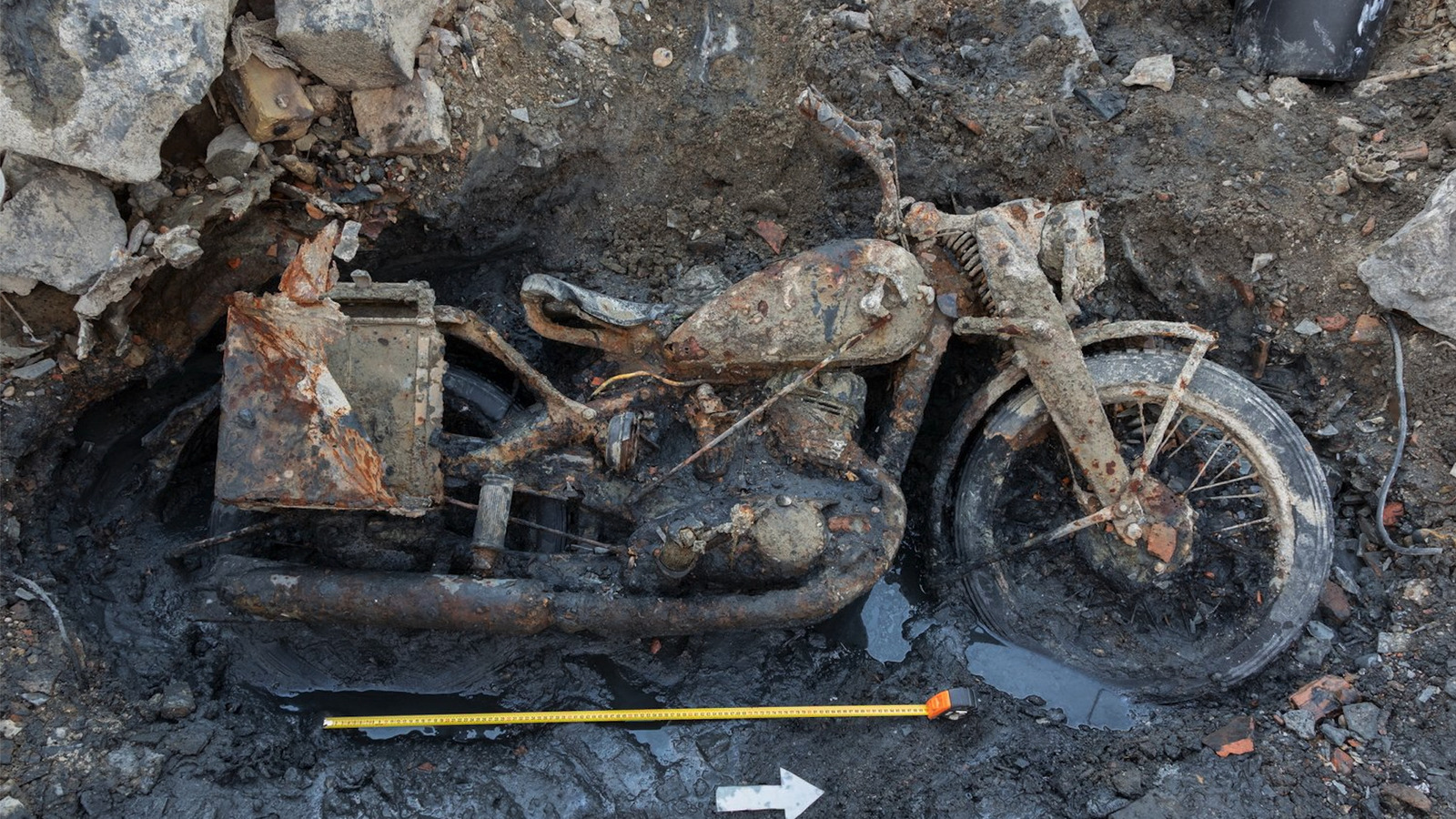
A German military motorcycle unearthed from a World War II waste pit in the Danube River represents one of dozens of artifacts recovered as water levels dropped along the Austrian stretch of Europe's longest river. The discovery marks a rare find for historians and collectors tracking wartime relics submerged for nearly eight decades.
The motorcycle, a model used by Wehrmacht forces during the war, emerged in remarkably preserved condition given its submersion. Dog tags discovered near the site offer potential clues to the bike's original operator, though authorities have not yet confirmed the soldier's identity. The weapon's recovery demonstrates how changing river conditions occasionally expose forgotten chapters of the conflict.
The Danube's receding water levels revealed more than just a single motorcycle. Investigators documented multiple artifacts within what appears to be a deliberate disposal site, suggesting German forces intentionally dumped equipment and materiel as the war concluded. Such caches provide valuable archaeological evidence about military logistics and hasty retreats during the final months of combat in Europe.
These discoveries occur with increasing frequency as climate patterns affect major European waterways. Lower water levels expose riverbeds that have remained largely undisturbed since 1945, turning sections of the Danube into an inadvertent museum of wartime detritus. Local authorities typically coordinate with military historians and museum curators to properly catalog and preserve findings.
The motorcycle itself represents Wehrmacht procurement standards and engineering of the era. German military bikes served as reconnaissance vehicles, courier transport, and reconnaissance platforms. Their robust construction allowed operation across rough terrain typical of Eastern Front campaigns and Alpine regions. This particular example, despite decades underwater, retained structural integrity that specialists will use to aid identification and historical documentation.
The ongoing investigation into ownership connects directly to the dog tags retrieved nearby. Military records, when cross-referenced with artifact locations and construction dates, often reveal which units operated in specific regions and when. The recovered tags could point toward specific individuals or