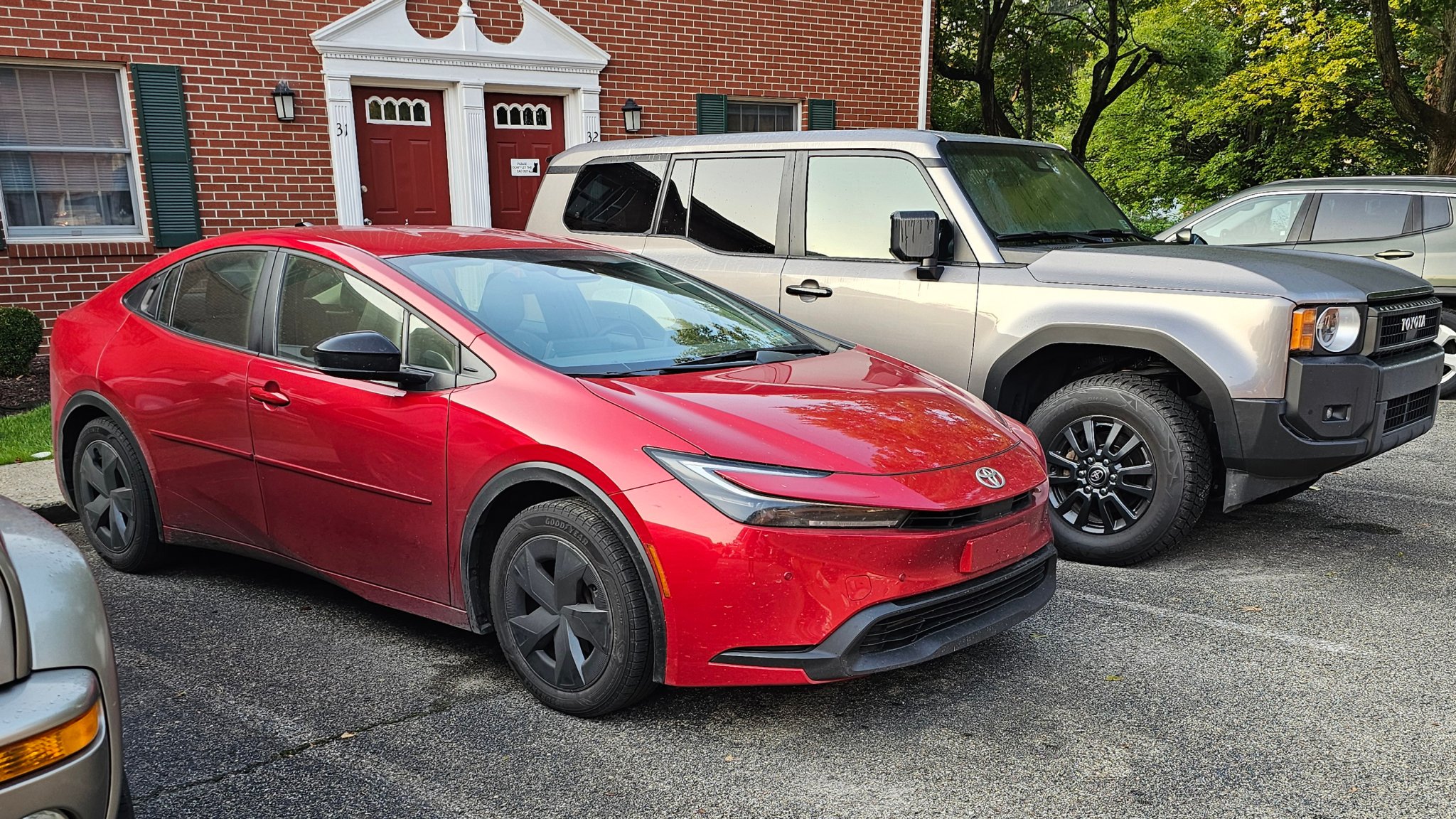
A medical transporter pushed a 2026 Toyota Prius LE to 100,000 miles in just eight months, and the results tell us something important about Toyota's hybrid durability under extreme real-world conditions.
That's roughly 12,500 miles per month. For context, the average driver logs around 12,000 to 15,000 miles annually. This Prius owner was hitting annual mileage in weeks.
The Prius LE runs Toyota's fifth-generation hybrid system paired with a 2.0-liter four-cylinder engine and dual electric motors. Toyota rates the powertrain at 133 horsepower combined. In normal driving, the Prius achieves EPA figures around 56 city, 53 highway, and 54 combined mpg. The hybrid system does exactly what it was designed to do: recover energy during braking, manage power flow between engine and motors, and minimize fuel consumption during repetitive stop-and-go driving. Medical transport work fits that profile perfectly.
The owner's service records reveal how the hybrid held up. Toyota's maintenance schedule for early Prius models requires oil changes every 10,000 miles or annually. Tire rotations, air filter replacements, and transmission fluid checks follow manufacturer intervals. The real question was whether 100,000 miles in eight months would surface premature wear in the hybrid components, battery system, or drivetrain.
Toyota's hybrid system has earned a reputation for longevity. Early Prius models from the 2000s routinely exceed 200,000 miles with minimal hybrid-system failure. The fifth-generation Prius, new for 2023, carries forward proven technology with incremental refinements in efficiency and reliability.
What matters here is durability under sustained high-mileage use. Medical transport work means