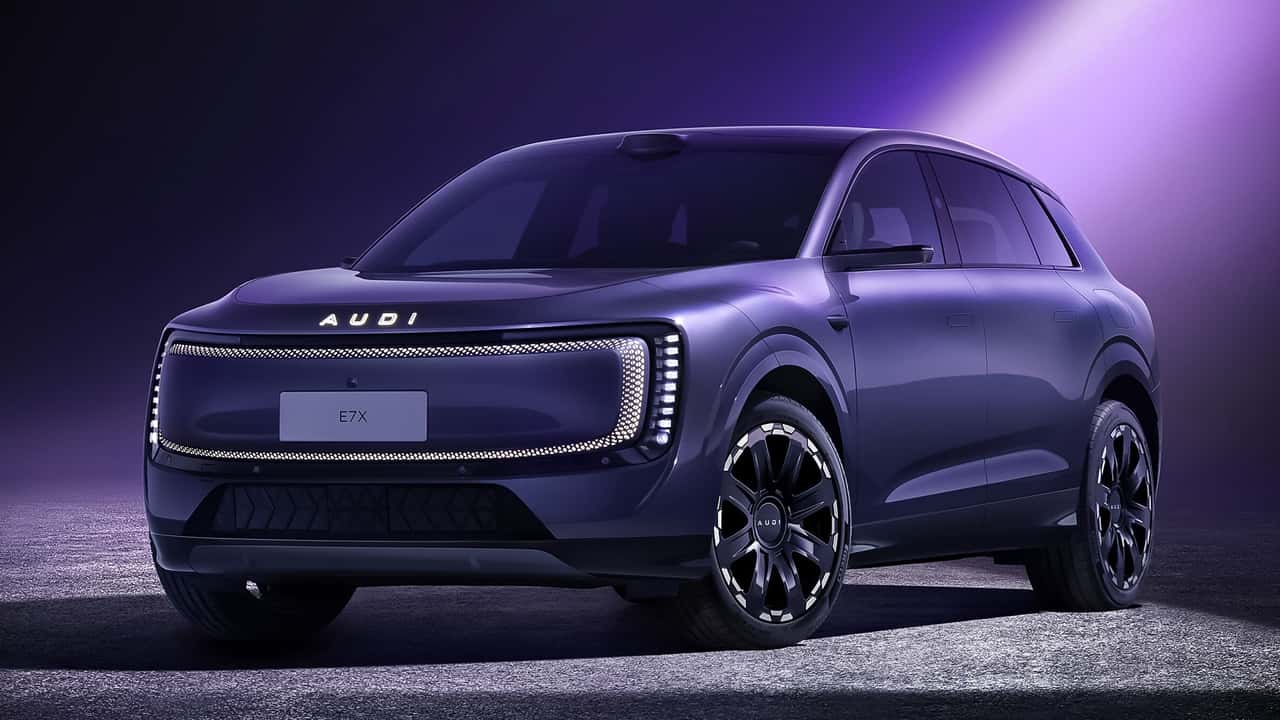
Audi's strategy to shield European markets from its Chinese-built EVs is cracking. Third-party importers are now bringing the E5 and E7X sedans from China into Europe, undercutting Audi's locally-manufactured models with significantly lower prices.
The E5, a mid-size sedan, and E7X, a coupe-SUV, were engineered specifically for Chinese buyers but offer compelling value propositions that threaten Audi's European pricing structure. These vehicles leverage lower Chinese manufacturing costs and simpler feature sets compared to their German-built counterparts. The E5 competes with the A4, while the E7X targets the Q4 e-tron segment, yet both carry price tags substantially below their official European equivalents.
Audi deliberately excluded these models from European distribution channels to protect its premium market positioning and dealer networks. The company's official stance emphasizes quality control, warranty compliance, and regulatory alignment. Yet independent importers have found legal pathways to register and sell these vehicles in EU markets, exploiting parallel import rules that permit cross-border vehicle sales.
This reflects a broader industry tension. Chinese EV manufacturers have achieved manufacturing efficiency that Western automakers struggle to match. Audi's own Chinese operations benefit from scale and lower labor costs, yet the company profits more by selling premium-priced models in wealthy European markets. Gray market imports disrupt that calculus entirely.
The practical complications run deep. Warranty coverage becomes murky for imported vehicles. Spare parts supply chains diverge from official networks. Software and infotainment systems may lack European language support or regulatory compliance certifications. Some imports may not meet Euro 6 emissions or safety standards originally designed for Chinese homologation.
Still, price-conscious European buyers recognize the opportunity. As EV adoption accelerates across the continent, affordability matters increasingly. If