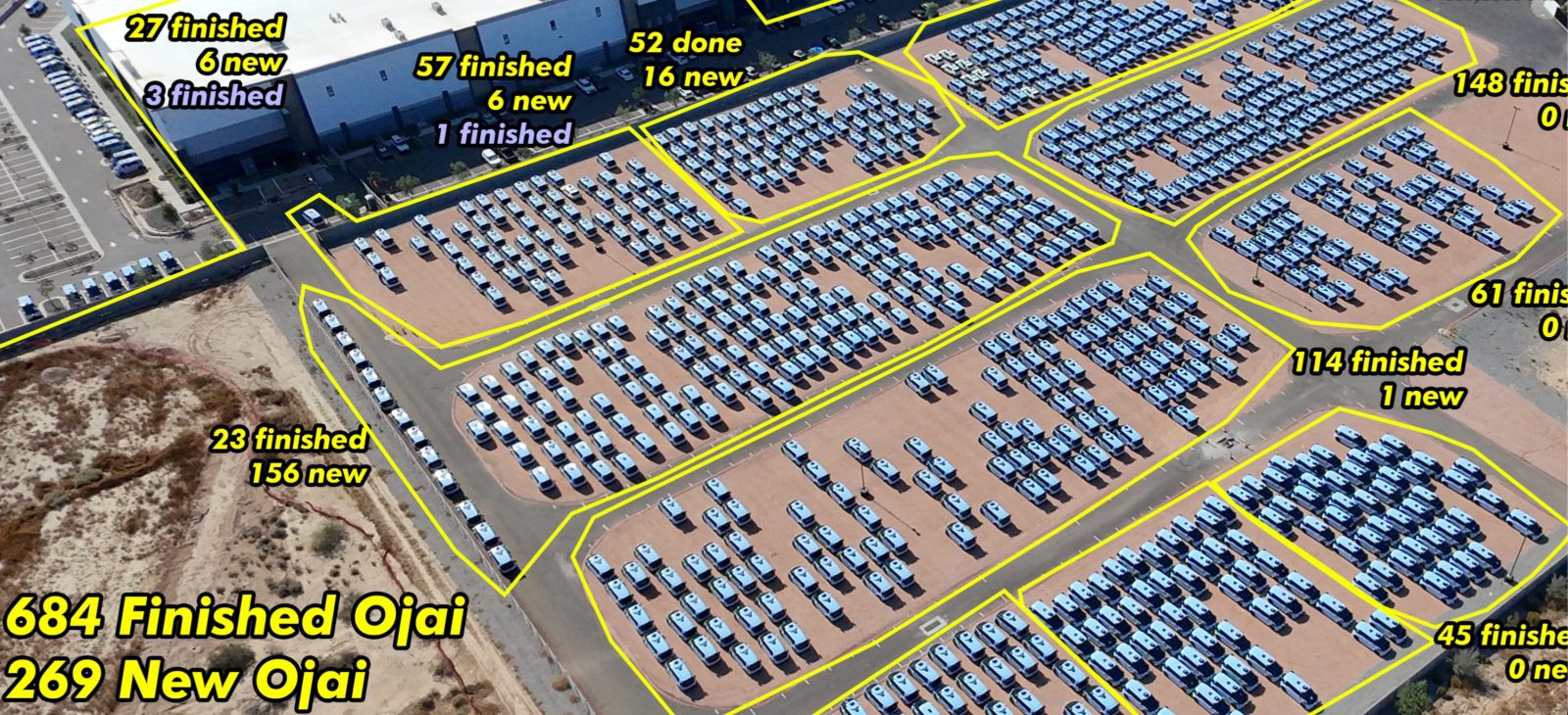
Waymo is rapidly building out its autonomous fleet at its Mesa, Arizona facility. Aerial imagery shows 684 Ojai robotaxis already completed and ready for deployment, with 953 total units on the lot in various stages of conversion. That 72% completion rate signals aggressive scaling.
The Ojai is Waymo's new fifth-generation robotaxi, built on the Jaguar I-PACE platform. Unlike its predecessor Chrysler Pacifica minivans used in San Francisco and Phoenix, the Ojai represents a purpose-built driverless vehicle with no steering wheel or pedals. This stockpile of nearly 1,000 units reveals Waymo's expansion plans far beyond its current service areas.
The timing matters. Waymo operates robotaxi services in San Francisco, Phoenix, and Los Angeles, but demand has consistently outpaced supply. Building inventory now positions the company to launch in new cities without the production bottlenecks that plagued earlier rollouts. Industry observers view the Ojai as Waymo's answer to Tesla's Cybercab and other autonomous startups racing to deploy fleets at scale.
This factory ramp also reflects Waymo's confidence in its technology. The company has logged over 20 million autonomous miles and operates profitable robotaxi services in multiple markets. Competitors like Cruise (GM's subsidiary, now paused) and traditional automakers lag in driverless readiness, giving Waymo a window to dominate the market.
However, challenges remain. Insurance, regulatory approval in new states, and public acceptance all slow expansion. Waymo must convert this hardware advantage into revenue. Each idle Ojai represents capital tied up until deployment begins.
The Mesa factory reflects Waymo's commitment to vertical integration and manufacturing control. Rather than relying solely on third-party suppliers, Waymo took