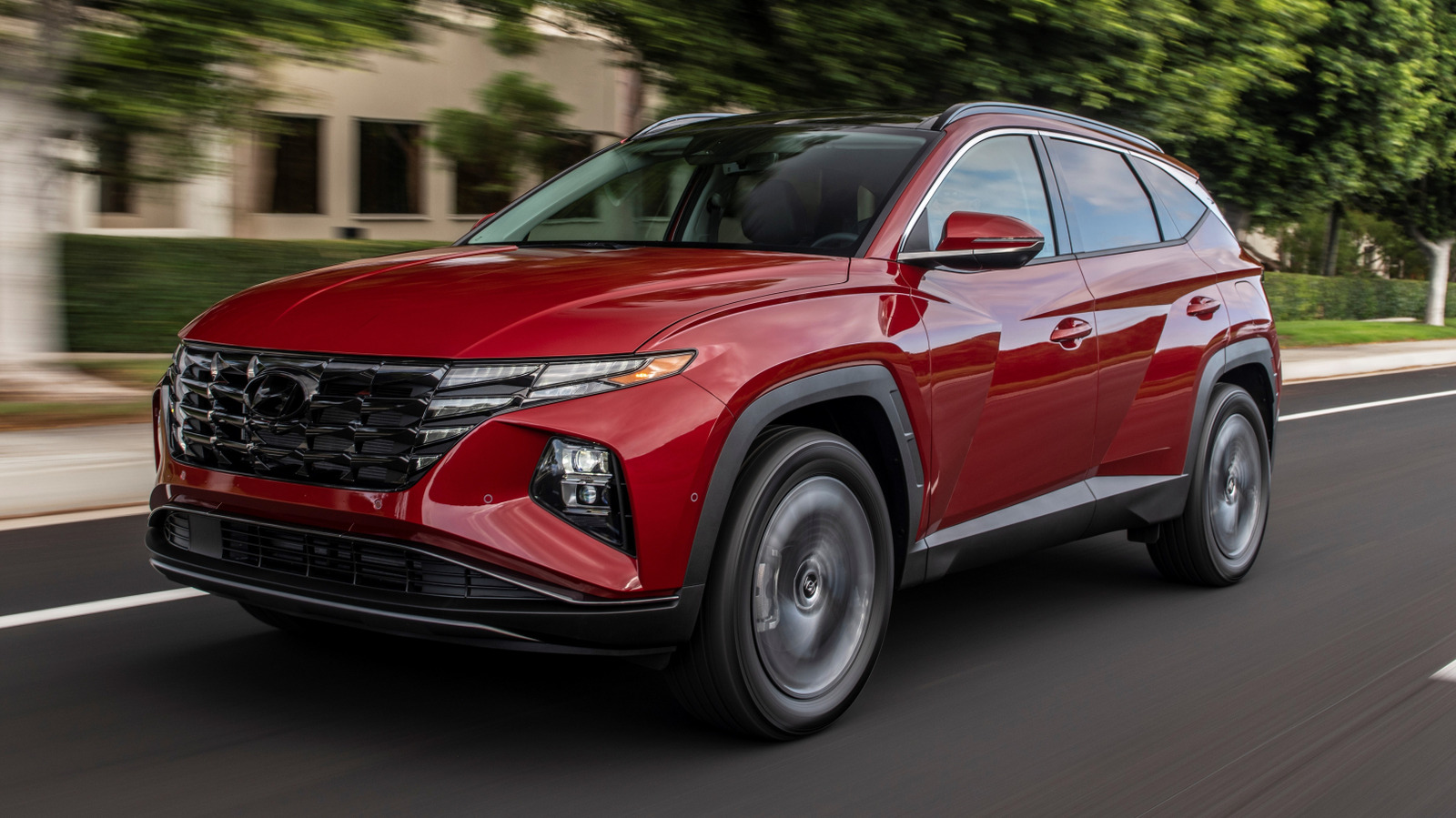
The 2023 Hyundai Tucson enters the used market as a paradox: buyers praise its warranty coverage, feature-rich cabins, and proven reliability, yet the compact crossover sheds value faster than some direct rivals. This depreciation gap matters because it signals how the market values Hyundai's compact SUV against proven competitors like the Toyota RAV4, Honda CR-V, and Mazda CX-5.
Hyundai's aggressive pricing strategy in the new-car segment has created a used-market perception problem. Dealers and private sellers must discount 2023 Tucsons more steeply than expected to move inventory, even with the brand's 10-year powertrain warranty backing them up. The Tucson's lower transaction prices on the dealer lot don't necessarily translate to stronger residual values once it ages.
The RAV4 remains the depreciation champion in this class. Toyota's segment leader holds value at roughly 55-60 percent after three years, according to industry tracking. The Honda CR-V performs similarly, typically retaining 52-58 percent of its original price. The Mazda CX-5 lands in that same territory, around 50-56 percent. The Tucson, by contrast, depreciates to roughly 45-50 percent of its original MSRP by year three, a meaningful gap of 5-10 percentage points.
This matters for lease programs and certified pre-owned programs. Hyundai dealers face tighter margins on CPO inventory because the cars command lower asking prices relative to mileage and condition. Lease programs also feel pressure since residual values determine monthly payments. A Tucson-leasing customer might face higher annual mileage charges or steeper wear-and-tear assessments to compensate for projected residual shortfalls.
The depreciation gap reflects several factors. First, the Tucson's price undercuts rivals by $2,000 to $4,000 on comparable trims. That lower entry price creates a perception of lower value retention. Second, the Japanese brands benefit from decades of residual-value reputation. Buyers assume a RAV4 will hold value, so dealers price accordingly. Third, the Tucson still fights an image battle in the mainstream segment despite its strong product fundamentals.
Hyundai's warranty advantage doesn't offset this residual-value reality. A 10-year powertrain warranty reduces buyer anxiety about longevity but doesn't influence what a used 2023 model brings at trade-in. Market pricing focuses on age, mileage, and segment positioning. The warranty helps new-car sales but evaporates once the car changes hands.
For current Tucson owners, this depreciation trend matters at trade-in time. Owners expecting RAV4-level residuals will face a rude surprise in two to three years. Buyers shopping the used market gain an advantage because a 2023 Tucson with 35,000 miles carries the same warranty coverage as a more expensive RAV4 but costs significantly less.
Hyundai addresses this through lease incentives and fleet programs that absorb residual risk. The brand also pushes monthly payment-focused marketing rather than ownership-cost positioning. Until the Tucson builds the residual-value reputation of segment leaders, buyers willing to keep their cars long-term gain the best value.