# American vs. European Police Cars: A Study in Different Law Enforcement Priorities
Police departments on opposite sides of the Atlantic operate under vastly different constraints and philosophies, and nowhere does this show more clearly than in their choice of patrol vehicles. American and European law enforcement agencies select fundamentally different cars, reflecting divergent road conditions, budgets, regulations, and operational needs.
American police forces overwhelmingly favor full-size sedan platforms, particularly the Dodge Charger and Chrysler 300. The Crown Victoria dominated for decades before its retirement in 2011. These vehicles offer spacious interiors for equipment storage, powerful V8 engines for highway pursuit, and rear-wheel-drive platforms engineered for the demands of high-speed chases across wide-open American roads. The Charger remains the standard choice for state police and highway patrols, where sustained speed and acceleration matter. Its 370-horsepower 5.7-liter HEMI V8 delivers the straight-line performance American police expect.
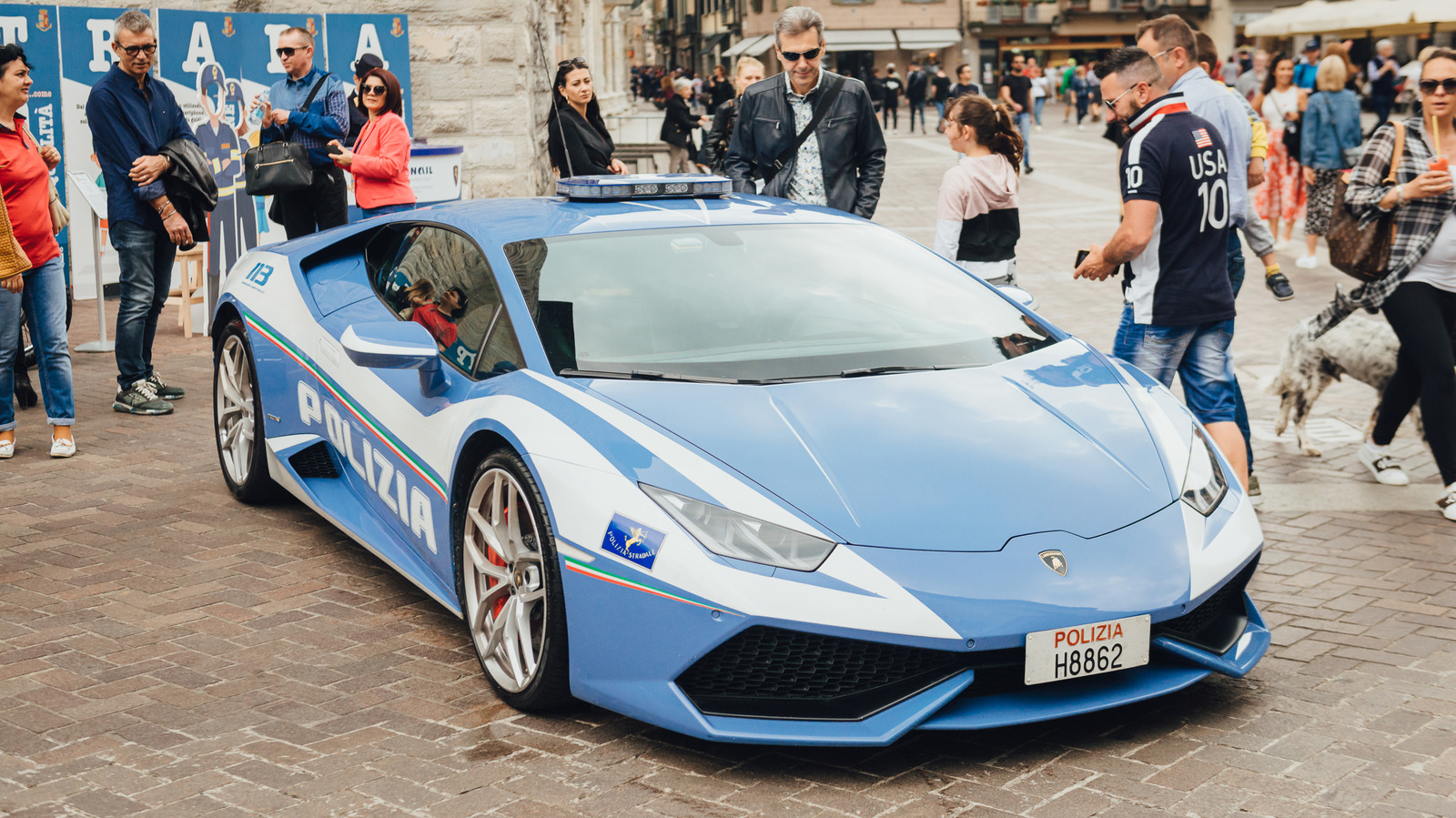
European forces take the opposite approach. They select compact sedans and hatchbacks like the Volkswagen Golf, Ford Focus, and Peugeot 308. These vehicles prioritize fuel economy, maneuverability through narrow city streets, and lower acquisition costs. European police operate in dense urban environments with narrow lanes, tight corners, and pedestrian-heavy zones where a full-size sedan becomes a liability rather than an asset. Fuel costs also run higher in Europe, making the smaller, more efficient platforms economically sensible.
Engine displacement tells the story. American police cars typically run large-displacement V8s or turbocharged V6s producing 300+ horsepower. European police vehicles often feature smaller turbocharged three-cylinder or four-cylinder engines producing 150 to 200 horsepower. Acceleration matters less on congested European streets. Agility and operational cost matter more.
Road infrastructure shaped these choices. American highways stretch hundreds of miles with minimal turns. Police need vehicles capable of sustained high-speed pursuit on interstate systems. European roads wind through ancient city centers and country villages. The vehicles need to fit in tight spaces, navigate roundabouts, and park efficiently.
Budget realities differ too. American departments often justify large patrol fleets through federal grants and state budgets designed for highway enforcement. European municipalities operate leaner budgets and require vehicles that cost less to purchase and operate daily. A Golf costs far less than a Charger to acquire and maintain over its service life.
Climate also plays a role. American police operate across extreme temperature ranges from desert heat to arctic cold. European climates remain more moderate. Full-size sedans handle winter conditions better in places like Minnesota or North Dakota. Smaller European cars handle the relatively mild winters of Germany or the UK adequately.
Safety equipment and specification packages differ accordingly. American patrol cars get reinforced police packages with heavy-duty transmissions, upgraded cooling systems, and beefier suspension designed for constant acceleration and high-speed cornering. European police cars receive smaller-displacement engine upgrades and efficiency-focused builds.
Neither approach is objectively superior. Both succeed within their operational contexts. An American-style Charger makes no sense navigating the medieval streets of Prague. A Volkswagen Golf cannot deliver the highway performance an Arizona state trooper requires. Police fleet decisions reflect the roads they patrol, the budgets they control, and the pursuit scenarios they expect to encounter. The divergence reveals how profoundly geography, infrastructure, and economics shape even something as seemingly universal as police work.