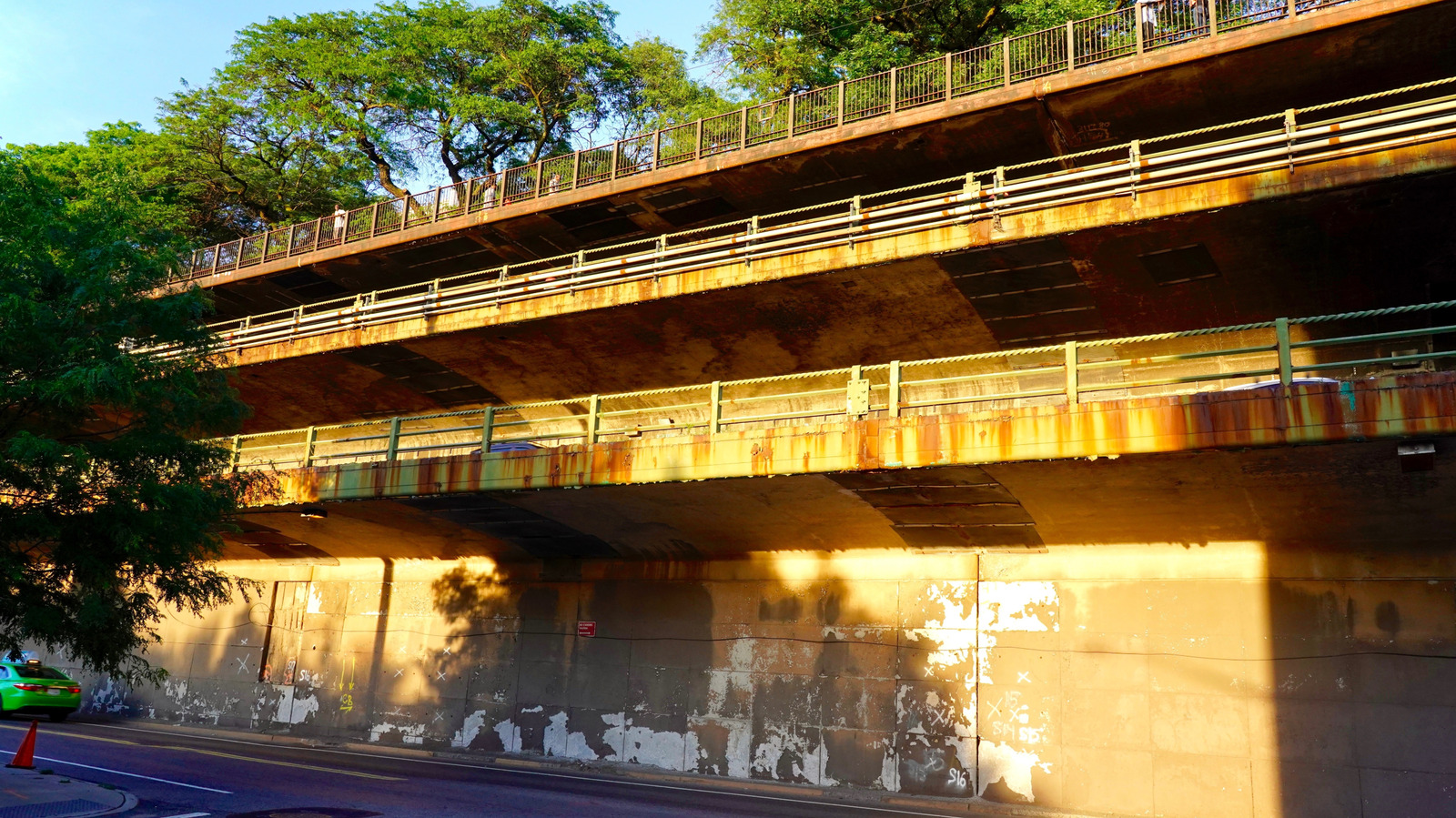
# Mamdani's BQE Fix Balances Politics, Economics, and Urban Reality
New York State assemblymember Zohran Mamdani's proposal to reconstruct the Brooklyn-Queens Expressway represents a pragmatic middle ground in a debate that has paralyzed city planners for years. The plan tackles one of the Northeast's most deteriorating infrastructure corridors, a highway that hemorrhages hundreds of millions in annual maintenance costs while choking neighborhoods with congestion and emissions.
The BQE, which connects downtown Brooklyn to Long Island City and serves as a critical artery for the region's logistics network, has become a symbol of deferred maintenance gone wrong. Built in 1959, the elevated expressway now requires constant patching. Annual repair bills exceed what a comprehensive reconstruction would cost over a decade. Yet previous proposals, whether for a full teardown-and-replace or a tunnel solution, foundered on environmental reviews, community opposition, and financing obstacles that seemed insurmountable.
Mamdani's approach avoids those historical pitfalls. Rather than pursuing visionary but politically toxic solutions like underground routing through densely populated neighborhoods, the plan charts a course that acknowledges real constraints. It proposes rebuilding the expressway largely in place, maintaining traffic flow during construction while modernizing the structure. This addresses the core problem: a $10 billion asset deteriorating into dysfunction.
The political calculus matters here. Tunnel proposals generate fierce opposition from residents in Brooklyn Heights and DUMBO, who fear disruption and construction impacts lasting years. Community boards have consistently voted against such schemes. Mamdani's proposal sidesteps these fights by accepting the expressway's existing footprint, though this means preserving a highway that many urbanists view as an outdated relic that divides neighborhoods.
What makes this plan noteworthy is its acknowledgment of economic reality. New York cannot afford to ignore the BQE; it cannot afford to rebuild it multiple times either. A deteriorating expressway eventually closes, strangling the regional economy that depends on it. The Port of Newark traffic, food distribution networks, and commuter flows all funnel through this corridor. Gridlock costs the metro area billions annually in lost productivity.
The plan also reflects shifting priorities in transportation funding. Rather than pursuing transformative urban design that separates cars from neighborhoods, the focus lands on maintaining infrastructure that, whatever its urban costs, remains operationally essential. This represents a retreat from the vision of highway removal that energized urbanists in the 1990s and 2000s, when cities like Portland and San Francisco pursued teardowns.
Financing remains the open question. Mamdani's proposal would require federal infrastructure dollars, state bonding, and possibly congestion pricing revenue. The incoming Trump administration and Republican Congress may prove less generous with urban infrastructure funding than recent predecessors. New York's fiscal situation, while improved from pandemic lows, offers limited room for massive capital commitments without raising tolls or taxes.
Implementation timelines matter too. Full reconstruction takes seven to ten years minimum. During that period, Brooklyn and Queens absorb significant construction traffic and disruption. But the alternative, piecemeal repairs that extend indefinitely, guarantees perpetual congestion and periodic closures that devastate commerce.
Mamdani's plan succeeds because it abandons perfection for functionality. It accepts that the BQE exists, will exist, and must work. Rather than fantasizing about its removal, the proposal builds toward a structure that serves the region for another 70 years without constant emergency repairs.