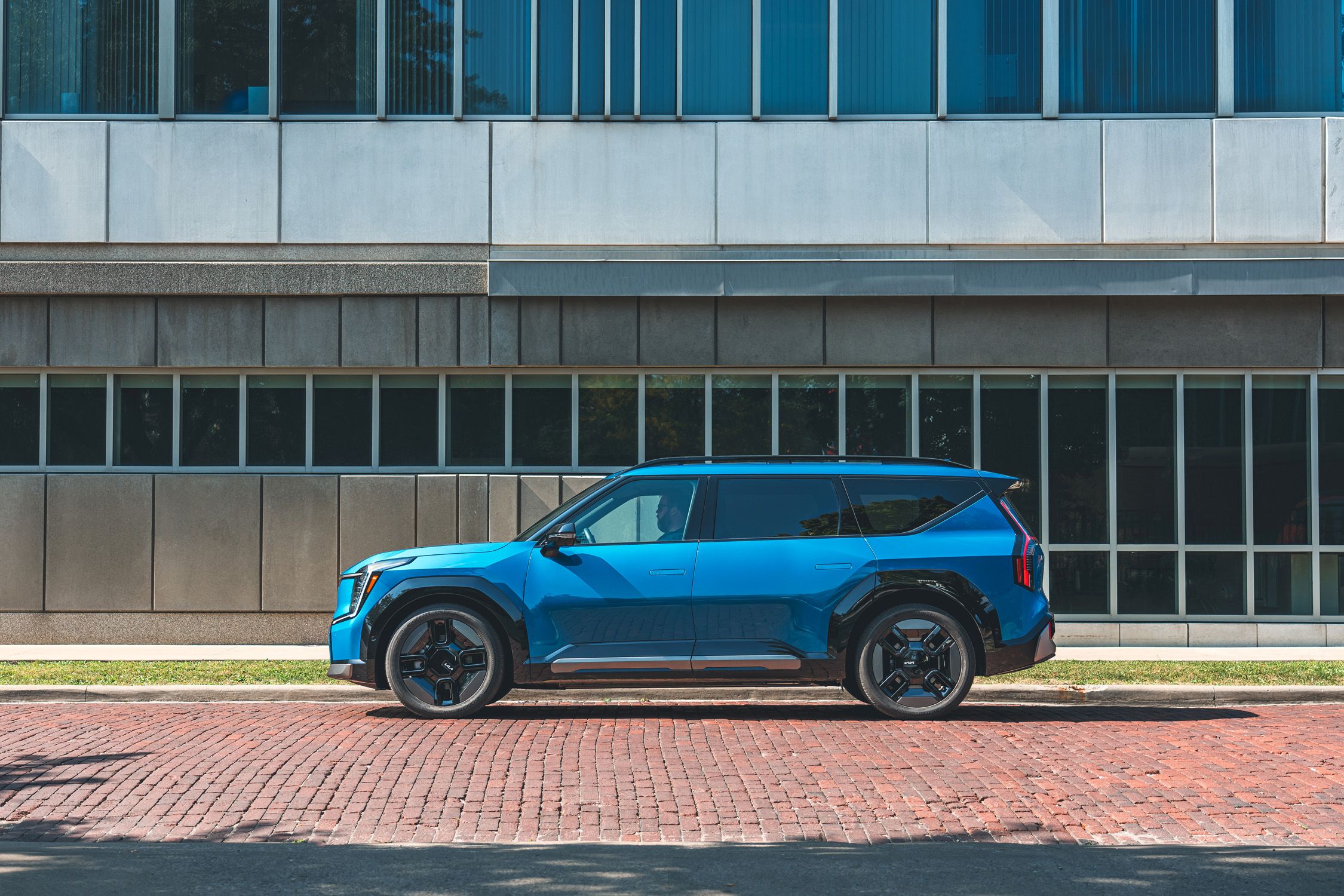
Kia is recalling 21,290 EV9 electric SUVs over a defect where front passenger airbags can fail to detect the presence of a child or child seat, creating a serious crash hazard. The airbags may not deploy disabled modes required by federal safety standards when children occupy the front seat.
The National Highway Traffic Safety Administration, which oversees automotive recalls in the United States, flagged this compliance failure. Federal regulations require front passenger airbags to detect occupant weight and size to determine whether deployment poses greater risk than benefit, particularly for children and rear-facing child seats. In certain conditions, the EV9 airbag system loses this detection capability, forcing airbags to deploy at full force even with a child present.
This defect carries real-world consequences. A child airbag striking a small occupant at full deployment speed can cause serious injury or death. Rear-facing infant seats, which position babies closest to dashboard components, face particular risk. The EV9 launched as Kia's three-row electric flagship in 2023, targeting families and drivers seeking capacity in an EV package. The model competes directly with the Tesla Model Y, BMW iX, and Mercedes-Benz EQE SUV in the premium electric utility segment.
Kia has not disclosed the specific trigger for the sensor malfunction, though airbag detection systems typically rely on weight-sensitive seat cushions or optical cameras behind the dashboard. When these sensors fail, the vehicle cannot communicate passenger classification data to the airbag control module. The defect likely affects EV9s built during a specific production window, which Kia will identify through vehicle identification numbers.
Owners of affected models will receive recall notices directing them to contact Kia dealers for a software update that restores airbag sensor functionality. Software repairs for airbag systems represent a growing recall category as vehicles add more electronic components to safety systems. Tesla, General Motors, and other manufacturers have addressed similar detection failures through over-the-air updates in recent years.
The EV9 already faced scrutiny in 2024 over other safety concerns, including seat belt anchor problems and panoramic sunroof failures, though those recalls proved less widespread. This airbag recall underscores the ongoing challenges Kia faces as it scales electric vehicle production. Quality control lapses in safety-critical systems damage brand reputation, particularly among families making first EV purchases.
Kia dealers will prioritize scheduling recall appointments starting immediately. Vehicle owners should not place children in front passenger seats until repairs are completed, though best practices already recommend keeping children under 13 in rear seating positions due to airbag deployment force. The recall affects a material slice of the EV9 production run but remains manageable compared to industry-wide safety defects.
This recall demonstrates that electric vehicles require the same rigorous safety validation as traditional combustion models, even as manufacturers race to deliver new products to market. Airbag systems represent decades of crash-tested engineering, and any deviation from proven architectures demands thorough testing before production release.