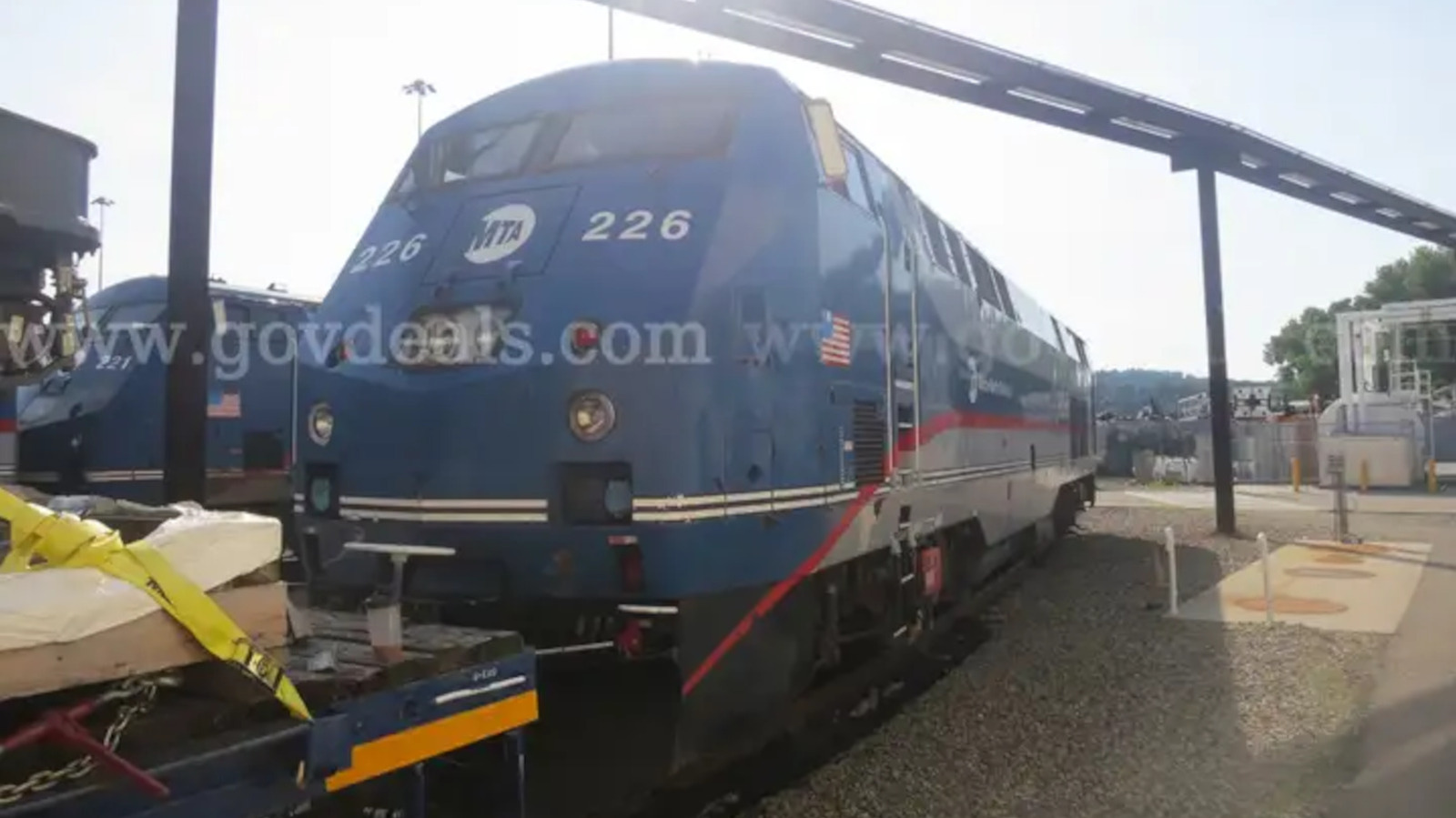
# You Can Buy A Real Locomotive For Less Than A Luxury Sedan
A General Electric Genesis P32AC-DM locomotive from Metro-North Railroad is currently listed for sale on GovDeals, and it's priced cheaper than a new BMW 5 Series. This isn't clickbait math. A used commuter rail locomotive genuinely costs less money than a premium German sedan.
The GE Genesis P32AC-DM represents workhorse technology from the 1990s and 2000s. These diesel-electric locomotives powered regional and commuter rail networks across North America. Metro-North, which operates rail service in the New York City metropolitan area, retired this unit along with others as agencies upgrade to newer rolling stock or reduce fleet capacity. Instead of scrapping the machine, the railroad opted to sell it through GovDeals, the government surplus auction platform used by federal agencies, state governments, and public authorities to liquidate assets.
The P32AC-DM designation tells the story. The "P" refers to passenger service, distinguishing it from freight locomotives. "32" indicates approximately 3,200 horsepower. "AC-DM" means alternating-current traction motors with distributed power capability. These specifications made the Genesis line popular for commuter operations where operators needed speed, reliability, and operational flexibility on shared tracks.
The comparison to a BMW 5 Series underscores a real economic reality in transportation markets. A current BMW 5 Series sedan starts around 60,000 dollars for base models and climbs past 80,000 dollars for well-equipped versions. A used commuter locomotive, despite its massive metal construction, complex diesel engine, and traction systems, apparently falls below that threshold when sold as surplus government property.
Why the price gap exists matters. Locomotives are specialized machinery with limited secondary markets. A small number of operators need them. Maintenance requires specialized technicians and parts. Operating a locomotive legally demands FRA certification and track access agreements most civilians never obtain. A BMW 5 Series, by contrast, serves millions of potential buyers globally. Every luxury car buyer represents a customer. Locomotives serve a handful of railroads and transit agencies in North America. Supply vastly exceeds demand in the used locomotive market.
The GovDeals listing reflects broader trends in North American transit. Agencies like Metro-North face budget pressures, aging fleets, and regulatory requirements for newer emissions-compliant equipment. Rather than maintain decades-old locomotives, they phase them out. Some get scrapped. Others, like this Genesis unit, get listed for auction. Buyers occasionally include tourist railways, industrial operators, or international transit agencies seeking used American equipment.
For enthusiasts, the listing highlights the raw value proposition of heavy industrial equipment versus consumer goods. A locomotive that hauled thousands of commuters over multiple decades can sit unused and cost less than a vehicle designed primarily for highway commuting. It's a reminder that price reflects utility and demand, not size or capability. The BMW sells because millions want one. The locomotive sits because operating one requires expertise, capital, and regulatory compliance most people lack.
GovDeals regularly surfaces similar contradictions. Military vehicles, aircraft, and industrial equipment routinely sell for fractions of their original cost simply because civilian demand proves limited. This Genesis locomotive represents that economic principle in steel and diesel.