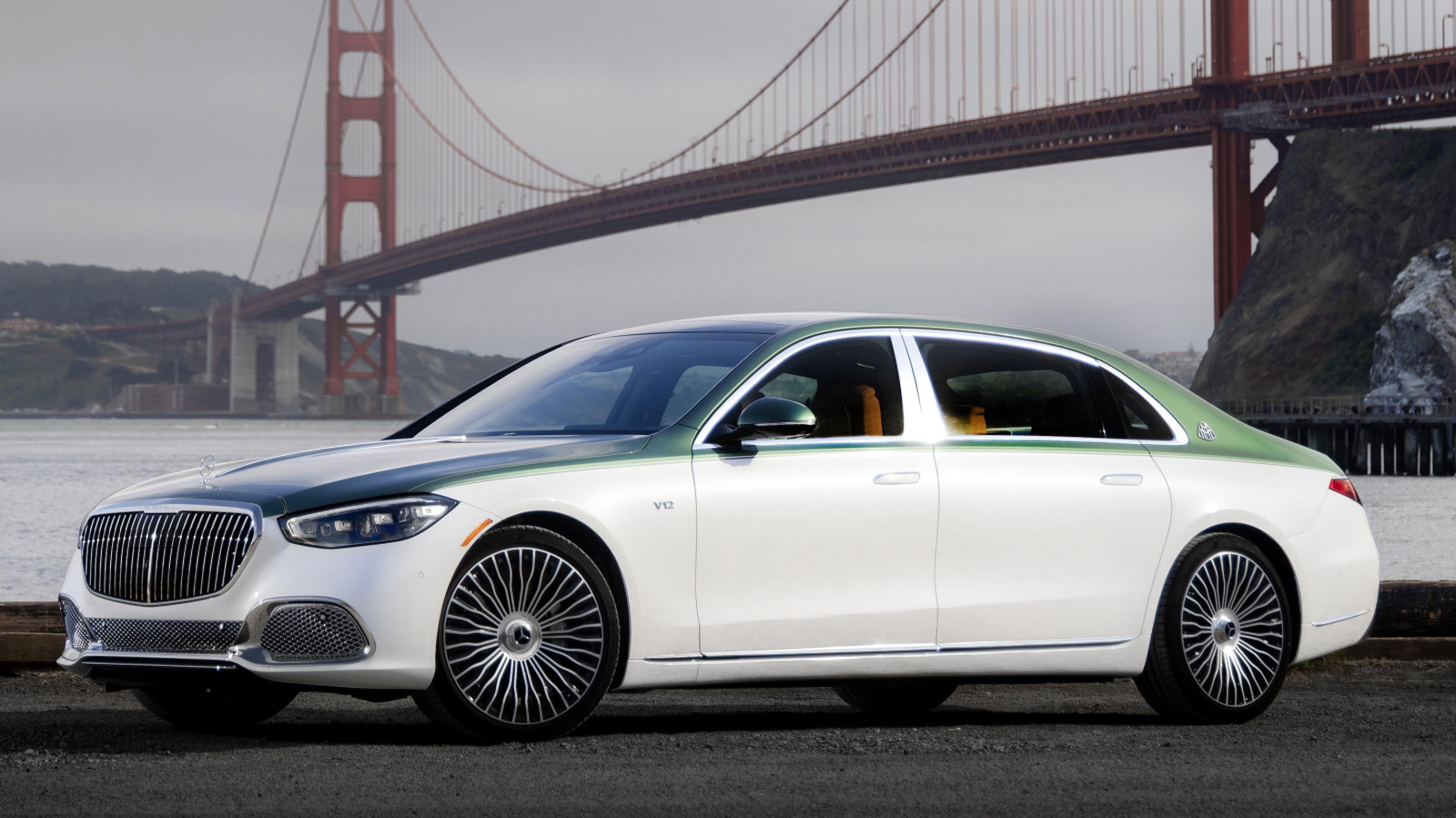
Mercedes offers two wildly different vehicles that both achieve 15 miles per gallon combined: the Maybach S680 ultra-luxury sedan and the GLS full-size SUV. Only one faces the federal gas guzzler tax. The S680 escapes the levy entirely while the GLS pays it. This split outcome reveals how America's three-decade-old fuel efficiency law creates unexpected winners and losers.
The gas guzzler tax, enacted in 1978, targets cars that fail to meet federal fuel economy standards. The threshold sits at 22.5 mpg combined for passenger vehicles. Trucks and SUVs, classified differently under federal law, operate under separate rules and lower thresholds. The Mercedes-Maybach S680 qualifies as a sedan and passenger car, pushing it squarely into the stricter 22.5 mpg requirement. At 15 mpg, it lands 7.5 mpg below the limit, which would normally trigger the tax.
Here's where the law's age matters. The gas guzzler tax applies only to vehicles with a footprint of 55 square feet or less. The S680, measuring roughly 52.6 square feet, technically fits within that boundary. The Maybach's extreme length (over 20 feet) and width, combined with its extended wheelbase design, create a footprint large enough to fall into a regulatory gray zone. Manufacturers and the EPA have interpreted these measurements in ways that exempt ultra-luxury sedans with massive dimensions but tight footprints from the tax.
The Mercedes-AMG GLS 580, meanwhile, carries the gas guzzler tax despite identical efficiency. The GLS's classification as a sport utility vehicle triggers different regulatory treatment. While SUVs and trucks have historically received more lenient mpg standards, they face the gas guzzler tax at different thresholds. The GLS's footprint and vehicle weight push it across the line where the tax applies at 15 mpg.
This quirk of regulation exposes how federal efficiency standards fail to keep pace with vehicle evolution. When lawmakers drafted the gas guzzler tax in 1978, ultra-luxury sedans weighing 4,600 pounds with 12-cylinder engines didn't exist. The S680 exceeds 4,700 pounds and produces 516 horsepower from its 6.0-liter V12. Similarly, three-row luxury SUVs were uncommon. The law's footprint-based exemptions made sense for a different automotive landscape.
The tax itself remains punitive. For a vehicle 7.5 mpg below the threshold, federal law assesses $1,000 per 0.1 mpg increment. The S680 faces approximately $7,500 in tax if it were subject to the rule, yet it pays nothing. The GLS, sitting at the same efficiency level, absorbs the tax burden.
For consumers, this creates absurd outcomes. Maybach owners avoid a tax that should theoretically discourage fuel consumption in ultra-luxury cars. GLS buyers, purchasing a three-row family vehicle, subsidize inefficiency standards designed for a bygone era. Both vehicles consume excessive fuel, yet regulatory ambiguity shields one while penalizing the other.
Mercedes benefits from this legal peculiarity without modifying the S680's drivetrain. The company sells a thirsty luxury sedan with zero tax consequences. The automaker could improve efficiency through hybrid technology or smaller engines, but regulatory gaps eliminate the financial incentive.
This disparity highlights why federal efficiency regulations need modernization. Vehicles have grown larger and heavier across all categories. Loopholes that protected luxury cars and trucks in 1978 enable manufacturers to avoid efficiency improvements today. Until lawmakers address footprint-based exemptions and align car-truck regulations with current vehicle types, manufacturers will continue exploiting outdated rules to sell inefficient vehicles without penalty.