# Every EV from Every Brand in America: Your Complete Shopping Guide
The electric vehicle market in the United States has exploded into a crowded field. What was once dominated by Tesla now includes offerings from virtually every major automaker, plus a growing roster of EV-only startups.
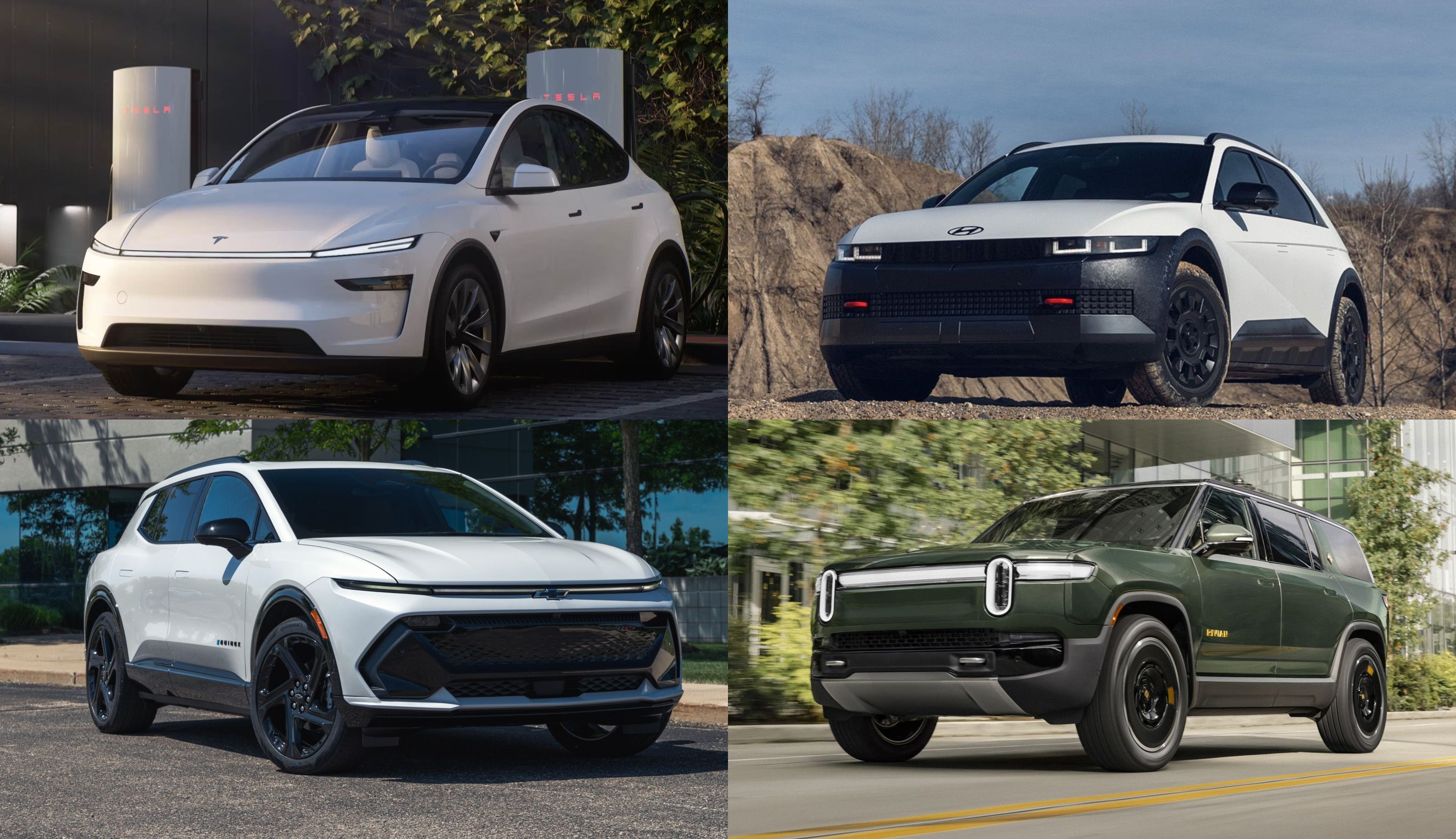
Traditional automakers have committed billions to electrification. General Motors leads the domestic charge with the Chevy Bolt EV and EUV, the Cadillac Lyriq, and the upcoming GMC Sierra EV. Ford delivers the Mustang Mach-E and the all-electric F-150 Lightning pickup. Stellantis brings Jeep's Wagoneer S and Grand Cherokee 4xe lineup. BMW, Mercedes-Benz, Audi, and Porsche all sell premium EVs stateside. Hyundai and Kia, historically price-conscious brands, now offer competitive models like the Ioniq 5 and EV6 that challenge Tesla's value proposition directly.
Tesla retains the Model 3, Model Y, Model S, and Model X. The Model Y remains America's best-selling EV overall and the company's volume backbone. Yet Tesla's market share has shrunk from dominance to roughly 50 percent of the EV market, down from near 80 percent in 2020.
Startup brands are gaining traction. Rivian produces the R1T and R1S electric trucks aimed at premium buyers willing to pay $70,000 and up. Lucid Motors offers the Air sedan, targeting luxury buyers. Fisker briefly competed with the Ocean, though the company filed for bankruptcy in 2023. Polestar, Volvo's performance EV sub-brand, sells the Polestar 2 and 3.
Chinese manufacturer BYD does not sell in America, but other international players have arrived. Volkswagen's ID.4 crossover offers German engineering at mid-range pricing. Volkswagen also introduced the ID.Buzz, the electric revival of the iconic Microbus. Nissan's Leaf, one of the original mass-market EVs, persists despite aging design language. Honda offers the e and the e:Ny1.
Price compression defines the current market. The Chevy Bolt EV starts below $27,000 before incentives, undercutting Tesla's entry-level Model 3. This forces manufacturers to choose between volume and margin. Tesla responds with price cuts. Competitors bundle features aggressively.
Federal tax credits worth up to $7,500 reshape purchase decisions. The IRA's domestic content rules favor American and Mexican assembly. This pushes traditional automakers to localize production and favors domestic brands over imports.
Range anxiety diminishes as fast chargers proliferate. Most new EVs achieve 200-plus miles per charge. Real-world highway range remains Tesla's advantage, though other manufacturers close the gap quarterly.
The market fragments along income levels. Budget buyers land on the Bolt and Hyundai's Ioniq. Middle-class shoppers consider the Model 3, Model Y, Ioniq 5, EV6, and ID.4. Luxury buyers choose between Cadillac, BMW, Mercedes, Audi, Lucid, and Rivian.
Dealer networks matter more than many EV advocates admit. Traditional franchises handle service and financing, advantages Ford and GM leverage against Tesla's direct-sales model. However, Tesla's Supercharger network remains unmatched in reliability and speed.
Electrification accelerates. Trucks and SUVs shift to batteries faster than sedans. Pickup buyers, once EV skeptics, now consider the F-150 Lightning and Rivian R1T seriously. The truck segment, historically America's profit engine, electrifies in real time.