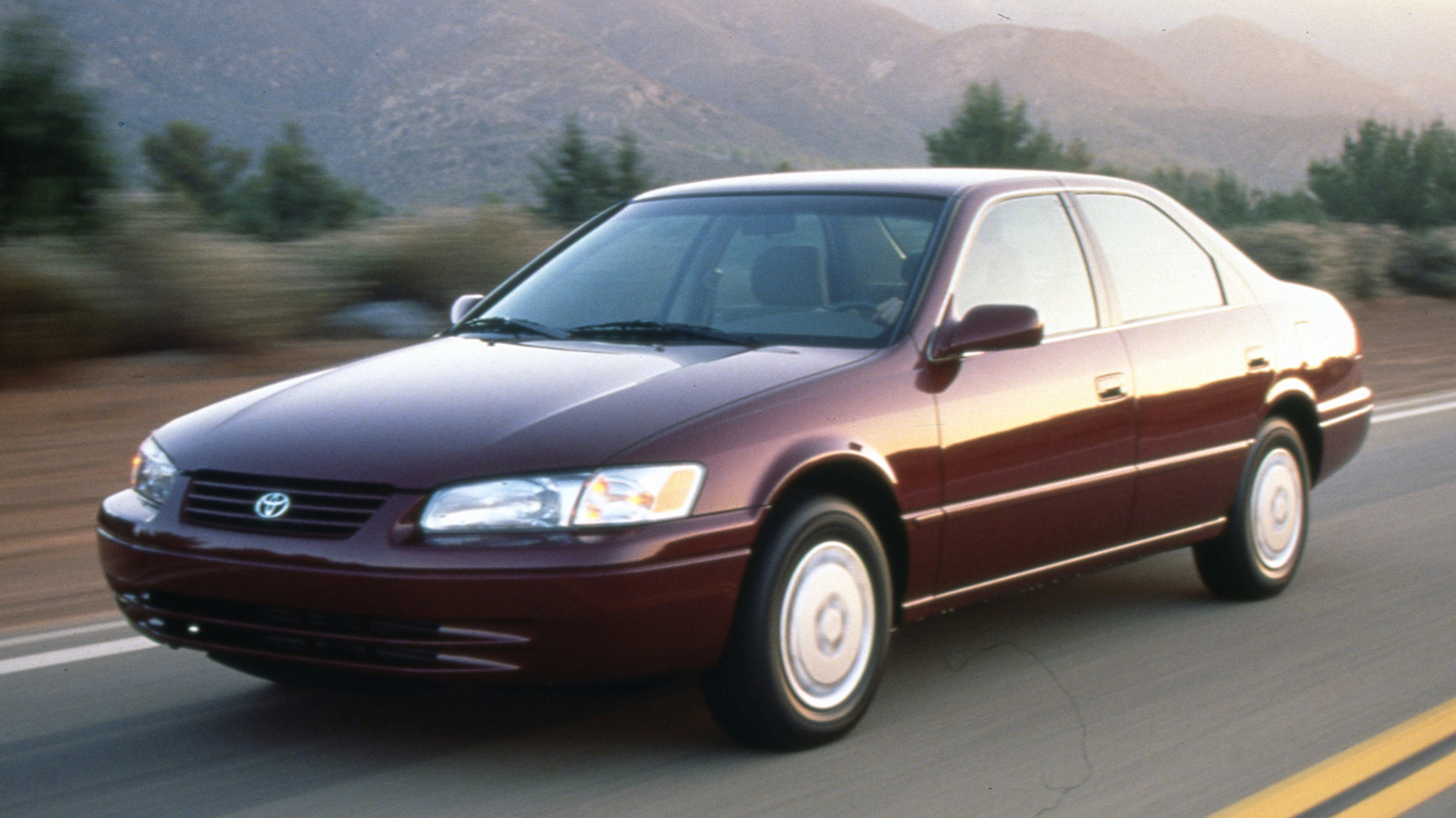
# Toyota Camry Proves Cars Are Cheaper Than Ever, Despite Sticker Shock
When adjusted for inflation, a new Toyota Camry costs thousands of dollars less than the 1997 model, revealing a counterintuitive truth about the auto market. While sticker prices hit record levels, the actual purchasing power required to buy a midsize sedan has declined significantly over the past quarter century.
The 1997 Camry carried a base price of approximately $24,000 in nominal dollars. Adjusted to 2024 dollars, that translates to roughly $46,000 to $47,000 in today's money. The current generation Camry starts around $30,000 to $32,000, depending on trim level. This gap demolishes the narrative that cars have become unaffordably expensive in real terms.
The disconnect between perception and reality stems from multiple forces reshaping vehicle economics. Modern Camrys deliver substantially more capability than their 1990s predecessors. Standard features now include electronic stability control, multiple airbags, backup cameras, Bluetooth connectivity, and sophisticated infotainment systems. The 1997 model offered few of these as options. Today's vehicles also deliver better fuel economy, longer service intervals, and improved reliability metrics. A modern Camry will likely exceed 200,000 miles with proper maintenance, whereas 1990s vehicles frequently required major repairs by 150,000 miles.
Safety regulations have driven costs upward. Modern vehicles meet stricter crash test standards, requiring reinforced frames, advanced braking systems, and collision avoidance technology. These compliance costs add thousands to production expenses but enhance occupant protection substantially. The Environmental Protection Agency imposes strict emissions and fuel economy standards that necessitate expensive engine management systems and hybrid powertrains.
Manufacturing complexity has exploded. Modern vehicles contain sophisticated computer systems, electric power steering, advanced suspension geometry, and precision-manufactured components that demand tighter tolerances and more expensive tooling than 1990s cars. A 2024 Camry contains roughly 30,000 parts, many electronically controlled. The 1997 Camry was far simpler mechanically.
Supply chain disruptions, semiconductor shortages, and labor cost increases have elevated final prices in recent years. Used vehicle values remained artificially high through 2023, suppressing new car demand and allowing manufacturers to maintain premium pricing. New car prices peaked when inventory collapsed during the pandemic recovery period.
Financing patterns mask the true affordability equation. In 1997, the average auto loan stretched five years at roughly 8 percent interest rates. Today's loans frequently extend to 72 or 84 months at lower rates, spreading payments across longer periods and making monthly obligations feel more manageable despite higher nominal prices. However, this masks the total cost of ownership and leaves buyers underwater on loans longer.
Consumer expectations have shifted dramatically. The 1997 Camry buyer accepted basic creature comforts. Modern customers demand wireless smartphone integration, premium audio systems, climate control, and advanced driver assistance systems. These expectations have driven feature inflation that increases both costs and final prices.
Income growth hasn't kept pace with vehicle price increases. Median household income has risen roughly 40 percent since 1997 when adjusted for inflation, while new vehicle prices have climbed 60 to 70 percent. This gap explains why affordability feels worse despite cheaper real-dollar pricing. The Camry costs less in inflation-adjusted terms, but it represents a larger percentage of typical household earnings.
The fundamental paradox remains. Consumers perceive cars as more expensive than ever. Technically, adjusted for inflation, they've become cheaper. The real story involves trade-offs between feature richness, regulatory compliance, financing structures, and changing consumer expectations that create genuine affordability pressure despite favorable long-term price trends.