# Dodge Brothers' Egyptian Mausoleum Reflects Industrial-Age Ego and Automotive Legacy
The Dodge brothers, John and Horace, built one of America's earliest and most influential automotive manufacturers. Their final resting place tells you everything about how they viewed their place in history.
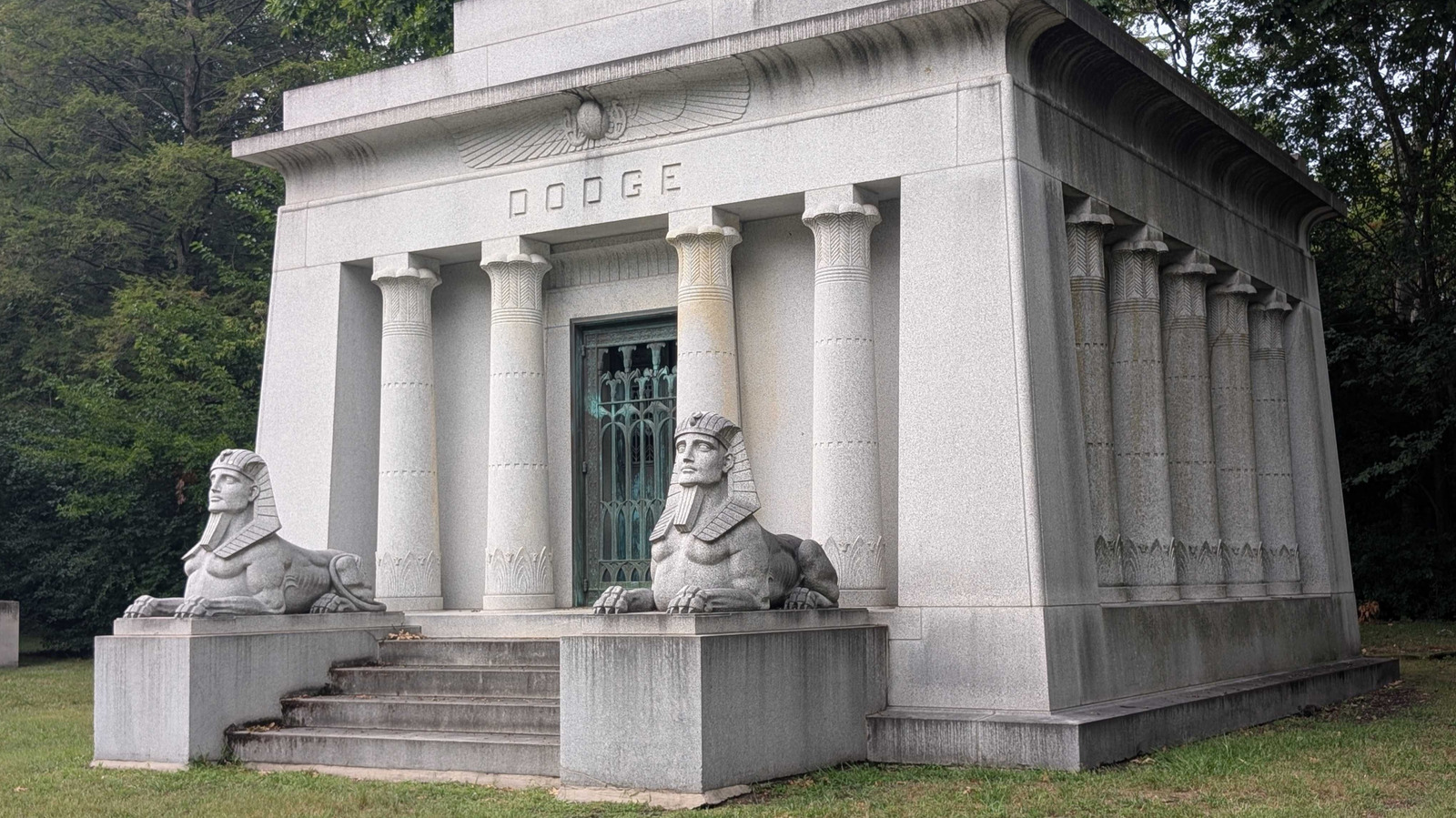
Located in Detroit's Woodlawn Cemetery, the Dodge brothers' mausoleum stands as a monument to Gilded Age excess. The ornate structure draws heavily from Egyptian architectural symbolism, complete with references to divine protection and kingly blessings. The brothers didn't simply want a grave. They wanted a temple that reflected their self-perception as titans reshaping American industry.
This architectural choice matters because it illustrates the mindset of early automotive pioneers. The Dodge brothers didn't see themselves as mechanics or engineers. They saw themselves as industrial royalty, worthy of monuments befitting pharaohs. The Egyptian motif was no accident. In the 1920s, when the brothers died within years of each other, Egyptology captivated the American imagination following Tutankhamun's tomb discovery. The Dodges tapped into that cultural moment to cement their legacy in stone and marble.
Horace Dodge died in 1920, while John followed in 1920. Both men had transformed the American automobile industry from their base in Detroit. Initially, the brothers supplied engines and transmissions to Ransom Olds and Henry Ford. By 1914, they launched their own Dodge Brothers brand, immediately distinguishing themselves through quality and mechanical sophistication. Their vehicles earned a reputation for durability that competed directly with Ford's Model T.
The Dodge brand became synonymous with reliability and performance. The brothers' business model focused on component quality rather than price competition. This strategy positioned Dodge as a premium alternative to Ford's mass-market approach. By the time of their deaths, the Dodge name carried genuine prestige in American automotive circles.
The mausoleum's lavish design reflects an era when industrial titans faced no serious constraints on self-promotion or monument-building. Wealthy business leaders routinely commissioned elaborate tombs, and the Dodges' vision matched their business ambitions. The structure incorporates classical Egyptian design principles, suggesting the brothers viewed their accomplishments as timeless and transcendent.
Today, the mausoleum stands as a curious relic of Detroit's industrial heritage. It represents an age when automotive manufacturing concentration in Michigan created genuine dynasties. The Dodge family's tomb competes for attention alongside other elaborate Detroit mausolea, many built by other automotive magnates and industrialists who shaped American manufacturing.
The Dodge brand itself outlived its founders by a century. Chrysler acquired the company in 1928, just years after both brothers died. The brand persists today as Stellantis' performance-oriented division, carrying the Dodge name into modern times. Modern Dodge vehicles bear no direct connection to the original brothers' engineering philosophies, yet the brand name still carries echoes of their early reputation for mechanical quality.
The Egyptian-inspired mausoleum ultimately serves as architectural proof of how the Dodge brothers saw their role in automotive history. They weren't simply building cars. They were establishing a dynasty, and they wanted their eternal resting place to reflect that ambition.