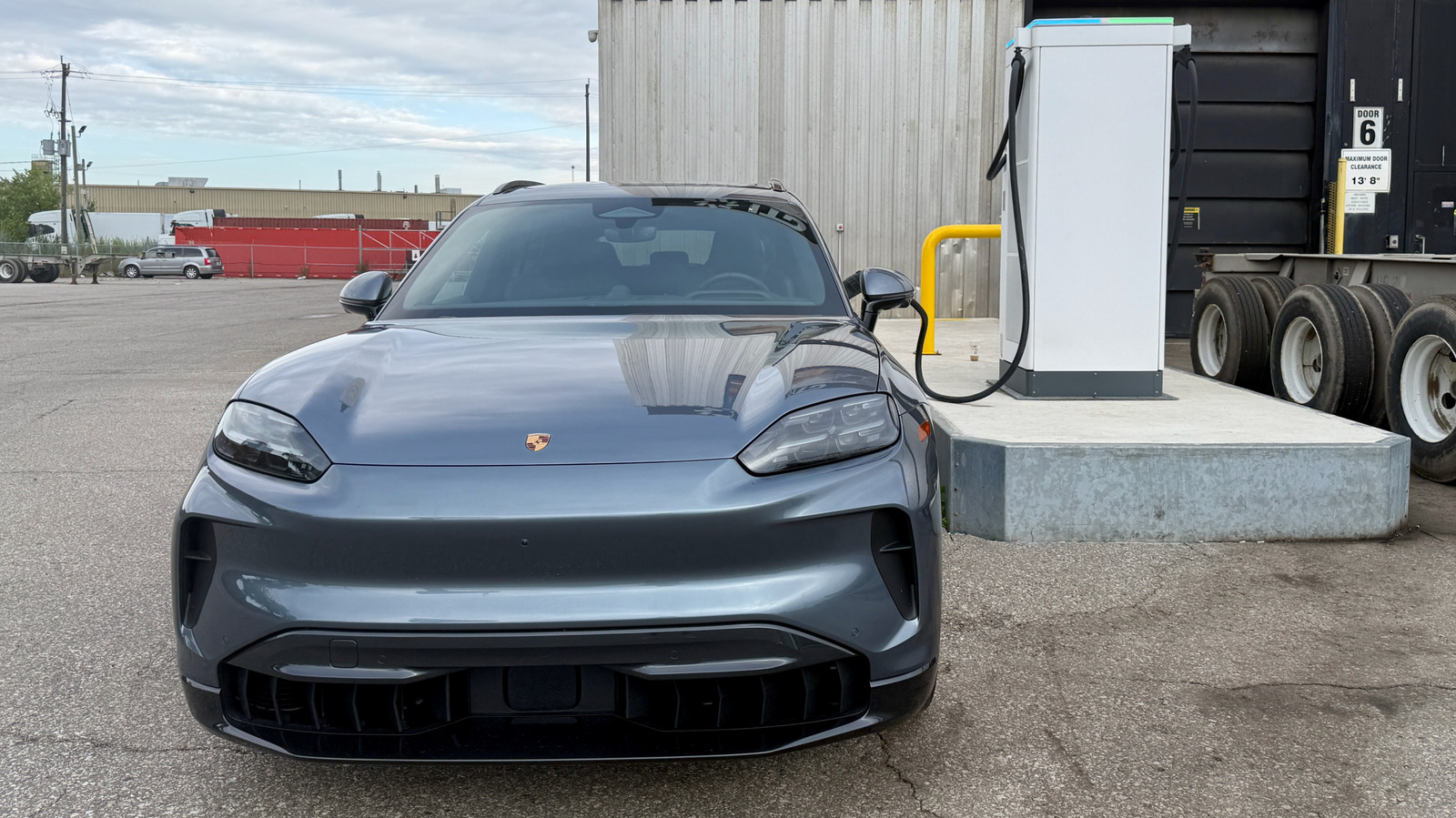
Porsche's new all-electric Cayenne demonstrates charging speeds that reshape expectations for luxury SUVs. A real-world test from 13 percent to 80 percent state of charge took just 16 minutes, with the vehicle hitting peak charging rates around 350 kW. That falls short of the Cayenne EV's theoretical maximum of 400 kW, yet still delivers results that matter for long-distance travel.
The 16-minute charging window addresses a core EV pain point. Traditional gas-powered vehicles take minutes to refuel, and early adopters complained that even the fastest chargers demanded hour-long waits. The Cayenne EV narrows that gap. For a luxury SUV carrying a substantial battery pack, this speed represents genuine progress in real-world usability.
Porsche targets the Cayenne EV at affluent buyers who already own multiple vehicles and likely have access to premium charging infrastructure. The brand has positioned this model as a flagship electric experience, not a compromise product. The 400-kW capability places it alongside the Lucid Air and the upcoming Mercedes EQS SUV in the ultra-fast-charging tier. BMW's iX M60, by comparison, maxes out around 200 kW.
The gap between theoretical 400 kW and actual 350 kW matters less than observers might think. Multiple factors influence peak charging: battery temperature, ambient conditions, the charger's output stability, and the vehicle's thermal management system all play roles. Hitting 87.5 percent of maximum in real conditions shows that Porsche's charging architecture performs predictably, not as a marketing ceiling that users never actually reach.
This is Porsche's first mass-market electric vehicle built on a dedicated platform rather than adapted from an existing ICE architecture. The Cayenne EV uses Porsche's PPE platform, shared with Audi. Early charging performance validates the engineering investment. Faster charging translates to less time at stops, which directly influences whether luxury SUV buyers view an EV as practical for their lifestyle.
The 13-to-80 percent metric reflects standard testing practice rather than a full zero-to-100 charge. Charging rates slow dramatically in the final 20 percent to protect battery health and longevity. Most real-world drivers charge to 80 percent anyway, especially on road trips. The Cayenne EV's performance in this window makes the difference between a 90-minute Supercharger stop and a 30-minute rapid-charge break.
Porsche enters a crowded segment. Tesla's Model X Plaid tops out around 250 kW on premium hardware. Rivian's R1S uses 11.5-kW onboard charging, forcing reliance on DC fast chargers. BMW's iX xDrive50 reaches 200 kW with adequate but unremarkable speed. The Mercedes EQE and EQS SUV lines handle similar power levels. Porsche's 350-kW real-world performance places it near the top of the luxury SUV charging hierarchy.
Battery capacity remains unconfirmed in the test, though the Cayenne EV reportedly offers multiple configurations. Larger packs inherently charge slower at equivalent power levels, so the specific model tested influences these numbers. Still, the results suggest Porsche engineered a thermal management system capable of sustaining high charge rates without throttling.
This charging performance alone won't drive sales. Range, price, interior quality, and driving dynamics matter equally. But for buyers considering a $100,000-plus luxury electric SUV, charging speed now ranks as a practical purchase factor. The Cayenne EV removes a legitimate objection from the EV conversation.