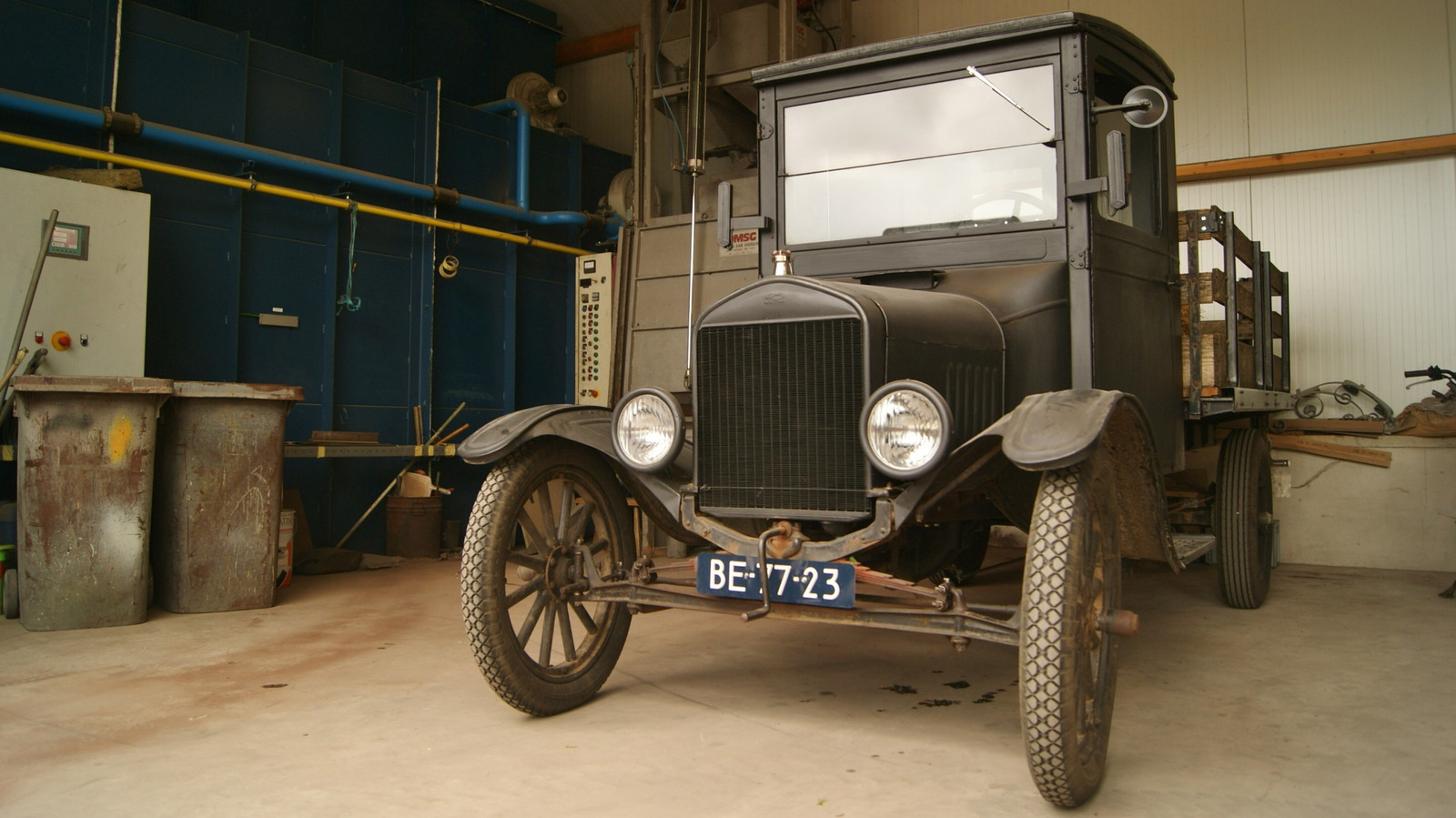
# Model T Conversion Kits Predated Slate's Truck Concept By Over A Century
Ford's upcoming Slate electric truck has drawn considerable buzz as a modular, adaptable vehicle designed for flexibility. Yet the automaker's own history reveals that this concept of repurposing a base vehicle into different configurations traces back to the earliest days of mass production.
More than a century ago, Ford offered conversion kits that transformed the iconic Model T into one-ton trucks. These kits allowed owners to convert their passenger cars into commercial haulers without purchasing an entirely separate vehicle. The Model T's modular platform and sturdy construction made it the perfect candidate for such conversions. Customers could buy a basic Model T and then add truck bed components, reinforced suspensions, and cargo frames as needed.
This wasn't a fringe aftermarket phenomenon. Ford itself recognized the opportunity and supplied official kits to meet demand from farmers, small business owners, and contractors who needed commercial capacity without luxury. The Model T dominated American roads from 1908 onward, and its affordability made truck conversion especially attractive to cash-strapped operators. A farmer didn't need to choose between a passenger car and a truck. He could own both capabilities in one vehicle for the cost of the base model plus a modest conversion kit.
The Model T's production run lasted until 1927, and during that 19-year span, hundreds of thousands were sold. Some estimates suggest that roughly one-third of all Model Ts produced ended up in some form of commercial service, whether through factory kits or aftermarket modifications. This created an informal ecosystem of customizers, parts suppliers, and dealers who profited from expanding the Model T's utility.
Ford didn't invent modular vehicle design, but the company perfected it on an unprecedented scale. The Model T's simplicity and robust architecture made it ideal for adaptation. Owners faced genuine choice. The platform could serve as transportation, as a truck, as a taxi, or as an agricultural tool depending on what components were attached.
Fast forward to 2024, and the Slate concept promises something philosophically similar. The forthcoming electric truck aims to be adaptable, with modular components and flexible configurations that serve different use cases. Slate owners will theoretically have options for customization and repurposing their vehicles just as Model T owners did a century earlier.
The comparison highlights an enduring truth in automotive design. The most successful vehicles aren't one-dimensional. They serve multiple purposes. They adapt to customer needs rather than forcing customers to adapt to rigid vehicle categories. Model T owners recognized this value in the 1920s. Modern consumers chase the same principle when they buy crossovers and trucks that blur traditional categories.
Ford's engineers designing the Slate likely studied nothing resembling Model T conversion kits. Yet they inherited the same philosophy. Build a flexible platform. Let the customer decide what it becomes. That formula worked in 1908. It works now.