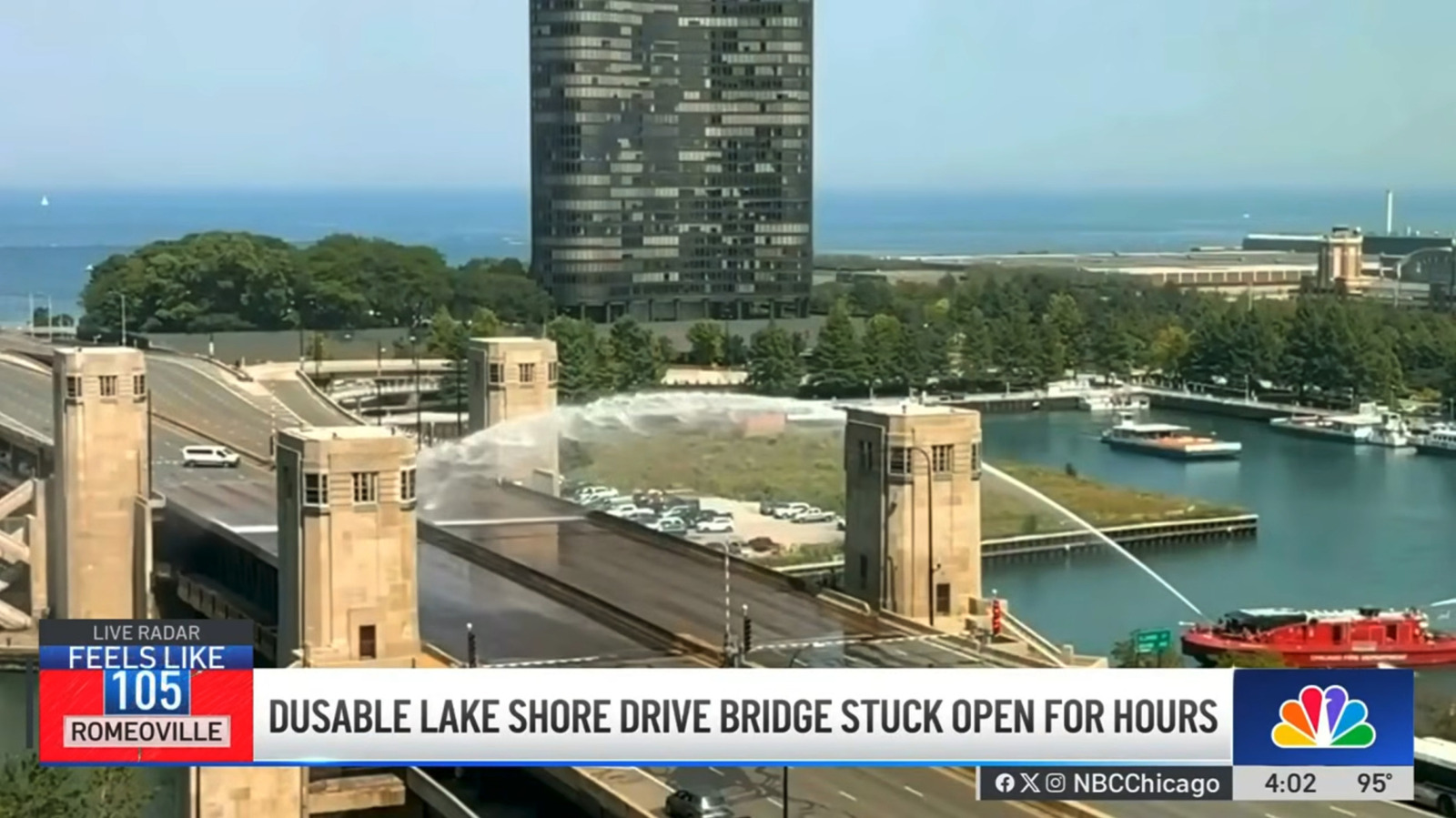
# Chicago's Infrastructure Crisis: Heat Waves Expose Dangerous Bridge Failures in Major Cities
Two Chicago bridges failed to close during extreme heat conditions, highlighting a widespread infrastructure vulnerability that affects transportation safety across American cities. The failures occurred as temperatures soared, revealing how aging mechanical systems designed decades ago cannot withstand modern climate stress.
The bridges in question rely on expansion joints and mechanical closing mechanisms that were engineered with historical temperature ranges in mind. When heat waves push beyond those parameters, the metal expands unevenly. Hydraulic systems freeze or malfunction. Gears jam. The result: bridges that should seal themselves instead remain stuck in dangerous positions, creating hazards for both vehicular and pedestrian traffic.
This is not a Chicago problem alone. Cities nationwide operate bridge infrastructure built in the 1950s through 1980s. That generation of engineers designed for average summer temperatures around 85 to 90 degrees Fahrenheit. Today, heat domes regularly push into the 100s. A 15-degree variance from design specs breaks systems that operated reliably for forty years.
The mechanical failure also exposes the garbage infrastructure comment in the original reporting. Chicago's bridges rely on decades-old hydraulic and electrical components that lack redundancy. There are no backup systems. When one sensor fails or one pump quits, the entire bridge fails. Modern infrastructure would include automated failsafes, remote diagnostics, and multiple closure pathways. Instead, these bridges rely on single-point failures in their control systems.
The automotive and logistics industries depend on reliable bridge operations. Delivery trucks, rideshare vehicles, and commuters navigate these routes daily. A bridge that cannot close during maintenance or emergency creates bottlenecks that ripple across entire metro areas. Companies shipping goods through Chicago cannot predict transit times. Emergency vehicles face routing delays. The economic cost multiplies quickly.
This summer's heat waves have stressed infrastructure nationwide. Phoenix saw record temperatures that buckled pavement and melted traffic signals. Las Vegas experienced similar issues. Heat-related infrastructure failures now occur multiple times per season in major metropolitan areas, yet funding for replacement or upgrades remains inadequate in most municipalities.
Chicago's situation reflects a broader American challenge. The American Society of Civil Engineers rates the nation's infrastructure a D+. Bridges specifically receive a C. These grades mean systems are aging faster than replacements arrive. Federal infrastructure funding passed in 2021 helped, but the backlog spans decades.
The solution requires replacing these mechanical systems with modern alternatives. Expansion joints need redesign for wider temperature ranges. Hydraulic systems should transition to redundant electric or pneumatic backups. Sensors need cloud connectivity for remote monitoring and predictive maintenance. None of this happens overnight or cheaply.
For drivers and transit operators in Chicago, the immediate risk remains real. When the next heat wave arrives, those same bridges could fail again. Until mechanical systems undergo complete overhaul, extreme temperatures will continue exposing the vulnerability of infrastructure built for a cooler era.