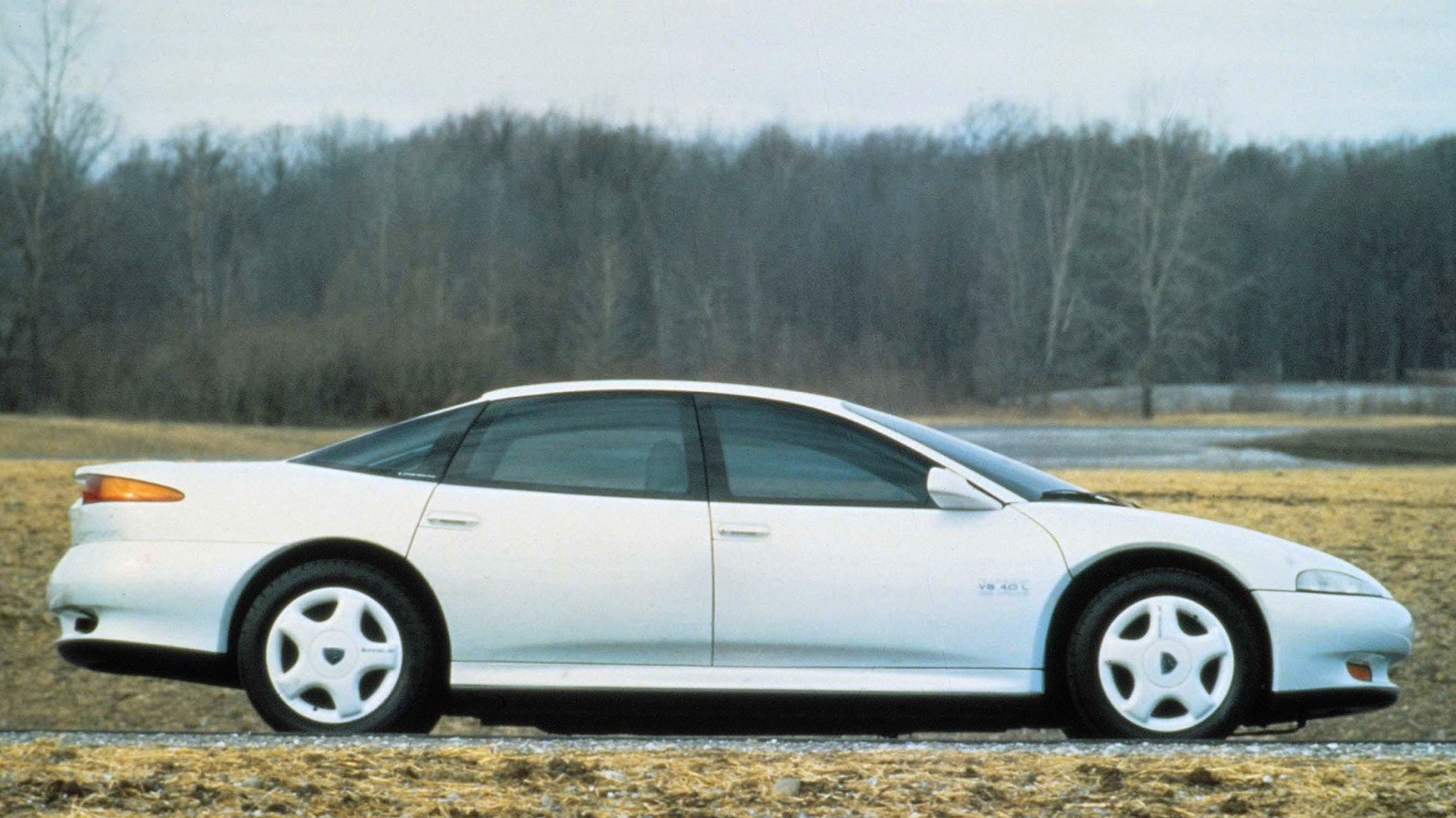
# The Lost V8 Sedan That Chrysler's Ambition Nearly Killed
Chrysler's 1987 acquisition of American Motors Corporation represented one of the automotive industry's most audacious corporate gambles. Fresh off that merger, the company entertained ambitious plans for a V8-powered sports sedan that would carry genuine Italian design pedigree from its recent Lamborghini connections. The car never reached production in its intended form, instead transforming into a forgotten V6 commuter that barely registers in automotive history today.
The mid-1980s marked peak ambition for Chrysler under Lee Iacocca. After saving the company from near bankruptcy with the K-car revolution, Iacocca wanted to compete across every segment. The AMC acquisition brought Jeep, a growing SUV portfolio, and design assets that opened fresh creative possibilities. Within this fever dream of corporate expansion, designers sketched a proper performance sedan with V8 power.
What made this project particularly intriguing was the Lamborghini connection. Chrysler owned a 46 percent stake in the Italian supercar maker from 1987 to 1994, creating a direct pipeline for design influence. Lamborghini's design team under legendary stylist Marcello Gandini had established itself as capable of creating proportions and presence that transcended price points. That DNA was supposed to inform this new Chrysler sedan, promising something genuinely different from the corporate blandness that typically emerged from Detroit.
The V8 engine planned for this car would have positioned it as a genuine threat to German sport sedans and Japanese performance imports gaining traction in the late 1980s. Chrysler had competent V8 options in its portfolio. The company could have fielded a 318 cubic-inch or 360 cubic-inch engine that would deliver respectable horsepower and torque. A four-door sedan with Italian design flourishes and proper V8 grunt would have carved out interesting competitive space.
Instead, market realities intervened. Chrysler's financial situation remained precarious throughout the late 1980s. The AMC acquisition demanded capital that could have funded this project, and bean counters began scrutinizing every development expense. Fuel economy regulations tightened. Consumer preferences shifted away from performance sedans toward sport-utilities and trucks. The business case for a niche V8 sedan evaporated.
What emerged was fundamentally different. Chrysler truncated the project's ambitions and rolled out a V6-powered sedan that delivered neither the performance character of the original concept nor any memorable identity of its own. The car existed in competitive limbo, offering neither the prestige of Teutonic sport sedans nor the value proposition that could justify choosing it over more established options. It disappeared from showrooms with minimal fanfare and virtually no enthusiast following.
This story captures Chrysler's eternal struggle with execution. The company consistently demonstrated creativity and willingness to take risks that more conservative manufacturers avoided. Yet financial constraints, organizational chaos, and shifting market conditions repeatedly forced compromises that neutered promising products. What could have been a genuinely interesting alternative to Munich and Tokyo slowly morphed into forgettable appliance.
Today, automotive historians mention this V8 sedan concept mainly as a footnote to Chrysler's wild 1980s era. The car represents roads not taken, a reminder that even well-intentioned ambition collides with economic reality. The V6 version sits in obscurity, remembered by nobody outside hardcore Mopar archivists.