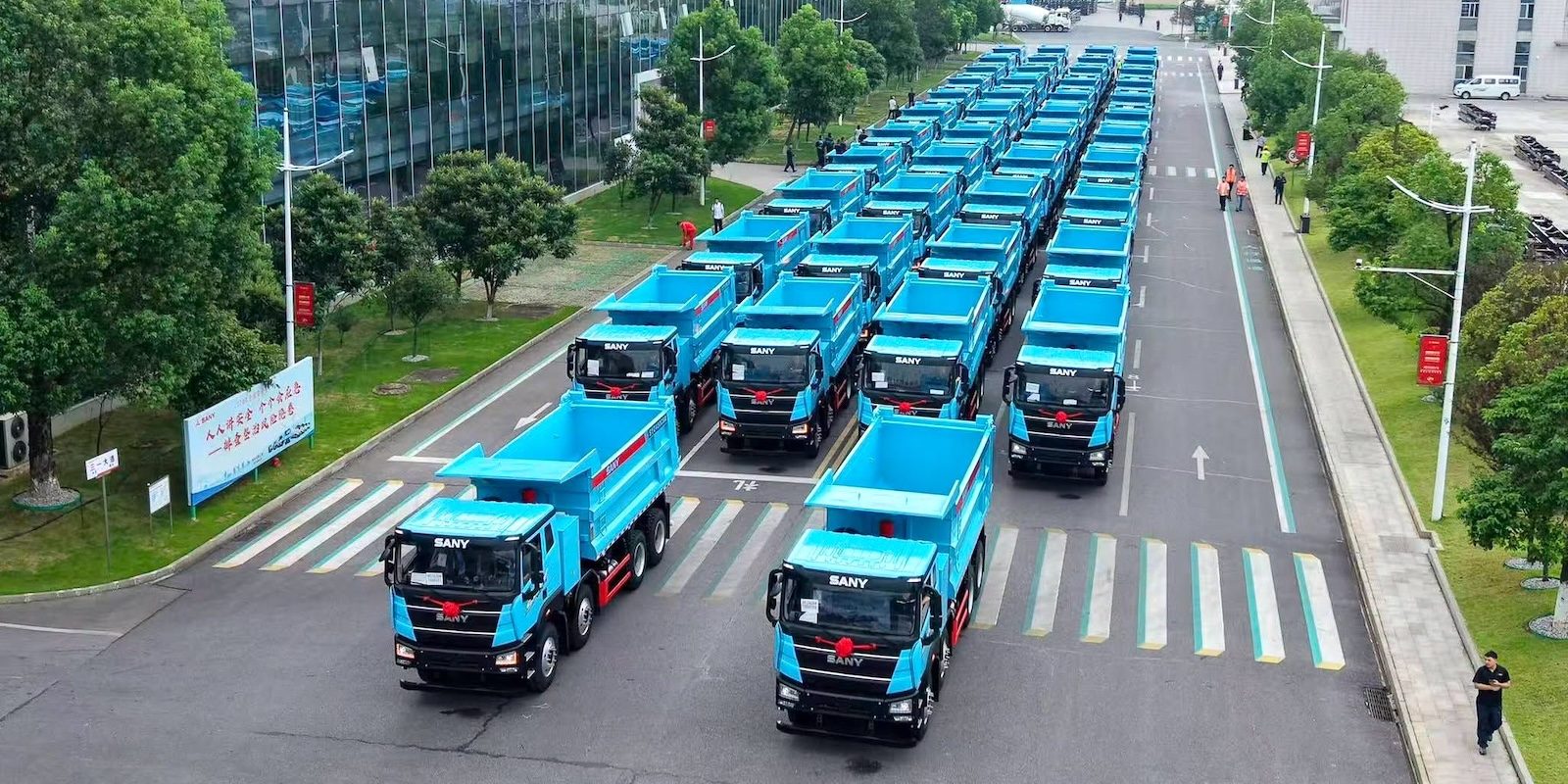
Chinese heavy equipment manufacturer SANY delivered 200 electric haul trucks and more than 600 electric wheel loaders in a single month, underscoring the accelerating shift toward electrified construction and mining equipment outside North America.
The shipment volume reveals a stark contrast between global markets and the United States. While North American fleet operators remain cautious about electrification, citing concerns over battery costs, charging infrastructure, and payload capacity, international buyers are adopting electric heavy machinery at scale. SANY's monthly output exceeds what many Western equipment makers deliver annually in battery-powered construction vehicles.
SANY manufactures concrete pumps, excavators, and material handlers alongside its haul truck and wheel loader lines. The company ranks among the world's largest construction equipment producers by volume. These delivery figures represent meaningful production capacity, not pilot programs or limited releases.
The haul truck segment matters most to mining and aggregate operations. Electric haul trucks eliminate tailpipe emissions in open pits and quarries where ventilation is poor and diesel fumes concentrate. Operators save fuel costs over vehicle lifespans, a calculation that favors electrification in markets with high diesel prices and strong environmental regulations. Wheel loaders handle material movement in demolition, landscaping, and heavy construction. Their constant start-stop duty cycles suit electric powertrains well, since regenerative braking recovers energy that internal combustion engines waste.
Caterpillar, Volvo, Komatsu, and JCB dominate Western heavy equipment markets. Most have launched electric wheel loader prototypes or limited production runs. Caterpillar's battery-electric wheel loaders entered trials with select customers in 2023. Volvo launched electric wheel loader production. Komatsu produces electric excavators primarily for Japanese and Asian markets. None report monthly volumes approaching SANY's scale.
Why the gap exists involves multiple factors. Chinese construction demand remains robust, particularly for infrastructure projects under government stimulus. Environmental regulations in China's major cities and provinces penalize diesel equipment in sensitive zones. SANY benefits from vertically integrated battery supply chains and domestic lithium sourcing. Western manufacturers face higher labor costs, complex dealer networks, and fragmented customer bases across different markets and equipment classes. They also service older equipment fleets that lack charging capability.
Financial incentives matter too. Chinese buyers access subsidies for electrified construction equipment. European regulations increasingly restrict non-electrified equipment on job sites. North American incentives remain scattered and conditional on state or regional programs.
SANY's production numbers also reflect operational differences. Chinese manufacturers often produce equipment with shorter expected service lives than Western counterparts. Battery replacement or refurbishment costs factor differently when equipment depreciates faster. This changes the total cost of ownership math.
The delivery surge signals confidence in demand. SANY would not allocate production lines to electrified models if customers weren't ordering them. Mining companies, construction firms, and aggregate operators in China, Australia, Southeast Asia, and other regions are making capital purchases based on operating cost and regulatory pressures.
For Western equipment makers, SANY's volumes represent both opportunity and threat. International customers increasingly compare electrified options. Competitors that delay full-scale battery-electric production risk losing market share to manufacturers who already operate proven supply chains and manufacturing processes. The competitive window narrows fast when rivals deliver 800 units monthly and your company ships dozens.