# What Adopt-A-Highway Actually Means: Volunteer Cleanups, Corporate Branding, and Free Speech Battles
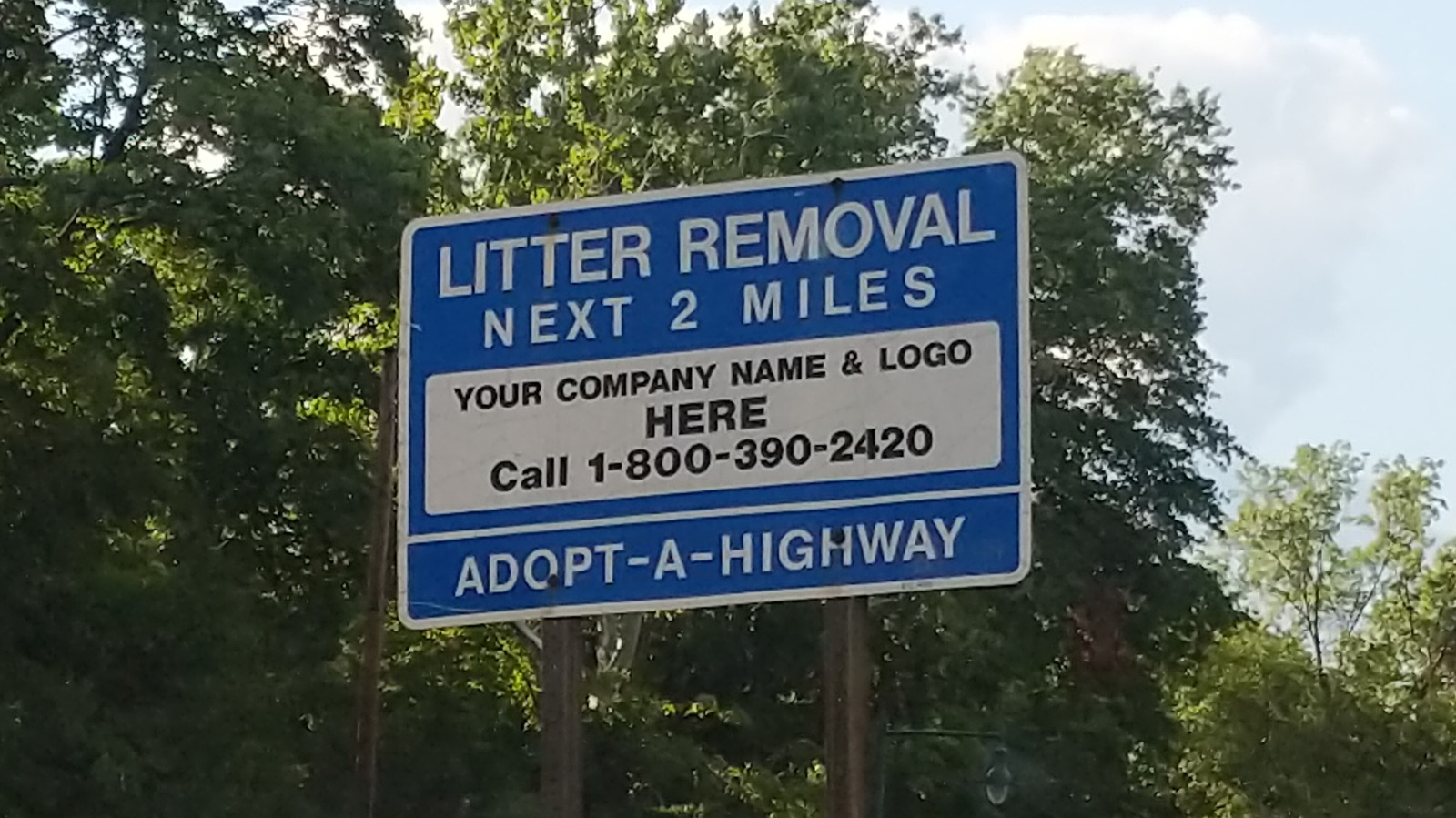
Adopt-A-Highway programs sound straightforward. A business or nonprofit sponsors a stretch of road, volunteers pick up litter, and a sign bearing the sponsor's name appears alongside the highway. Reality proves messier.
These programs operate across all 50 states, with variations in rules, enforcement, and what sponsors actually get in return. The core mechanics remain consistent: volunteers commit to cleaning a specific road segment multiple times yearly. States maintain the highway infrastructure itself. The sponsor receives public recognition through roadside signage. Taxpayers save money on maintenance labor that would otherwise come from state budgets.
The financial arithmetic favors states. A single cleanup crew working a two-mile stretch can handle trash removal that might otherwise cost a municipality thousands in contracted labor. Multiply this across thousands of volunteer groups nationwide, and the savings accumulate rapidly. States get cleaner roads without expanding maintenance budgets. Volunteers gain civic engagement opportunities. Sponsors obtain branding that reaches thousands of daily commuters.
But the system contains tensions.
First Amendment challenges have erupted repeatedly. Some states rejected or removed signs for groups deemed controversial. Texas initially refused to sponsor a sign for an atheist organization. A federal appeals court ruled that once a state establishes a highway adoption program open to the public, viewpoint-based rejections violate free speech protections. Other disputes involved environmental groups, racial justice organizations, and political entities. The principle remains consistent: states cannot pick and choose based on ideology.
Commercial sponsors dominate participation. Automotive dealerships, insurance companies, fast-food chains, and regional retailers heavily utilize these programs. The advertising value is substantial. A business name on a highway sign gets exposure to tens of thousands of drivers monthly. Cost-per-impression calculations make this marketing tactic remarkably efficient compared to traditional advertising.
Safety dynamics shift when volunteers work roadside. States implement specific protocols. Groups typically work during daylight hours on non-peak traffic periods. Safety vests and signage alert approaching drivers. Insurance liability remains the sponsor's responsibility, not the state's. Injuries occur infrequently but happen when distracted drivers fail to notice work crews.
Program participation has contracted in recent years. Fewer individuals volunteer for physical labor. Corporate consolidation means fewer small businesses participate. Environmental concerns about litter disposal practices have grown. Some states now question whether adoption programs genuinely incentivize highway cleanliness or simply shift labor costs to volunteers.
Environmental cleanup remains the stated purpose. But the program functions equally as a branding mechanism and taxpayer cost-shift. Sponsors view signage as return on volunteer coordination. States view volunteer labor as budget relief. The public sees corporate names attached to civic responsibility, blurring lines between genuine philanthropy and marketing strategy.
The Adopt-A-Highway concept persists because it satisfies multiple constituencies simultaneously. Volunteers contribute to their communities. Sponsors gain visibility and tax deductions. States reduce maintenance costs. The roadside remains cleaner than it would under pure government maintenance models.
Yet these programs reveal deeper infrastructure funding realities. Privatizing portions of government responsibility through volunteer programs reflects constrained state budgets. The system works smoothly when all parties benefit equally. Disputes emerge when sponsorship becomes ideologically contentious or when the line between community service and corporate advertising blurs beyond recognition.