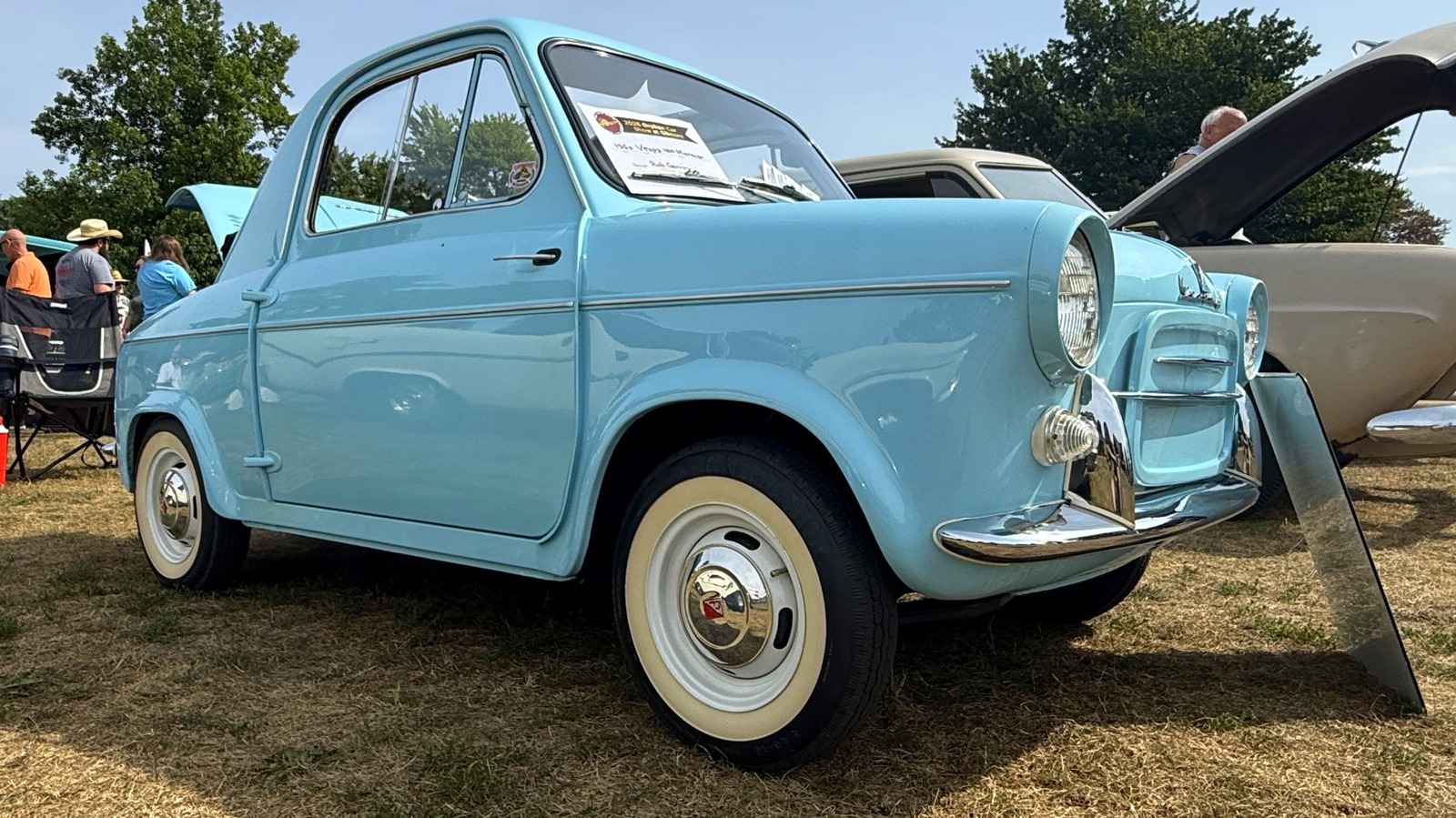
Piaggio's Vespa 400 microcar represents one of automotive history's most puzzling abandoned dreams. The Italian manufacturer launched this four-wheel cousin to its iconic scooter line in 1957, banking on the same design philosophy that had made Vespa two-wheelers wildly successful across postwar Europe. Instead of pursuing the microcar segment further, Piaggio ultimately shelved the project, choosing to concentrate resources on its proven scooter business.
The Vespa 400 arrived at an awkward moment in automotive history. By the late 1950s, the microcar category was already crowded with established competitors. The British Mini had launched in 1959 and immediately dominated small-car thinking with its revolutionary transverse engine layout and interior space. Citroën's 2CV had been plodding along since 1948, capturing budget-conscious families with its utilitarian charm and low price. Fiat's 500, introduced in 1957 the same year as the Vespa 400, would become the microcar template for an entire generation. These three vehicles defined what compact motoring could be. The 400 simply could not differentiate itself against this trinity.
Piaggio engineered the Vespa 400 with modest ambitions. The car featured a rear-mounted 400cc two-cylinder engine producing roughly 15 horsepower, a step up from scooter power but laughably underpowered even by microcar standards. The body sat on a simple steel frame, with styling that borrowed heavily from Vespa's curved, cheerful aesthetic. Capacity squeezed in four adults, barely. Performance was glacial. The vehicle cost roughly equivalent to an entry-level Fiat 500, yet offered fewer amenities and less interior volume.
Production figures tell the real story. Piaggio built approximately 30,000 Vespa 400s between 1957 and 1961, a respectable number in absolute terms but negligible compared to competitor output. The Mini sold millions. The 2CV became a phenomenon across rural France and beyond. Even the humble 500 vastly outsold the Vespa. For Piaggio, the four-wheeled venture represented a distraction from what the company did best: manufacture scooters that revolutionized personal mobility across Europe.
The decision to abandon the project reflected cold business logic. Piaggio recognized early that its competitive advantage lay in scooter design and manufacturing efficiency. The company's brand strength resided in the Vespa name as synonymous with two-wheeled transport. Attempting to leverage that equity into cars proved futile. Dealers sold scooters. Factories optimized for scooter production. Marketing budgets promoted the Vespa as freedom on two wheels, not four.
Today the Vespa 400 occupies a peculiar space in automotive memory. Enthusiasts cherish surviving examples as charming period pieces. Collectors recognize them as brave failures from an era when manufacturers experimented recklessly with novel categories. The microcar market itself proved remarkably robust even after the 400's departure, with Vespa's abandonment leaving no void. Other builders filled any potential gap.
Piaggio's choice validated what seemed obvious in hindsight. Companies thrive by doubling down on core competencies, not diluting focus across unfamiliar territory. The Vespa scooter remains in production today, fundamentally unchanged in concept from its 1946 debut. The Vespa 400 sits in museums, a curiosity from the moment a manufacturer realized it had wandered too far from home.