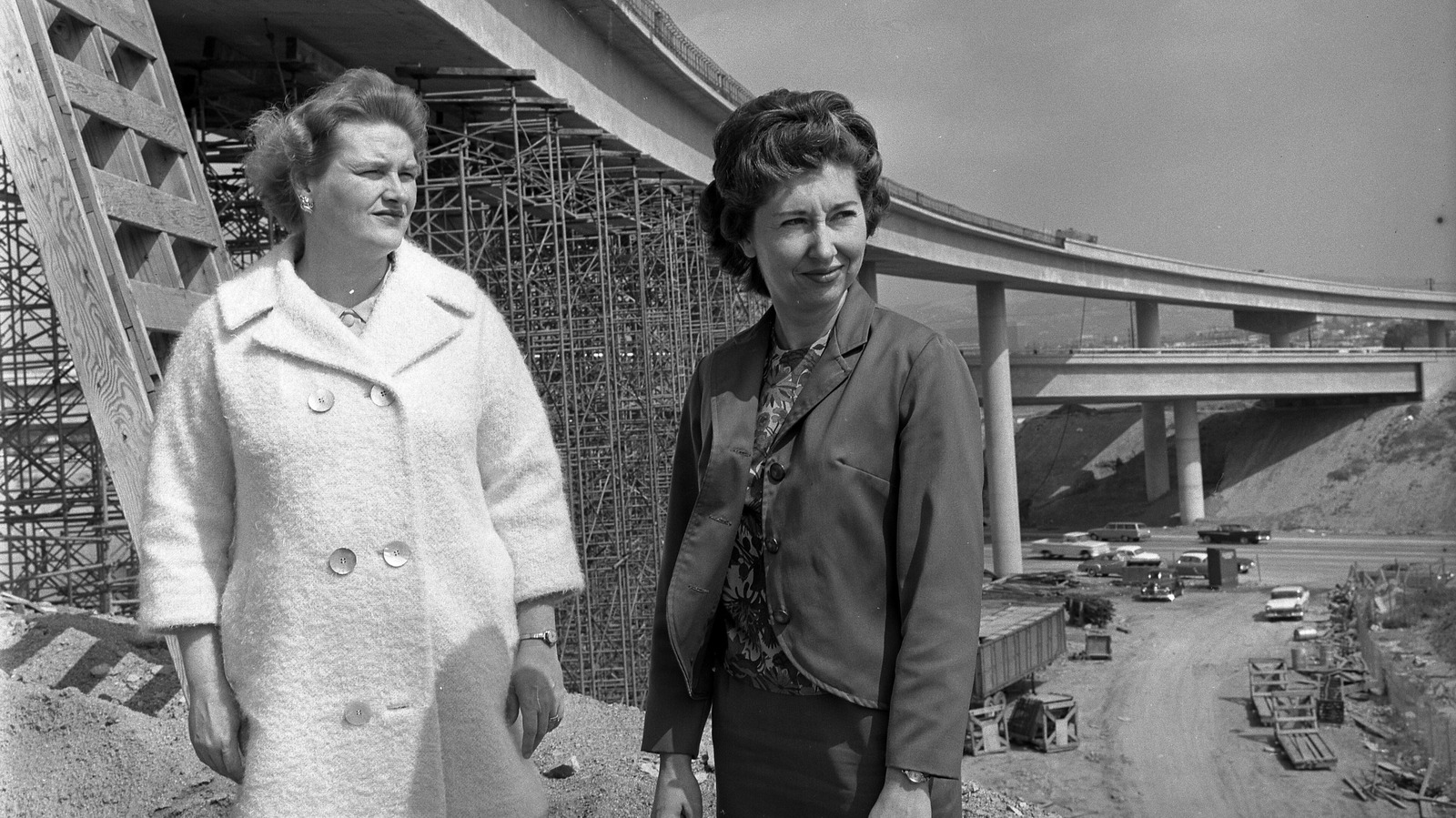
# The Marilyn Reece Interchange: Recognition for a Traffic Engineering Pioneer
Los Angeles drivers spend countless hours navigating the massive tri-level interchange where Interstate 10 meets Interstate 405. Few realize the structure bears the name of Marilyn Reece, a pioneering traffic engineer whose work shaped modern highway design in Southern California.
Marilyn Reece earned her place in transportation history as one of the first women to work as a traffic engineer in Los Angeles during an era when the profession remained almost exclusively male-dominated. Her career coincided with the explosive growth of the Southern California freeway system in the 1950s and 1960s, when planners rushed to build infrastructure to accommodate the region's booming post-war population.
The I-10/I-405 interchange, completed in 1966, represents a technical achievement that still serves as a model for complex urban freeway junctions. The tri-level design was revolutionary for its time, stacking three separate roadway levels to manage the massive volume of traffic flowing between Santa Monica, Long Beach, and points east and west. Engineers had to solve unprecedented problems in geometric design, traffic flow optimization, and structural engineering. Reece's contributions to traffic analysis and interchange planning helped make this complex project functional.
What distinguishes Reece's career beyond technical competence was her persistence in breaking gender barriers. During the 1950s and 1960s, women rarely worked in engineering roles, particularly not in the highly male-dominated world of highway design. Her presence on major projects like the I-10/I-405 interchange forced the profession to confront its own exclusionary practices. She proved women possessed the analytical and creative skills necessary to solve complex transportation problems.
The naming of the interchange after Reece reflects a broader trend in recent years toward recognizing overlooked contributors to public infrastructure. For decades, the interchange bore no official designation at all. Only recently did Los Angeles officials and transportation advocates work to memorialize her role in shaping the city's freeway system. This recognition arrived long after her most productive career years, following the historical pattern of belated acknowledgment for women engineers and scientists.
The I-10/I-405 interchange remains one of the busiest freeway junctions on the planet, handling over 500,000 vehicles daily. Modern drivers cursing the congestion probably never consider who designed the routes they're stuck on. The infrastructure we use daily represents the accumulated work of thousands of engineers, architects, and planners. Reece represents one of those often-invisible contributors.
Her legacy extends beyond concrete and steel. By succeeding as a woman engineer in a male-only profession, Reece opened doors for subsequent generations of female transportation professionals. Today, women hold prominent roles at Caltrans, local planning agencies, and major engineering firms throughout California. That progress traces back partly to pioneers like Reece who refused to accept exclusion.
The naming of the Marilyn Reece Interchange stands as recognition that infrastructure reflects human choices and human talent. Every time LA drivers navigate that tri-level junction, they travel through a monument to engineering skill and professional persistence.