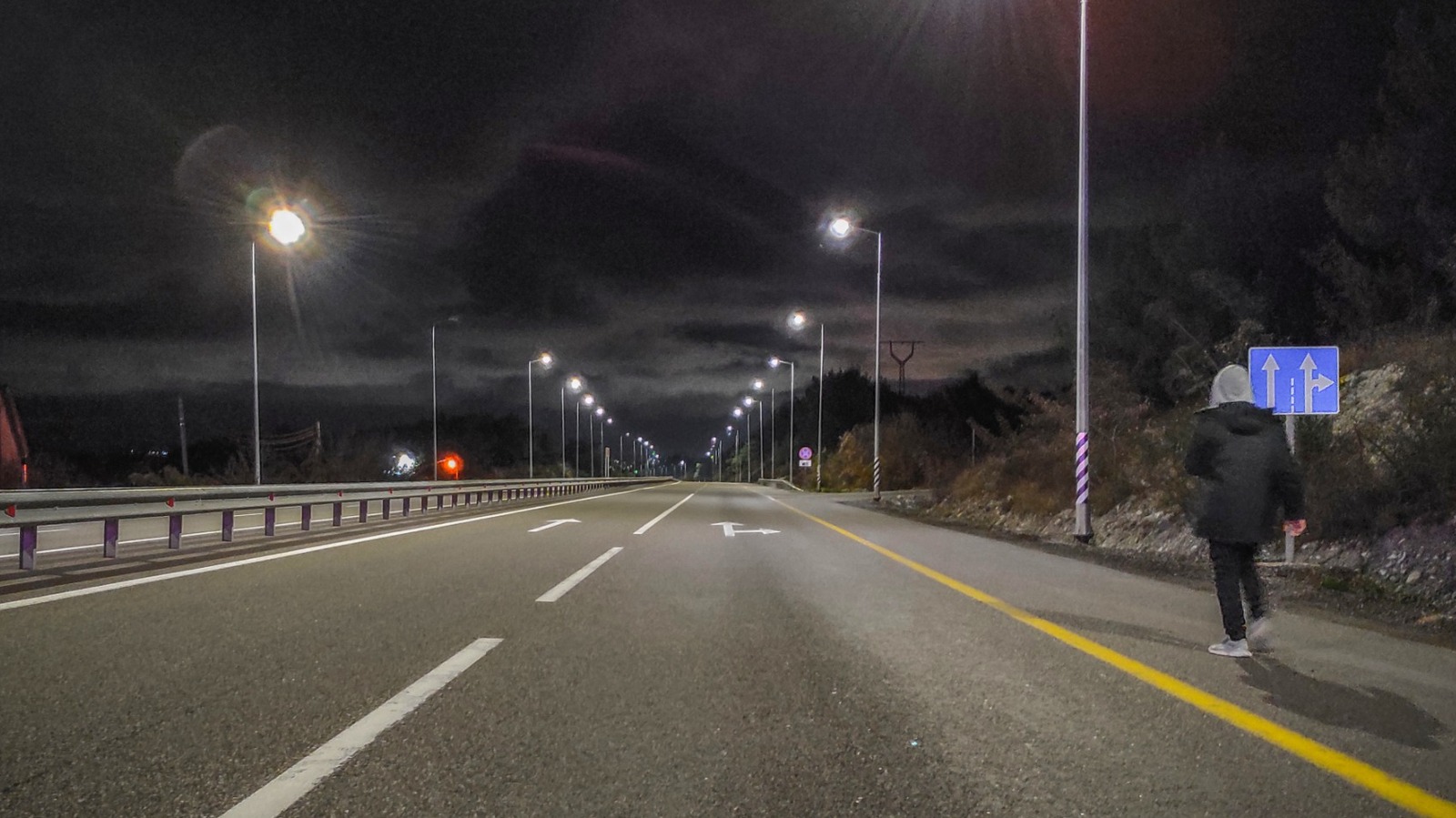
# Pedestrian Safety on Highways: What Drivers and Walkers Need to Know
Highway pedestrian deaths represent a persistent blind spot in traffic safety discussions. The National Highway Traffic Safety Administration records thousands of pedestrian fatalities annually, with a disproportionate share occurring on high-speed corridors after dark. Jalopnik's safety guidance highlights a reality that urban planners and safety advocates have long stressed: highways lack the infrastructure, lighting, and speed management that protect pedestrians in developed areas.
Walking along a highway creates a fundamentally hostile environment. Drivers operate vehicles at 55 to 75 mph, leaving minimal reaction time. Lane widths on highways exceed standard roads, and shoulders often narrow or disappear entirely. Night compounds every risk factor. Darkness reduces driver visibility to headlight range only, typically 150 to 200 feet ahead. A pedestrian in dark clothing becomes nearly invisible until it's too late to brake.
The practical advice boils down to visibility, positioning, and awareness. Wear high-visibility clothing, reflective gear, or light-colored garments that contrast sharply against night backgrounds. A white or neon-yellow jacket transforms a pedestrian from invisible to detectable. Positioning matters more than most people realize. Walk on the left side of the roadway, facing oncoming traffic. This reverses the normal pedestrian rule but gives you sight lines to approaching vehicles and allows drivers to see your face, not just your back.
Distance from the roadway itself provides a buffer against vehicle drift or loss of control. Stay as far from the travel lanes as the shoulder permits. If shoulder space doesn't exist, move even further into the grass or clear zone. Some highways funnel pedestrians into narrow corridors where they have nowhere to go if a vehicle veers toward them.
Attention matters as much as positioning. Put away phones. Remove earbuds. Constant alertness allows you to spot erratic driving, hear engine sounds changing, or notice headlights bearing down. Assume drivers don't see you. Many highway fatalities involve drivers who never knew they struck a pedestrian until well after the impact.
Timing exposure reduces risk exponentially. Avoid peak darkness hours, roughly midnight to 4 a.m., when fatigue and impairment spike among drivers. If you must walk at night, travel before 10 p.m. or after first light. Weather compounds visibility problems, so avoid walking highways during rain, fog, or snow.
The broader context reveals a systemic problem. Many pedestrians walk highways not from choice but from necessity. Missing sidewalks, insufficient transit options, and suburban sprawl force people onto high-speed corridors. In rural areas, pedestrians sometimes have no alternative routes. Better urban planning, improved sidewalk networks, and safe pedestrian crossings address the root cause. Until that infrastructure exists, walkers on highways operate in a zone designed for vehicles, not people.
These precautions reduce but don't eliminate risk. A pedestrian remains fundamentally vulnerable on a highway. The safest approach remains finding an alternative route or timing your travel for daylight hours when visibility favors survival.