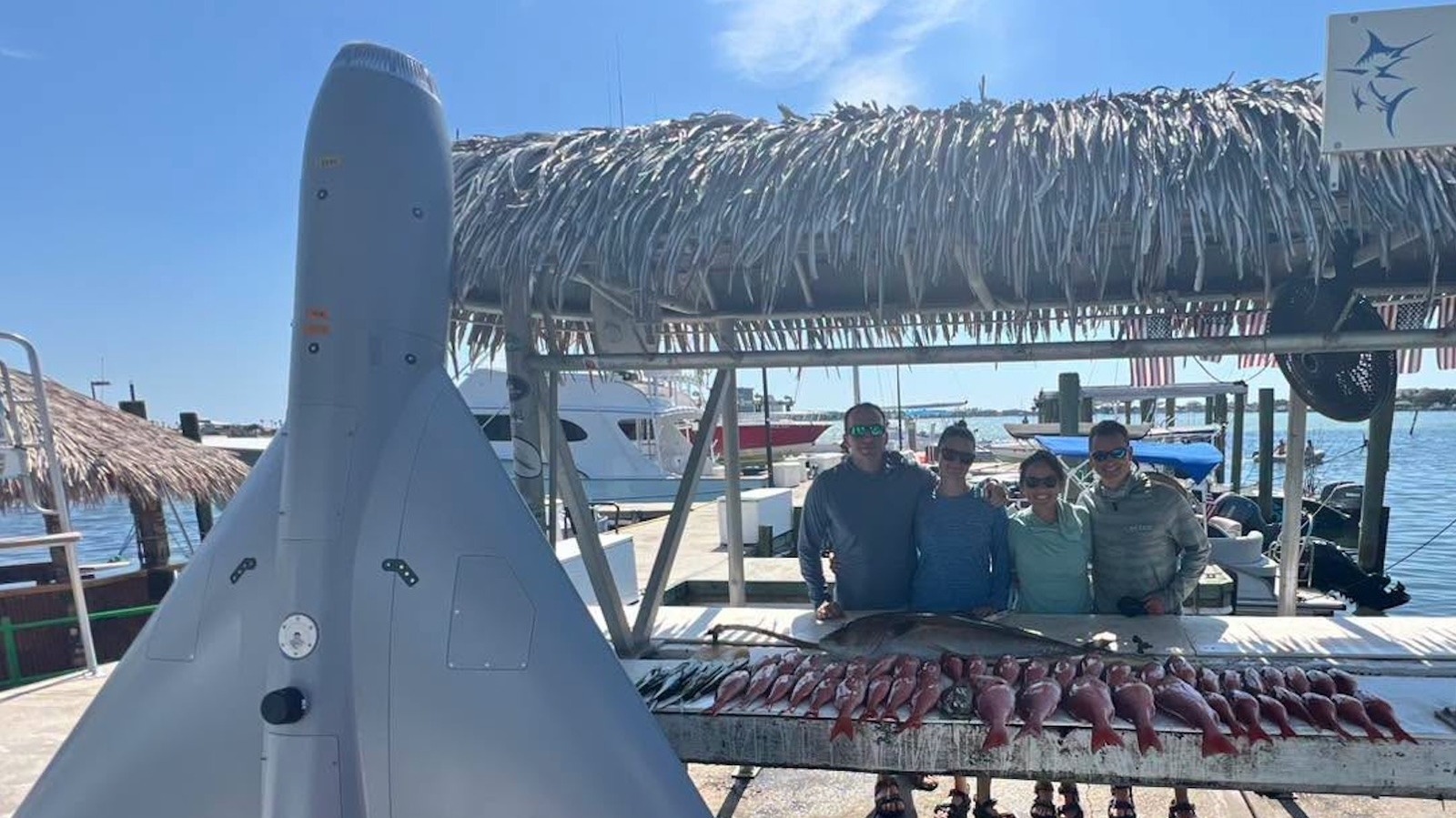
# Fishermen Haul Military Drone From Ocean, Score Unexpected Internet Gold
Two charter boat fishermen working the waters off an unspecified coastal region landed something far more valuable than their usual catch. They netted a military-grade drone floating in open ocean and hauled it aboard alongside their day's fish haul. The discovery has already become the stuff of internet legend, with the crew eyeing prime Tinder profile real estate for their unlikely trophy photo.
The incident captures a quirky intersection of maritime commerce, military operations, and modern dating culture. Military drones routinely operate in coastal zones for surveillance, reconnaissance, and training exercises. These unmanned aircraft systems cost taxpayers hundreds of thousands to millions of dollars depending on the model. Loss at sea happens. When it does, recovery becomes a naval logistics problem. When civilian fishermen find it first, the story becomes something else entirely: proof that sometimes the ocean still yields genuine surprises.
The practical reality behind the humor matters here. Fishing crews routinely encounter debris, equipment, and objects that fall or wash into their operating waters. Military hardware occasionally joins that float-ashore category. The fishermen's decision to pull the drone aboard rather than leave it follows maritime tradition and common sense. Unknown floating objects can become hazards. Retrieving items and reporting the recovery positions these crews as responsible operators and reliable sources for future salvage situations.
The Tinder profile angle reveals something about how younger generations document their lives and capitalize on viral moments. A photo of two fishermen holding a genuine military drone represents authentic adventure, technical intrigue, and the kind of "only in real life" story that cuts through algorithmic noise. It beats staged gym selfies or filtered sunsets. The crew understands that their accidental discovery translates to credibility, humor, and potentially actual conversation starters on dating apps.
From a military operations standpoint, losing equipment to the ocean represents a training opportunity and a logistics headache. The drone's current location, condition, and whether its systems remain operational all matter for damage assessment. Recovery protocols typically involve coordination with the branch responsible for the lost asset. The fishermen's find accelerates that recovery and saves the military from extended search operations.
The broader pattern here reflects how civilian encounters with military technology continue to shape public perception. When fishermen can pluck a drone from the water with standard equipment, it demystifies systems that often seem distant and secretive. It humanizes both the fishermen and the military by placing them in an absurd but genuine collision. It also highlights how vast ocean operations remain despite modern surveillance and tracking capabilities.
The fishermen's enthusiasm to weaponize the photo for dating apps captures the zeitgeist perfectly. Adventure sells. Authenticity resonates. A real story beats a fabricated one every time. Their military drone catch represents exactly the kind of content that breaks through social media's endless scroll of recycled content. Whether they actually used it for Tinder matches remains unknown. Either way, they own one of those rare true stories that nobody believes until they see the photographic evidence. The ocean still delivers moments that no algorithm can replicate.