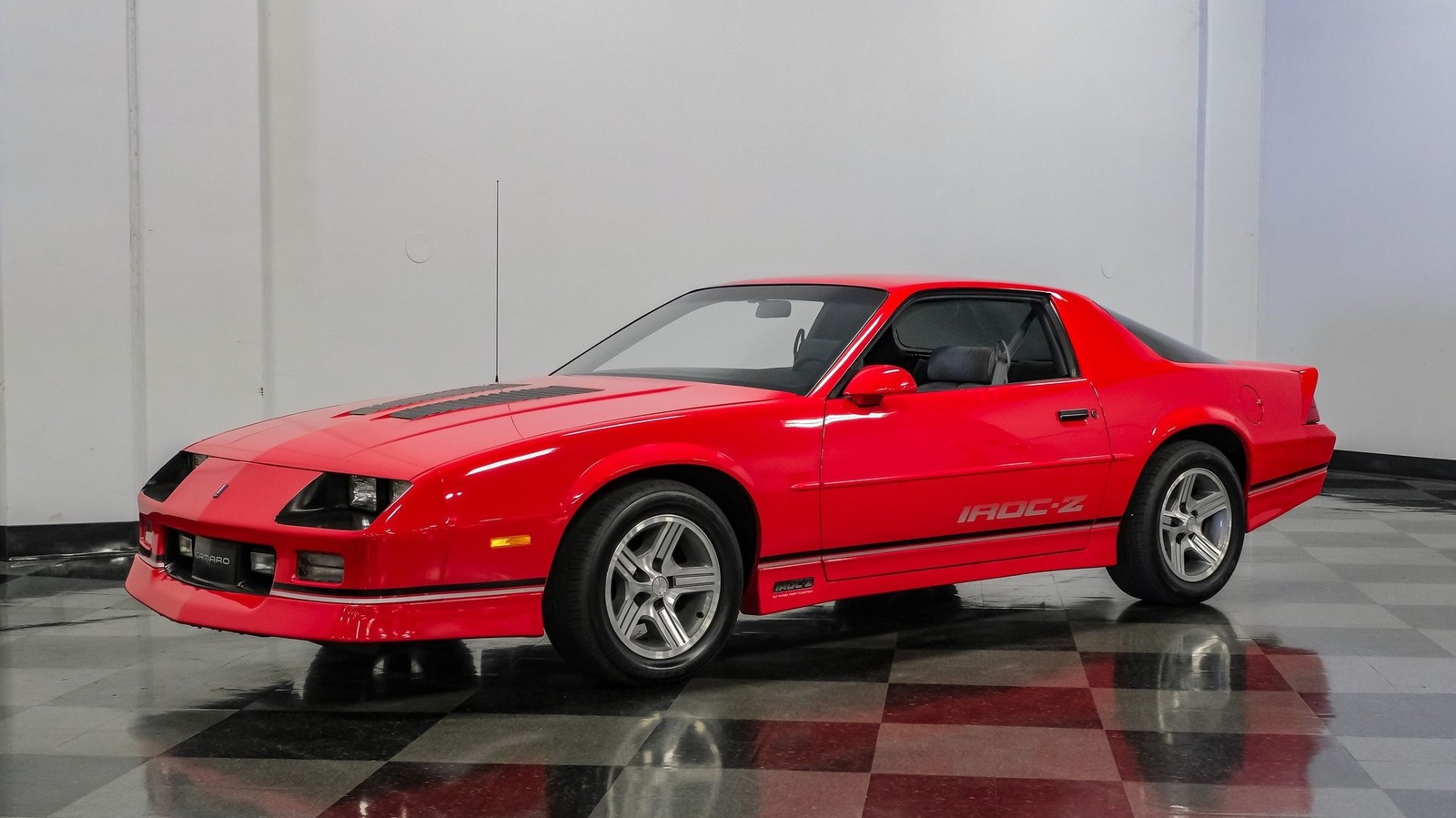
A pristine 1990 Chevrolet Camaro IROC-Z has surfaced on the used market with just 13,000 miles on the odometer, representing the kind of low-mileage, single-owner classic that collector car hunters spend years trying to find.
The car wears Bright Red paint and sits powered by the legendary 5.7-liter V8 engine that defined the final generation of the IROC nameplate. In 1990, that V8 produced 245 horsepower and 345 pound-feet of torque, figures that sound modest by modern standards but carried serious weight in a 3,400-pound sports car. The IROC-Z had already ruled American muscle culture for most of the 1980s, and this final model year represents the swan song before Chevrolet retired the iconic trim for a new generation.
The condition tells the real story here. Thirteen thousand miles over 34 years suggests this Camaro spent most of its life behind a garage door, driven on weekends or special occasions by someone who understood its value. No major restorations, no repaints, no engine rebuilds. The original interior, exterior trim, and mechanical systems remain intact. Time-capsule cars like this command premium prices precisely because they skip the depreciation scar of being thrashed by casual owners in the 1990s and 2000s.
The IROC-Z nameplate itself carries weight in American automotive history. Chevrolet introduced it in 1985 as a high-performance variant of the third-generation Camaro, inspired by the race-winning IMSA Racing Outlaw Challenge series. For five years, the IROC-Z was the factory answer to Ford's Mustang GT and the closest thing Chevy offered to a genuine performance car. It came loaded with performance suspension tuning, aggressive aerodynamic bodywork including a rear wing, and aggressive graphics that screamed 1980s excess. By 1990, the formula remained potent even as the muscle car market softened heading into the recession.
The 5.7 V8 was the only engine option that mattered for buyers who cared about performance. Paired with either a five-speed manual or four-speed automatic transmission, it delivered the kind of honest acceleration that defined the era. Zero-to-60 times hovered around 6.5 seconds, respectable for the period and a full second quicker than base V6 models.
What makes this particular example valuable lies in its preservation. Original paint means no hidden repair work underneath. Low mileage means minimal wear on brake components, suspension bushings, and the interior leather. The V8 engine sits undisturbed by modern modifications or amateur tuning. For collectors who prize authenticity over horsepower and want a direct connection to late-1980s American car culture, original examples like this set the standard.
The pricing of low-mileage classics has escalated dramatically in recent years as younger collectors with disposable income chase the cars of their childhoods. A 13,000-mile IROC-Z in Bright Red represents exactly the kind of unicorn find that generates bidding wars at auction houses and among private dealers. Whether this particular car commands record money depends on documentation, service records, and the specifics of its single-owner history, but the fundamentals are there for a significant sale.