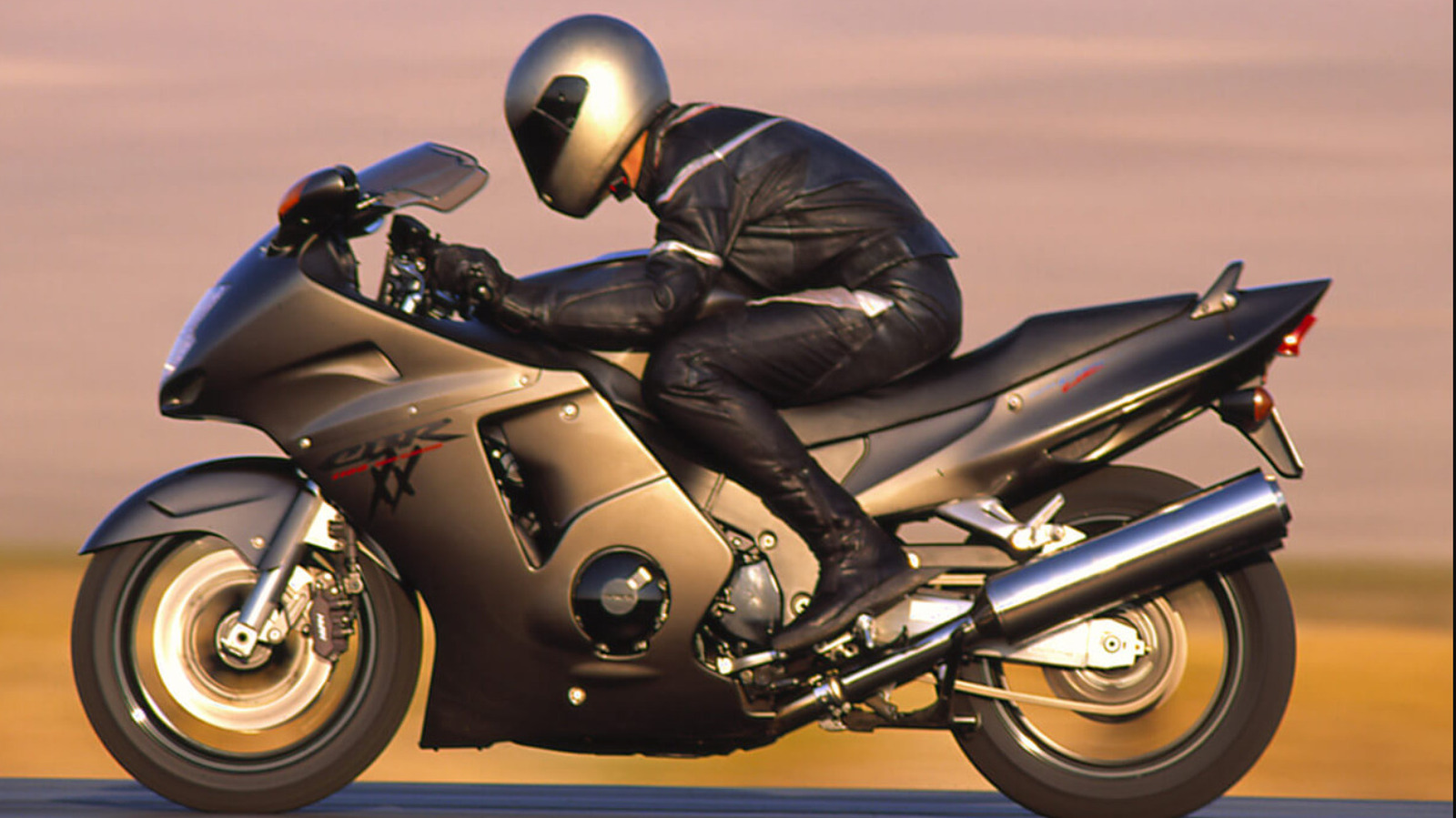
Honda's CBR1100XX earned its "Super Blackbird" nickname for good reason. When it debuted in 1996, the 1,137-cc inline-four screamed to a claimed 178 mph, making it the fastest factory motorcycle on the planet. That record held for three years until other manufacturers recognized the market opportunity and began chasing the top-speed crown with their own superbikes.
The CBR1100XX represented the apex of a specific era in motorcycle design. Manufacturers engaged in an outright speed war throughout the 1990s, using increasingly powerful engines and aggressive aerodynamic designs to claim bragging rights. Honda's Blackbird dominated that conversation until 1999, when the displacement wars and competitive pressure from rivals forced the company to surrender its throne.
Today's fastest production motorcycles dwarf the Blackbird's performance. The list includes machines like the Kawasaki Ninja H2, which produces 310 horsepower and achieves speeds exceeding 186 mph in controlled conditions. Suzuki's Hayabusa, launched in 1999 as a direct response to Honda's supremacy, initially claimed 188 mph and sparked an industry-wide gentleman's agreement to cap speeds at 186 mph. That agreement eventually fractured as manufacturers pursued electronic speed limiters and more creative marketing claims around top speed.
What made the Blackbird special extended beyond raw velocity. The 1,137-cc engine delivered 137 horsepower, remarkable for its era. The bike featured a fully faired design that minimized wind resistance and allowed the engine to push air efficiently rather than fighting it. Riders praised the Blackbird's stability at extreme speeds, an advantage that came from Honda's meticulous engineering and attention to weight distribution.
The competitive landscape shifted dramatically after the CBR1100XX's reign ended. Kawasaki, Suzuki, Yamaha, and BMW all pursued hyperbike platforms with turbocharging, supercharging, and displacement increases. The Kawasaki Ninja H2 Super Charger, introduced in 2015, obliterated previous records with forced induction. Ducati's Panigale V4 and BMW's S1000RR shifted focus from pure top speed toward acceleration and handling, reflecting changing customer priorities.
The CBR1100XX production run continued until 2006, giving Honda a decade-long window to refine the formula. Later models received updates to engine tuning and aerodynamics, but the fundamental architecture remained unchanged. The Blackbird represented a complete design statement from Honda, not a platform constantly chased by incremental upgrades.
Modern superbikes have abandoned the top-speed crown entirely. Today's fastest motorcycles prioritize corner speed, launch acceleration, and electronics integration. The CBR1100XX's 178 mph record seems almost quaint against contemporary machines achieving 186 to 200 mph in claimed tests. Yet the Blackbird remains culturally significant among enthusiasts who remember when a Japanese motorcycle company could claim the world's fastest production vehicle, full stop.