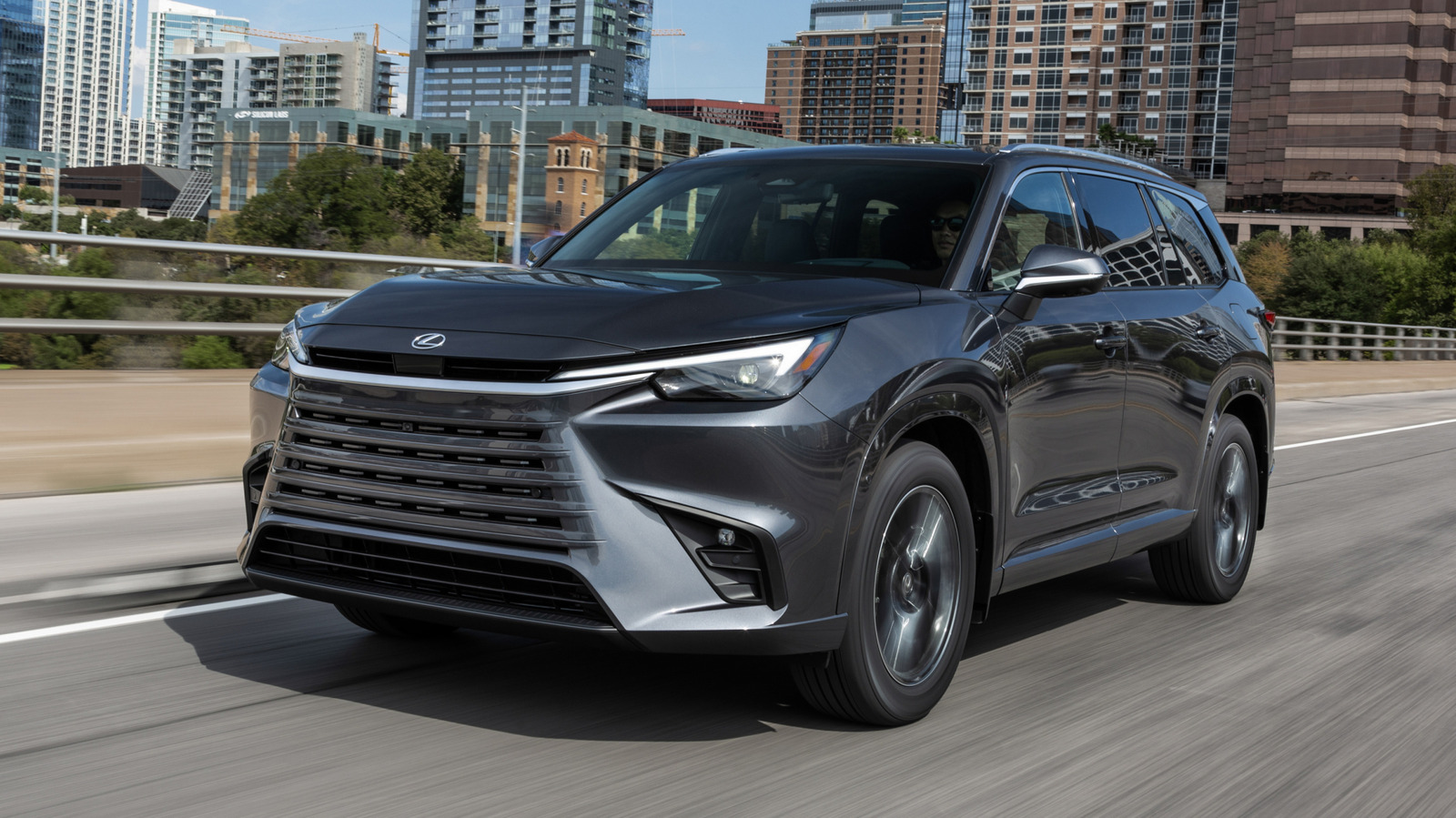
The four-cylinder engine has become the default setup for today's largest sport utility vehicles, marking a seismic shift in how manufacturers balance size, efficiency, and cost across their lineups.
Automakers now equip full-size and three-row SUVs with turbocharged four-cylinder engines where V6s and V8s once dominated. This transition reflects tighter fuel economy regulations, consumer pressure on fuel costs, and engineering advances that allow smaller-displacement engines to deliver adequate power and torque without the weight and expense of larger engines.
The trend spans multiple segments. The Ford Expedition, America's largest three-row SUV, offers a 3.0-liter turbocharged four-cylinder as its base engine. Chevrolet's Tahoe and Suburban, General Motors' full-size flagships, also come standard with turbo four-cylinder engines. Even premium brands have embraced this strategy. The BMW X5 and Mercedes-Benz GLE offer turbocharged four-cylinders alongside their traditional six-cylinder options. Volkswagen's Atlas, a three-row midsize SUV, defaults to a 2.0-liter turbo four. The Hyundai Palisade and Kia Sorento, two Korean competitors in the three-row space, both rely on four-cylinder power.
Performance capabilities have improved dramatically. Turbocharging technology allows four-cylinder engines to generate 250 to 300 horsepower and 280 to 350 pound-feet of torque, outputs that satisfy most buyers. Eight-speed and ten-speed automatic transmissions pair seamlessly with these smaller engines, improving acceleration and highway fuel economy simultaneously.
Cost savings drive adoption from both manufacturers and consumers. Four-cylinder engines cost less to produce than six and eight-cylinder alternatives. Buyers see lower purchase prices and reduced fuel expenses over ownership. Maintenance costs decline as well. Fewer spark plugs, simpler cooling systems, and lighter overall engine weight mean less wear on supporting components.
Fuel economy gains prove substantial. A turbocharged four-cylinder in a full-size SUV achieves 20 to 25 miles per gallon in combined driving. Equivalent V6-powered models from the previous generation managed 17 to 20 mpg. That efficiency advantage compounds across a vehicle's lifetime, particularly for owners who drive high mileage.
Turbocharged four-cylinder engines do carry trade-offs. Turbo lag, though minimized by modern engineering, still exists at low RPMs. Heat management becomes more complex. Oil change intervals sometimes compress to 5,000 miles instead of 10,000. Towing capacity can suffer compared to larger-displacement engines, though most four-cylinder SUVs still handle 5,000 to 7,000 pounds adequately.
Consumer acceptance has accelerated the shift. Early adopters reported reliable ownership experiences. Word-of-mouth improved the perception of four-cylinder performance. Dealers now stock more turbocharged models than naturally aspirated engines.
This transition reflects broader industry economics. Regulatory pressure from the EPA and California Air Resources Board pushes manufacturers toward lower emissions and better fuel economy. Electric vehicles will eventually replace internal combustion engines entirely, but the intervening years belong to efficient, downsized gas engines. Four-cylinders represent the practical compromise between performance and environmental responsibility in today's market.