# The Rarest SUVs on American Roads: Only Five V12 and W12 Models Ever Sold New Here
Twelve-cylinder engines in sport utility vehicles remain exotic rarities in America. Exactly five models with V12 or W12 powerplants reached U.S. showrooms as new vehicles, representing a tiny slice of the luxury SUV market dominated by turbocharged engines and increasingly by electrification.
This exclusivity stems from several hard truths. V12 and W12 engines demand engineering sophistication that justifies prices well into six figures. Fuel economy ratings turn away cost-conscious buyers. Emissions regulations, especially California's tough standards, make twelve-cylinder development risky for manufacturers betting on compliance. Most critically, the American market has never shown sustained appetite for these engines outside specialty segments.
The Lamborghini LM002 kicked off this rare lineage in the 1980s, though in limited numbers. This was the exotic Italian brand's first attempt at an SUV, powered by a 5.2-liter V12 generating 444 horsepower. It established the template: brutish, impractical, and wildly expensive. Few Americans ordered one.
Bentley entered the segment with the EXP 9F concept, which evolved into the Bentayga. The Bentayga's 6.0-liter W12 twin-turbo engine produces 608 horsepower and 664 pound-feet of torque. Bentley sold the W12 Bentayga in America from 2016 onward, targeting ultra-wealthy buyers who valued hand-stitched interiors and three-ton curb weights over practicality.
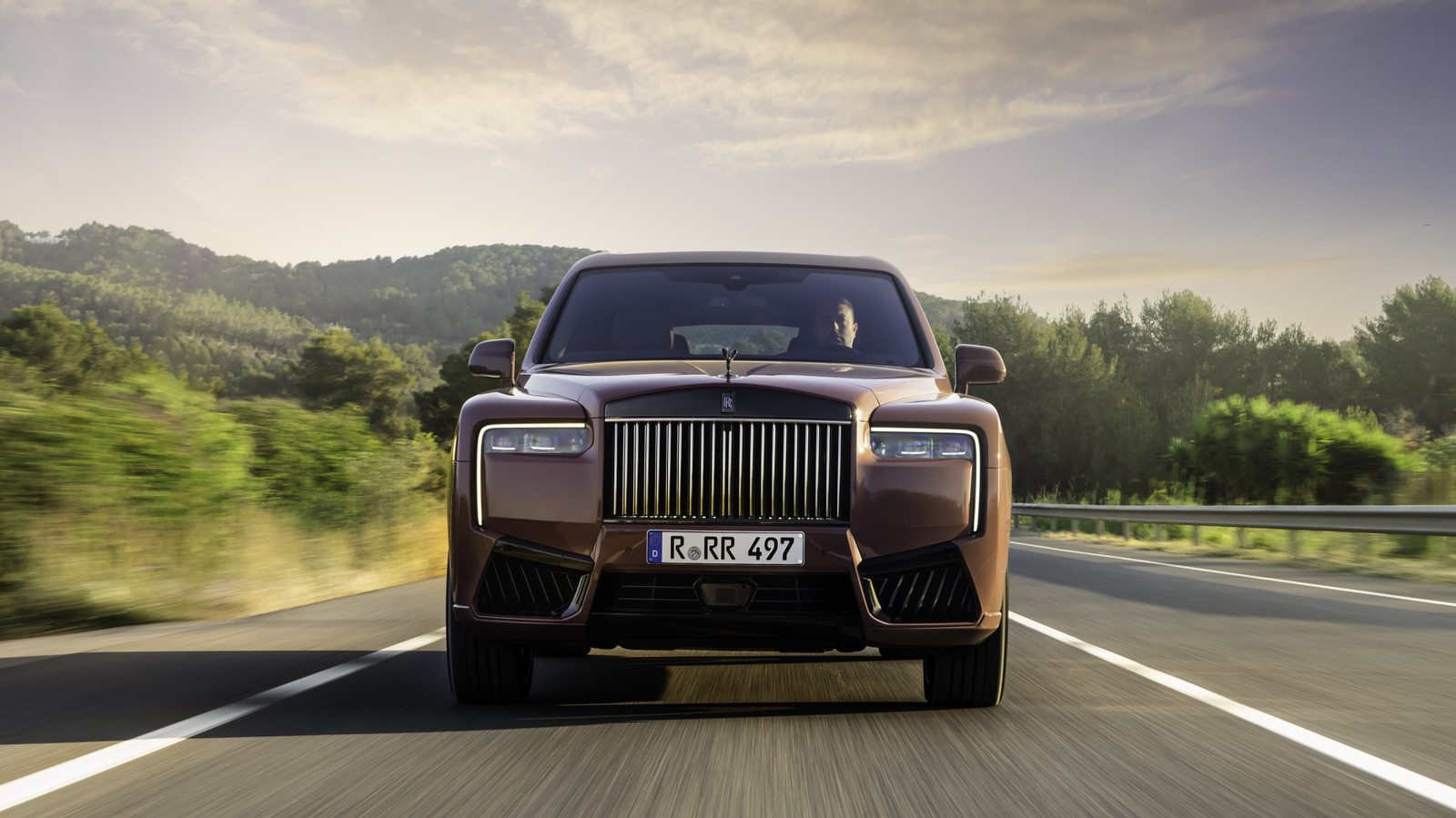
Rolls-Royce followed with the Cullinan, arriving in America around 2019. The Cullinan pairs a 6.75-liter V12 with twin turbochargers, delivering 563 horsepower. This SUV represents peak automotive excess: a $330,000-plus ultra-luxury machine where rear-seat passengers enjoy more space than the driver. Rolls-Royce built the Cullinan specifically to serve customers who refuse to drive sedans.
Lamborghini returned with the LM002 reboot, a modern interpretation released as a limited-production affair. The updated LM002 carried a 6.5-liter naturally aspirated V12 producing 570 horsepower. Its angular styling deliberately echoed the original 1980s model, though the mechanicals belonged firmly in the 21st century.
Aston Martin's DBX entered the American market with a different engine strategy initially, but the DBX V12, launched in 2023, represents the fifth contender. Its 5.2-liter V12 produces 533 horsepower and targets customers crossing over from the brand's sports car lineup into the SUV world.
The rarity reflects economic physics. Manufacturing a V12 engine requires extensive tooling, extensive development, and limited sales volume. Most premium manufacturers concluded that buyers accept twin-turbocharged V6 or V8 engines with comparable performance and superior efficiency. Porsche's Cayenne Turbo S and BMW's X7 M60i deliver superb performance without the twelve-cylinder complexity.
Environmental pressure accelerates this trend. Europe's CO2 regulations make V12 engines increasingly unviable. China's market favors electric and plug-in hybrid drivetrains. America's regulatory environment, while less restrictive than Europe's, still penalizes large-displacement, thirsty engines through EPA ratings and consumer choice patterns favoring efficiency.
These five represent a closing chapter in automotive history. Future ultra-luxury SUVs will likely pair hybrid systems with smaller turbocharged engines or go fully electric, as Lamborghini signals with its LM002 Hybrid. The V12 SUV era already belongs to collectors and automotive historians.