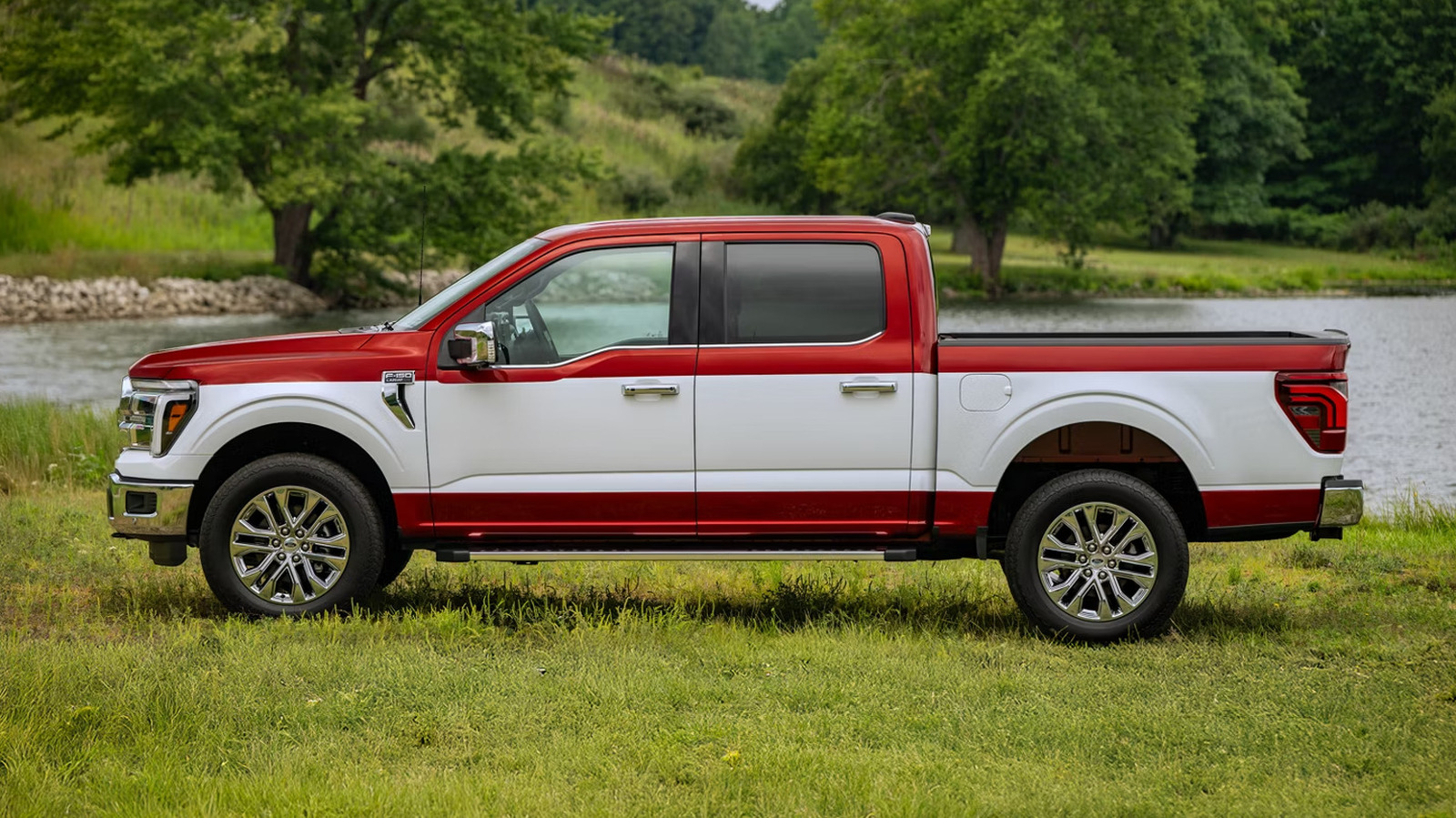
Ford is betting that nostalgia and visual appeal can overcome buyer hesitation in an increasingly stretched auto lending market. The automaker plans to offer retro two-tone paint options on the 2027 Ford F-150, hoping the classic aesthetic will attract customers willing to commit to longer financing terms.
The move reflects a broader industry challenge: average new vehicle loan terms now stretch to seven years or longer, with many buyers financing trucks well into the 2030s. Ford's strategy targets truck buyers specifically because the F-150 segment remains one of America's most profitable vehicle categories, even as affordability pressures mount.
Two-tone paint schemes evoke the golden era of American trucks from the 1950s through 1970s, when contrasting colors on cab roofs and bed panels defined pickup design. Ford hasn't officially confirmed specific color combinations, but the brand historically paired white with turquoise, red with cream, and similar period-correct pairings. This approach mirrors successful nostalgia plays in the market, including Chevrolet's recent retro color launches on the Silverado and GMC's heritage-inspired aesthetics on the Sierra.
The tactic addresses real market dynamics. Ford's own data shows buyers increasingly value visual differentiation and personalization, particularly in the truck segment where ownership pride runs high. Customization options, including paint, have historically commanded strong attachment rates and profit margins for dealers. A distinctive two-tone F-150 costs more to produce than single-color equivalents yet commands premium pricing that buyers appear willing to accept.
However, the underlying problem remains unchanged. Extended loan terms now stretch the effective cost of vehicle ownership across seven years or more, meaning buyers pay substantially more in interest. A truck financed at 7.5 percent interest over 84 months costs roughly 30 percent more than the purchase price alone. Ford's retro paint program doesn't solve affordability, it merely makes the purchase feel more appealing emotionally during the sales process.
The F-150 faces mounting competition from Chevrolet Silverado, Ram 1500, and increasingly, electric alternatives like Ford's own F-150 Lightning. Two-tone paint won't shift fundamental purchasing dynamics, but it does create social media buzz and dealer lot differentiation that influences retail traffic.
Ford's paint gambit also signals confidence in F-150 demand through 2027 despite economic uncertainty. The automaker continues full-size pickup production at scale, betting that truck demand remains structural rather than cyclical. This contrasts with pessimistic industry forecasts suggesting consumer spending will weaken further as loan delinquencies rise and used vehicle inventory normalizes.
The 2027 F-150 will arrive alongside updated powertrains, revised interior technology, and potential hybrid options. Retro paint becomes one piece of a broader refresh designed to justify higher pricing in an era when buyers already stretch their budgets dangerously thin. Whether nostalgic aesthetics alone persuade buyers into longer debt cycles remains an open question, but Ford clearly believes visual storytelling still moves metal in tough times.