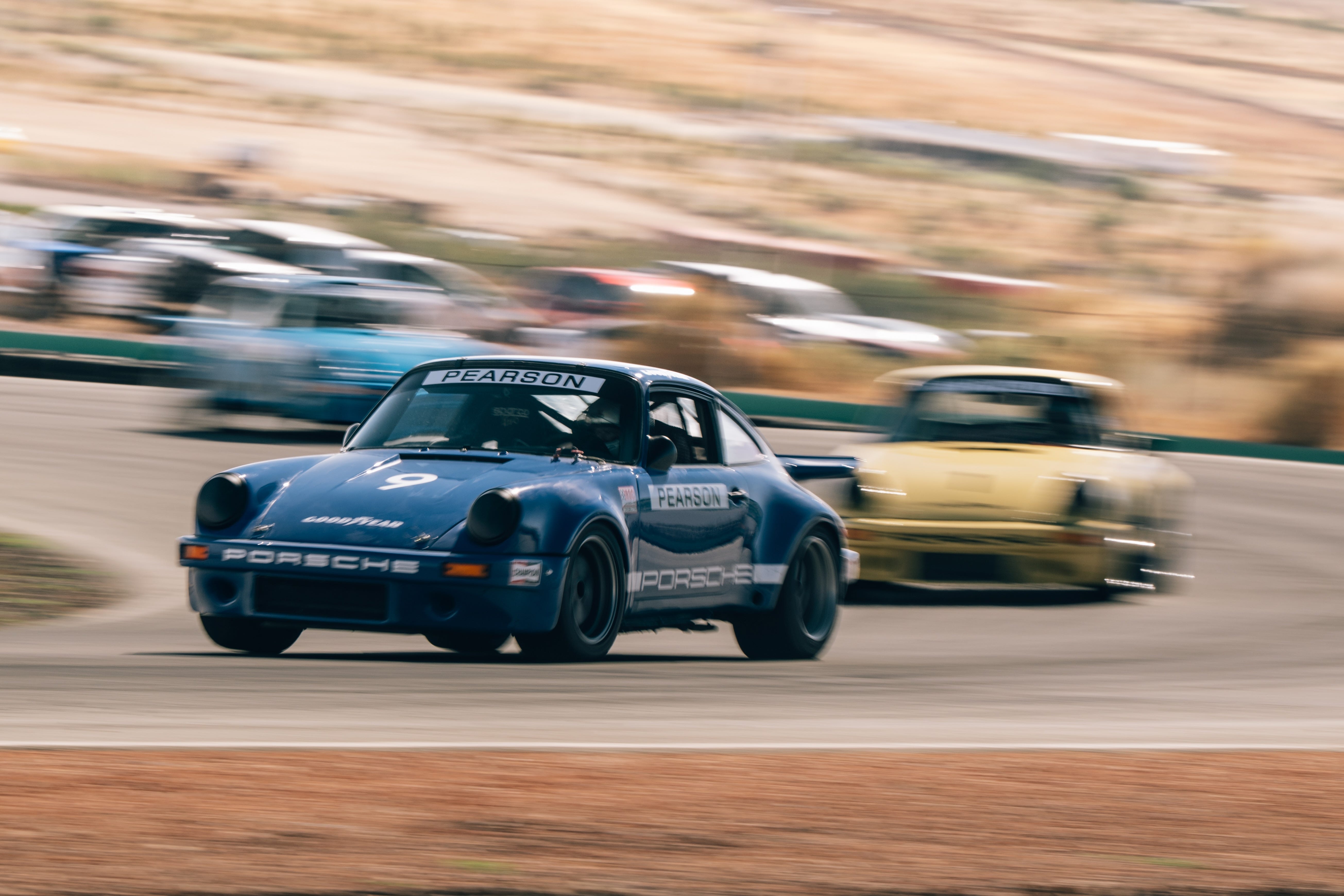
Willow Springs Raceway, the legendary desert racing venue near Rosamond, California, unveiled substantial infrastructure improvements at its two-year progress milestone. The facility's ownership demonstrated fresh pavement work, new buildings, and operational upgrades designed to modernize the 2.5-mile road course without compromising its storied character.
The celebration drew a diverse crowd. Drift competitors showcased cars on the newly paved surfaces. Vintage racers ran laps on the historic circuit. The facility also offered dirt-slinging ridealongs, giving attendees firsthand experience of the track's handling characteristics.
Willow Springs holds particular significance in automotive culture. Built in 1958, the track has hosted amateur racing, professional competitions, high-performance driver education, and film and television production work. The venue remains one of the few accessible, naturally-banked asphalt tracks in North America. Its elevation near 2,400 feet and exposure to desert heat create unique test conditions that manufacturers and racing teams value.
The two-year investment cycle reflects broader industry dynamics. Racing facilities across America face aging infrastructure challenges. Tracks require constant maintenance to manage weather damage, subsurface movement, and increased traffic from expanded programming. Willow Springs' decision to resurface pavement and add new structures aligns with survival strategies employed by other independent tracks. Modernization efforts balance capital investment against preserving the authentic character that makes venues like Willow Springs irreplaceable.
New buildings likely include improved spectator amenities, paddock facilities, or administrative space. These additions support the track's business model, which depends on multiple revenue streams. Driver education programs, private testing days, rental programs, and event hosting generate income beyond traditional race scheduling. Enhanced facilities attract corporate clients and manufacturers seeking controlled environments for vehicle testing.
The track's vintage racing programming holds particular appeal. Historic racing attracts dedicated competitor bases and spectators with disposable income. These events often showcase cars from the 1950s through 1980s, including Porsches, Ferraris, Jaguars, and early muscle cars. Vintage racing also supports a secondary market for restoration services and specialty parts vendors.
The drift car events underscore how modern tracks diversify. Drifting attracts younger audiences and creates social media content that drives attendance. It also generates revenue through competition fees and spectator admissions while filling calendar slots that might otherwise sit empty.
Willow Springs faces competition from other Southern California venues. Auto Club Speedway in Fontana hosts both road racing and oval track programming. Various parking lot events occur throughout the region. However, Willow Springs occupies a unique position. Its layout accommodates multiple racing formats simultaneously. Its naturally banked sections provide authentic handling challenges that engineered tracks cannot replicate. Its remoteness from urban centers offers genuine seclusion for sensitive testing programs and film work.
The investment announcement signals confidence in the track's long-term viability. Independent racing facilities operate on thin margins. Large capital expenditures on pavement and buildings represent commitments to remain operational and competitive. Management clearly believes demand exists to justify improvements.
For drivers and enthusiasts, better pavement means faster lap times, improved safety margins, and enhanced racing quality. For the industry, Willow Springs' continued investment preserves rare American racing infrastructure. The track serves as both historical artifact and functional test laboratory.