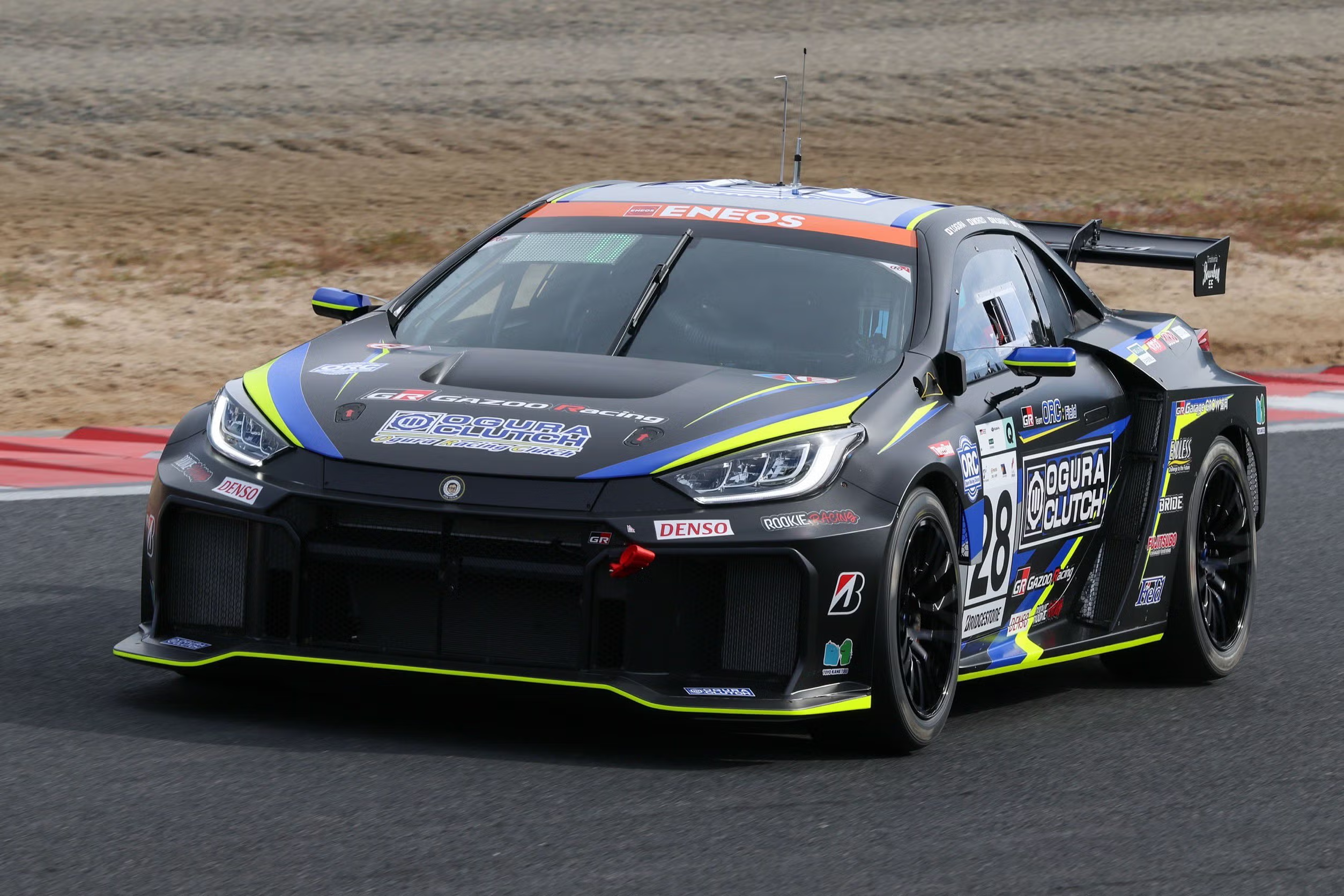
Toyota's Gazoo Racing division has unveiled a track-focused prototype that signals the automaker's intentions for the next generation of its iconic mid-engine sports car. The machine will contest Japan's Super Taikyu racing series, armed with a turbocharged four-cylinder engine and unmistakable MR2 styling cues.
The prototype's proportions mirror the compact, mid-engine layout that defined the original MR2 lineage. Toyota has maintained the signature proportions: short overhangs, a central engine bay, and a low stance optimized for the racetrack. The turbo four-cylinder powertrain aligns with Toyota's current performance philosophy. This engine choice contrasts sharply with the naturally aspirated engines of the original MR2 generations, reflecting both modern efficiency demands and Toyota's desire to prove forced-induction engineering on a high-profile racing platform.
The Super Taikyu series serves as the testing ground. Japan's premier domestic racing circuit provides Toyota with real-world validation before any road-going variant reaches production. This strategy mirrors how manufacturers use racing programs to develop technology and refine chassis dynamics under extreme conditions. Super Taikyu competition demands reliability, efficiency, and outright pace, making it an ideal crucible for prototype development.
For Toyota, this move signals confidence in the mid-engine sports car market segment. The original MR2, which launched in 1984, carved out a distinct niche between affordable roadsters and exotic supercars. The car gained a reputation for approachable handling and enthusiast appeal. After the third generation ended production in 2007, Toyota stepped away from this segment entirely, ceding territory to competitors like Porsche's Cayman line and Lotus models.
The timing reflects broader industry shifts. Consumers increasingly seek driving engagement over raw horsepower. Lightweight, mid-engine platforms deliver superior weight distribution and balance compared to conventional front-engine layouts. Toyota's GR (Gazoo Racing) division has established credibility with models like the GR Corolla, GR86, and GR Supra, proving Toyota can satisfy performance enthusiasts without compromising brand identity.
The turbocharged four-cylinder approach offers flexibility. Current regulations across multiple motorseries favor forced-induction engines for emissions compliance and fuel economy targets. By proving the powerplant's capability in racing, Toyota builds confidence for production applications. A turbocharged four-cylinder in a lightweight mid-engine chassis could deliver impressive power-to-weight ratios comparable to naturally aspirated six-cylinder engines of the 1990s MR2 generation.
Super Taikyu racing typically features extensively modified road cars competing in endurance formats. Toyota's willingness to run a prototype rather than a heavily modified road car indicates serious development intentions. The prototype phase allows engineers to test various chassis configurations, aerodynamic solutions, and powertrain mappings without production constraints.
Industry observers expect announcement details on a production MR2 successor within the next few years. Toyota has demonstrated through its GR lineup that performance variants can achieve profitability and brand distinction. A mid-engine sports car would complete Toyota's performance portfolio, filling a gap below the Supra while offering something fundamentally different from Toyota's SUV-heavy lineup.
The prototype's racing debut represents more than just another motorseries entry. It shows Toyota's commitment to rebuilding its sports car credentials while leveraging racing technology to accelerate development. For enthusiasts who mourned the original MR2's retirement, this machine could mark the beginning of redemption.