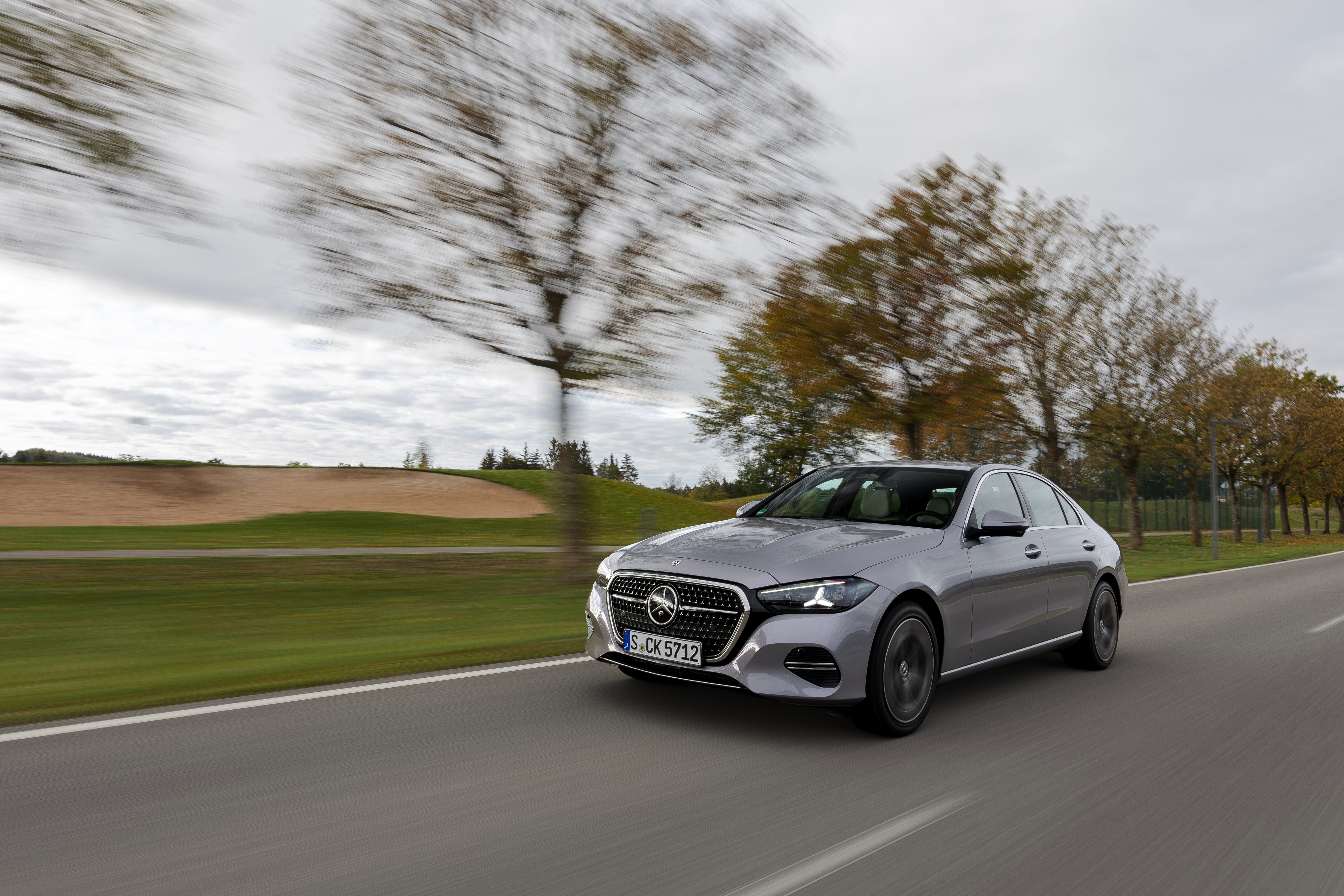
Mercedes-Benz is drawing a stark line between its compact sedan lineup for 2027. The new C350 receives a full refresh while the C300 remains largely carryover, a strategic move that reshuffles the entry-luxury hierarchy and pushes buyers toward the more expensive variant.
The C350 arrives with comprehensive updates across design, technology, and powertrain architecture. Mercedes has overhauled the exterior with sharper styling cues, revised grille treatment, and refreshed LED lighting signatures that align with the brand's current design language. Inside, the cabin gets the latest generation of Mercedes' MBUX infotainment system, featuring improved touchscreen responsiveness and integrated artificial intelligence features. The software now handles natural language voice commands more effectively and learns driver preferences to personalize climate and seat adjustments automatically.
On the mechanical side, the C350 debuts a turbocharged four-cylinder engine paired with a 48-volt mild-hybrid system. This setup delivers better efficiency than the previous generation while maintaining or improving power output. The transmission architecture has been refined, offering faster shift response and smoother power delivery. Suspension tuning receives attention too, with updated dampers and stiffer bushings designed to reduce body roll during cornering while maintaining ride comfort on rough pavement.
Safety equipment on the C350 includes upgraded active driver assistance systems. Mercedes has enhanced its collision avoidance radar, added new camera sensors, and integrated a more capable autonomous emergency braking system. Lane-keeping assist now functions at higher speeds, and the system predicts road hazards rather than simply reacting to them. Adaptive cruise control operates more smoothly in stop-and-go traffic.
The C300, by contrast, carries forward with minimal revisions. It retains the previous generation's exterior design language, the older MBUX interface, and the existing engine lineup without hybrid integration. Essentially, it becomes the budget gateway to the C-Class nameplate, though "budget" remains relative in a segment where entry pricing starts above $45,000. Mercedes maintains the C300 to capture price-sensitive luxury buyers while using the C350 as the step-up option for those willing to spend approximately $5,000 to $7,000 more.
This strategy mirrors approaches used in the broader luxury market. BMW treats the 330i similarly as a carryover model while investing engineering resources into the 340i and higher variants. Audi follows suit with its A4 lineup. Mercedes recognizes that not every buyer needs the latest technology or most advanced powertrain, yet the company wants to concentrate its engineering investment in vehicles positioned higher on the profit curve.
For 2027, this separation creates a clear choice for C-Class shoppers. The C300 appeals to loyalists and price-conscious buyers comfortable with technology that's now a generation old. The C350 targets drivers seeking current-generation features, improved efficiency, and modern driver assistance systems. Mercedes essentially forces a decision between entry-level luxury and mid-level luxury within the same model family, effectively narrowing the traditional C300's audience and steering volume toward higher-margin variants. It's a calculated bet that the updated features and capabilities of the C350 justify its price premium and will convert more sales upward from the C300 alternative.