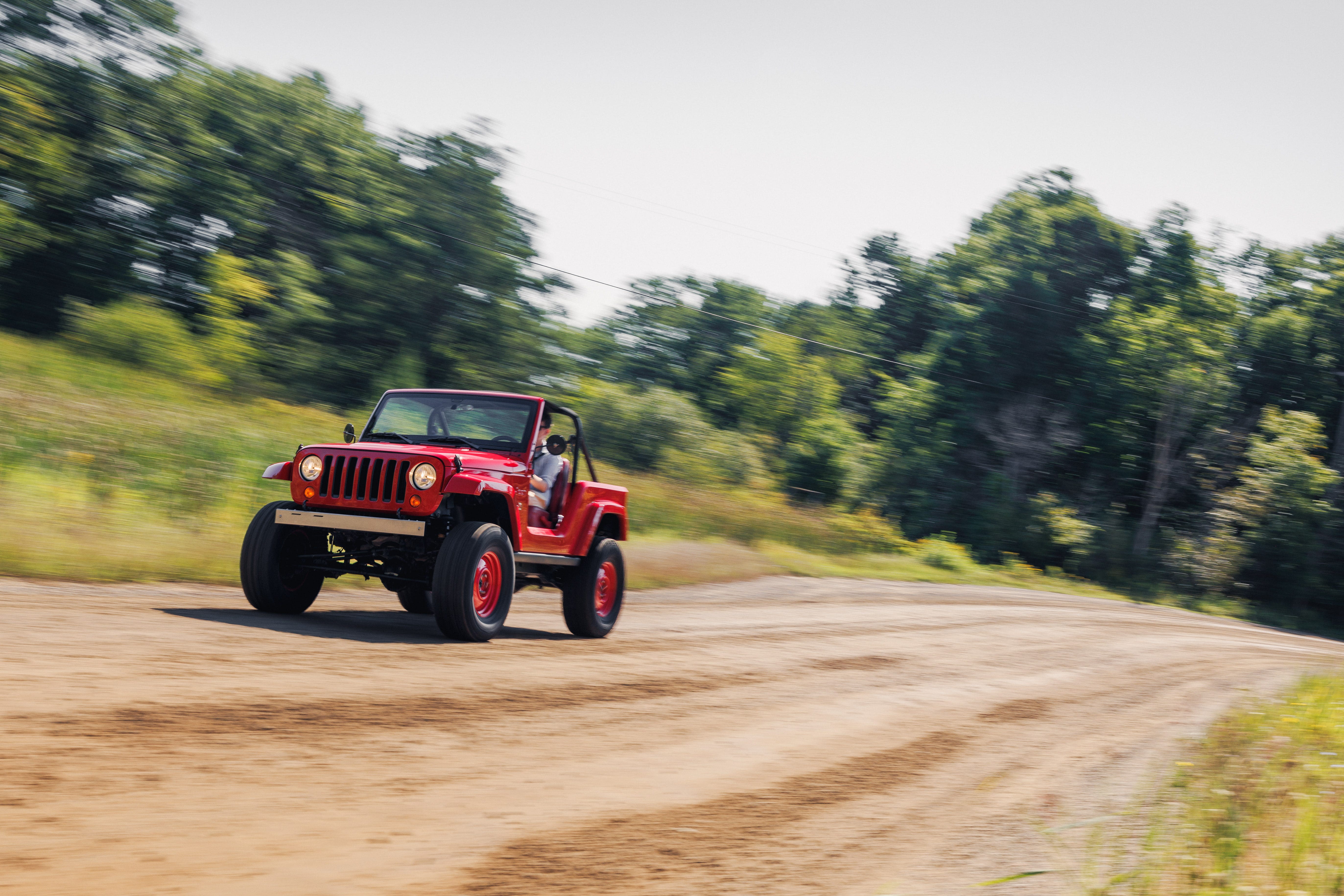
Jeep's Shortcut Easter Safari concept demonstrates the brand's core identity through radical simplification of a modern JK Wrangler Rubicon. Built in 2016 for Jeep's 75th-anniversary celebration, the Shortcut removes 14 inches of body length and replaces it with bespoke carbon-fiber panels hand-welded by Jeep technicians. The result looks so different from its donor vehicle that even Jeep fans struggled to identify its origins.
The transformation prioritizes the open-air experience that defines the brand. The Shortcut ditches doors and sports a Bimini roof with vintage-style roll hoop. It carries genuine CJ fender badges welded onto the JK chassis and features a vintage tailgate. Despite the body reduction, the wheelbase remains unchanged to preserve off-road capability.
Mechanically, the Shortcut runs a stock Pentastar 3.6-liter V-6 with automatic transmission paired to a Fox two-inch lift and 35-inch all-terrain tires. Locker and sway-bar disconnect switches hide on the steering column. The shortened front overhang delivers near-zero approach angles, allowing drivers to see their tires at all times. On-road stability suffers noticeably, with the concept feeling unfit for highway speeds beyond 45 mph.
The vehicle sees regular use on the trails. Since 2016, the Shortcut has returned to Moab nearly every year. Jeep reportedly uses it as a training vehicle for team members on their first Easter Safari rides due to its ease of use and fundamental connection to Jeep heritage. The concept still carries visible battle scars from trail use.