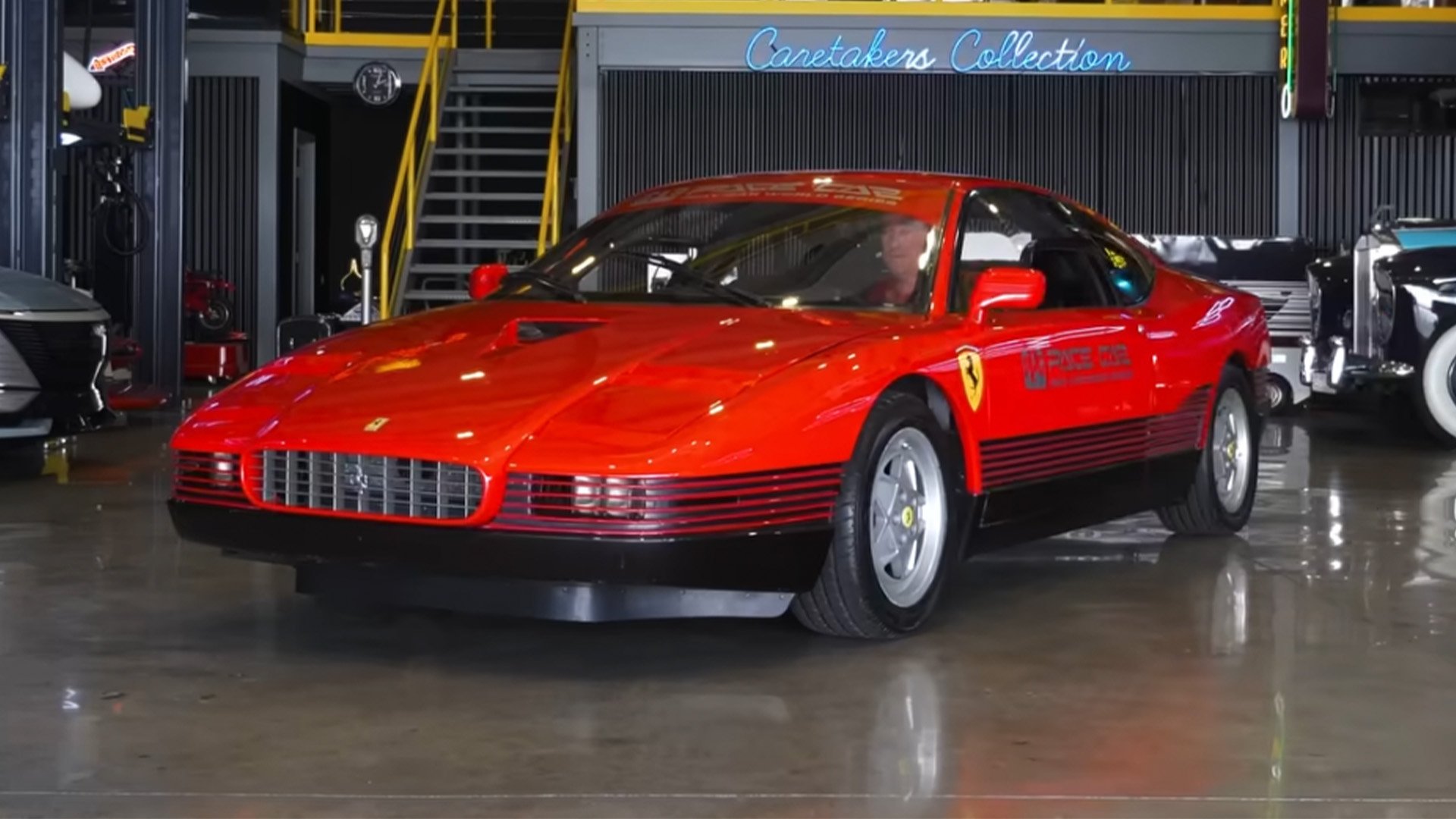
When PPG commissioned a series of one-off pace cars for the CART Indy Car World Series in the 1980s and 1990s, the company understood something that modern racing series seem to have forgotten: a pace car should be memorable, not mundane. Most series settle for production models with fancy paint jobs. PPG went a different direction. They asked manufacturers to dream big. One Ferrari Mondial T-based pace car, recently resurfaced at The Caretakers Collection, proves just how far that ambition could reach. Ferrari spent $1 million in 1987—roughly $3 million in today's money—transforming a production Mondial into something that captured the spirit of innovation that should define open-wheel racing.
The project itself was unusual for Ferrari. At the time, Ferrari's racing priority was Formula 1, not CART. In fact, the company had canceled its CART program about a year before unveiling this pace car in October 1987 at Laguna Seca. Yet Ferrari committed serious resources to the build. Rather than rely on Pininfarina, the design house that handled Ferrari's production cars, the automaker tapped I.DE.A., a Turin-based design firm with previous Fiat connections. The result was genuinely distinctive: a stretched wheelbase, streamlined front and rear fasciae wrapped in corrugated trim, and safety lights integrated into clear plastic flying-buttress sections around the engine cover. The interior received a complete overhaul in Kevlar and suede.
The Mondial itself was no performance icon. Unveiled at the 1980 Geneva Motor Show, the standard car lacked the style and performance of other Ferraris of its era. The Mondial T version used here produced 300 horsepower from its 3.4-liter V8, good for 6.3 seconds to 62 mph and a 158-mph top speed. Chassis modifications were almost certainly made to handle the consistent high speeds needed for safely pacing a CART field. According to a 2025 Forza magazine article, the car was on active duty from 1988 until 1991, though it wasn't particularly reliable—confirming what skeptics suspected about Italian engineering.
What matters now is that someone decided to save this oddity. It's fortunate that the Ferrari ended up at The Caretakers Collection, alongside a Tucker sedan and a GM Futureliner, where unusual vehicles are preserved rather than crushed or forgotten. Today's IndyCar bosses could learn from PPG's approach. A pace car shouldn't just wave the green flag. It should inspire. It should represent the creative ambition that makes racing worth watching. The Mondial pace car, for all its quirks and reliability issues, did exactly that.