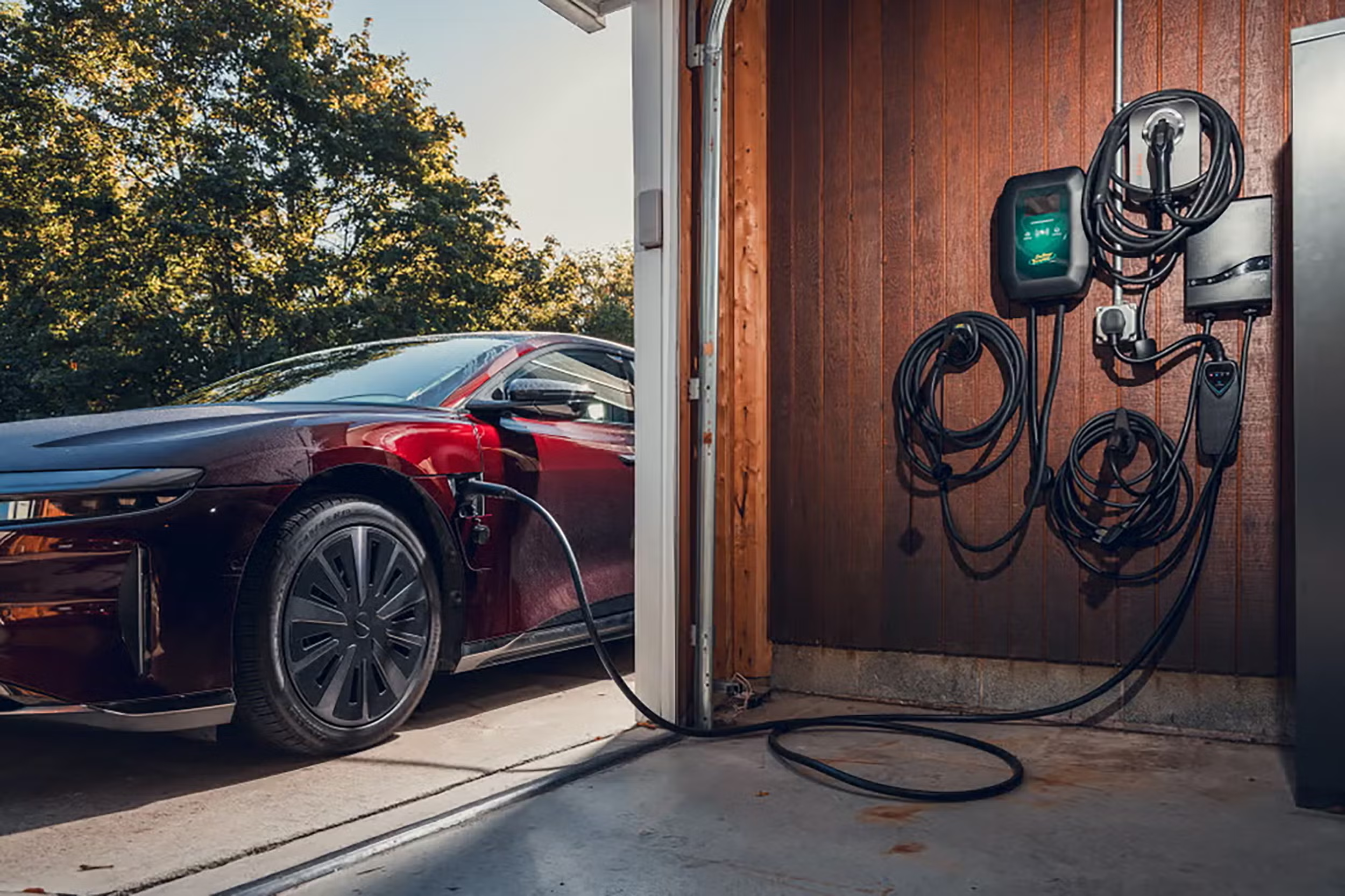
Home EV chargers cost between $400 and $700 upfront, though some EV owners may not need to purchase one if their vehicle came with a portable charging setup. Car and Driver tested six popular models by installing a dedicated 240-volt outlet and charging vehicles including a Tesla Model 3, Rivian R1T, BMW i4, Hyundai Ioniq 5, Kia EV9, and Lucid Air Pure over months of real-world use.
The Emporia Pro stands out for its integrated Vue 3 energy monitor, which installs into your electrical panel and adjusts charging output in real time to prevent exceeding household capacity. This eliminates the need for expensive electrical-service upgrades. The charger also features a thinner cable than Emporia's previous model. Buyers can also purchase the Vue 3 monitor and older Emporia Classic charger separately for $529 combined and achieve the same load-balancing capability. The Emporia Pro reacts to electrical loads faster than previous versions and offers J1772 or NACS plugs in hardwire or plug configurations at the same price.
Danlaw's CleverCharge uses an OBD-II dongle to track energy consumption, estimate real-world range, and send notifications about when to plug in based on driving behavior. It displays battery health ratings and received alerts about household voltage and check-engine codes during testing. The 25-foot cord is thinner than most competitors. However, the system's advanced features do not work with Tesla, Rivian, and Lucid vehicles, which lack OBD-II communication protocols compatible with the device.
Lectron offers entry-level equipment with Wi-Fi connectivity to control charge times and monitor energy use via app, priced lower than more sophisticated models. ChargePoint's Home Flex integrates with the company's public-charging network app, allowing users to add their vehicle and see battery-replenishment percentages and EPA miles added per charge.