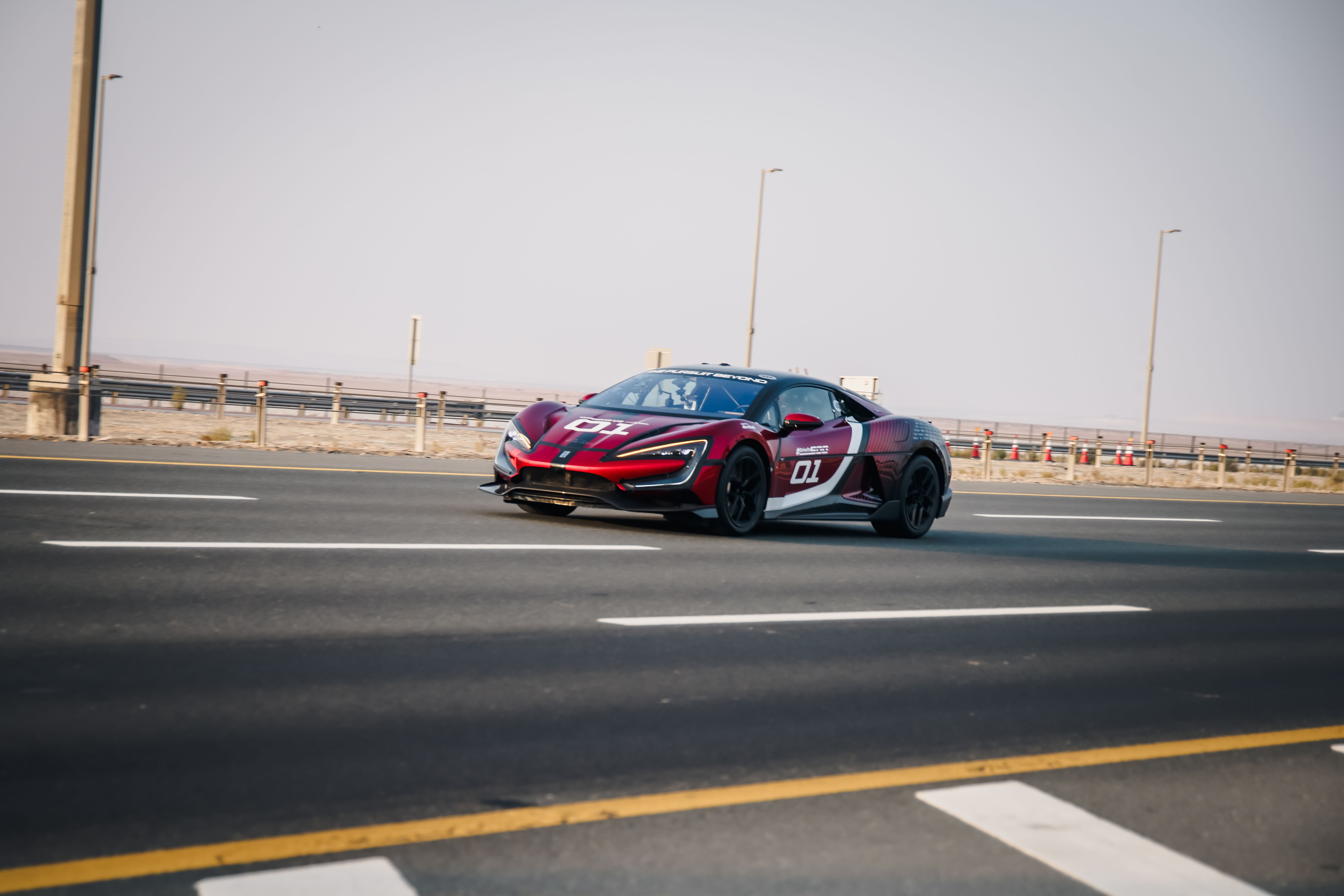
When the Yangwang U9 Xtreme hit 312 mph on a public road in Abu Dhabi's desert, it didn't just break a speed record—it shattered the assumption that electric vehicle performance records are novelty achievements designed for press releases. Yes, the car claimed two Guinness World Records simultaneously, one for the fastest production car overall and another for the fastest production electric car. Yes, it surpassed its own previous record of 308 mph set last year. But what matters more than the headline is what this achievement reveals about the maturity of EV battery technology and electric motor engineering at the highest levels.
The specifications tell the real story. Four electric motors producing over 3000 hp total, distributed one at each wheel for perfect torque vectoring control. A 1200-volt battery architecture capable of delivering 1800 kilowatts of power even at 20 percent charge, while simultaneously absorbing 700 kilowatts through regenerative braking. Electric dampers managing squat and dive. Active aerodynamic elements maintaining stability. These aren't gimmicks—they're sophisticated engineering solutions that required solving genuine technical challenges in battery thermal efficiency, power delivery precision, and structural dynamics.
The partnership with Indonesia's Giti Tires underscores how comprehensively this achievement demanded innovation across disciplines. A production EV capable of sustaining 312 mph required tire development specifically engineered to handle those tremendous speeds and forces. This wasn't about bolting existing components onto a chassis; it was about rethinking every system to function at hypercar levels of performance.
That Yangwang plans to build only thirty U9X models is almost beside the point, though it's worth noting that the 4.35-mile stretch of Abu Dhabi road used for the attempt was closed and meticulously cleaned of debris before the run. This wasn't a carnival stunt. It was a controlled demonstration of what BYD's battery chemistry and electric drivetrain architecture can actually achieve.
The automakers that built their reputations on speed records—Porsche, Ferrari, Bugatti—should take note. The age when only internal combustion engines could claim hypercar legitimacy has ended. BYD's luxury Yangwang division just proved that electric motors, advanced battery systems, and intelligent power management can not only match traditional speed records but dominate them. As these U9X hypercars prove their capabilities, expect manufacturers worldwide to stop viewing speed records as marketing theater and start viewing them as serious R&D demonstrations of technology that will eventually trickle down to production vehicles.