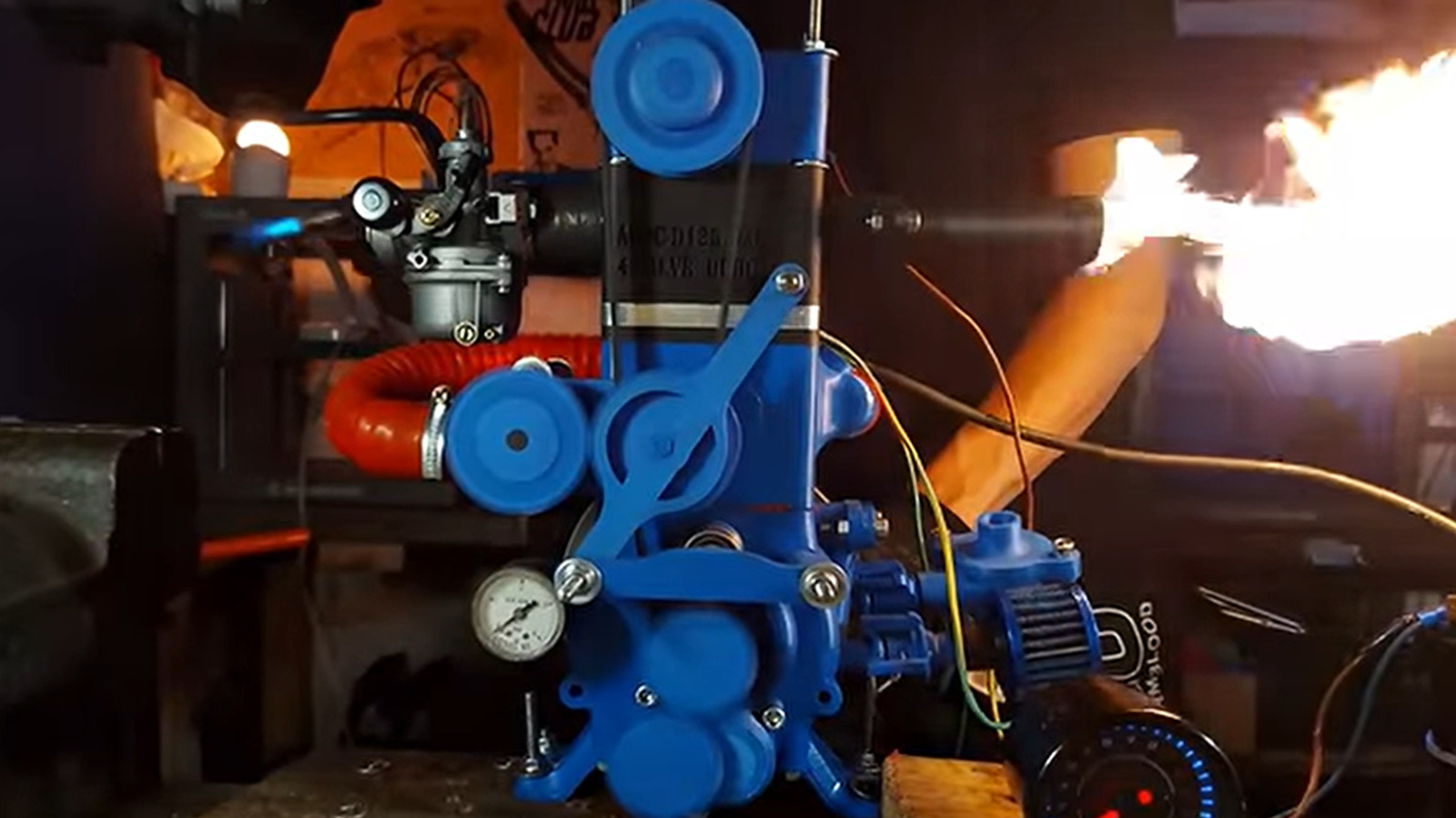
YouTuber Alexander's Laboratory built and ran 3D-printed plastic engines, including a single-cylinder and a parallel twin, demonstrating that plastic motors can function despite inherent material limitations.
Plastic melts at relatively low temperatures. ABS melts around 440 degrees Fahrenheit, while PLA melts around 340 degrees. Engine combustion chambers reach 2,500 degrees during the power stroke, which is why most engines use cast iron or aluminum. A previous attempt at a 3D-printed cylinder head failed under these conditions.
Alexander used machined steel strategically for cylinder walls, combustion chamber surfaces, crankshaft, and piston surfaces to handle heat and maintain proper sealing. He printed nearly everything else, including the water pump and drive gears.
The single-cylinder engine ran but experienced grounding issues due to the plastic's non-conductive nature. After running, the carbon-reinforced plastic connecting rod eventually failed and broke through the block.
The parallel twin engine performed better. Using beefed-up components, more metal parts, and improved heat management, the 250-cc twin ran continuously like a small motorcycle or scooter engine would.
Research cited in the report indicates that swapping metal components for 3D-printed plastic replacements cuts weight by 30 percent and costs by 15 percent. Structural lattice inside components could reduce weight further and improve coolant flow.