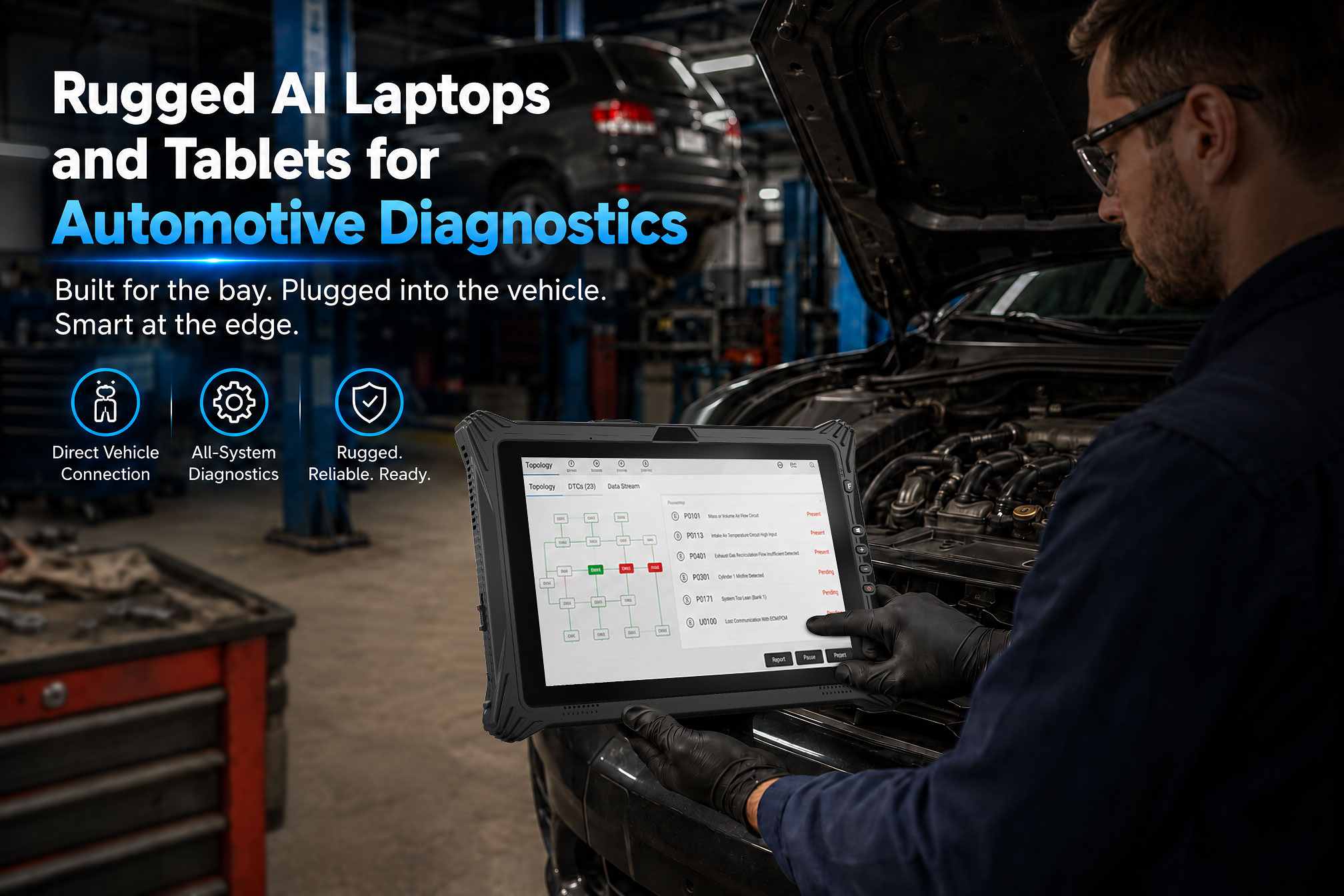
Emdoor Information, a Chinese rugged-computer maker, launched laptops and tablets designed to run diagnostic AI models locally in vehicle repair workshops. The devices avoid reliance on workshop connectivity and keep vehicle data on the device rather than sending it to cloud servers.
The hardware lineup ranges from Intel Core Ultra models with up to 33 TOPS of computing power to the AMD-powered EM-A15 with up to 126 TOPS. Both meet IP65 and MIL-STD-810H standards. The devices retain native RS232 and Gigabit Ethernet ports for direct connection to scan tools without adapters. Dual hot-swappable batteries allow technicians to change power without interrupting an ECU flash operation. Touchscreens respond to gloved or wet hands.
Emdoor structures the diagnostic workflow in three stages. First, the device reads a vehicle's ECU layout, fault history, and freeze-frame data to plan a diagnostic path and estimate labor time before the car enters the service bay. Second, it runs anomaly detection across live ECU data. Third, a local language model combined with a repair knowledge base converts fault codes into step-by-step repair guidance. Records sync to back-office systems once connectivity is available.
Workshops service vehicles with 60 to 100 electronic control units. Software-defined vehicles are raising computing demands in the aftermarket. Carmakers such as Nissan already use AI to speed up fault analysis. For independent workshops, the limiting factor is less the hardware than the data, since on-device models depend on repair information carmakers make available to them.