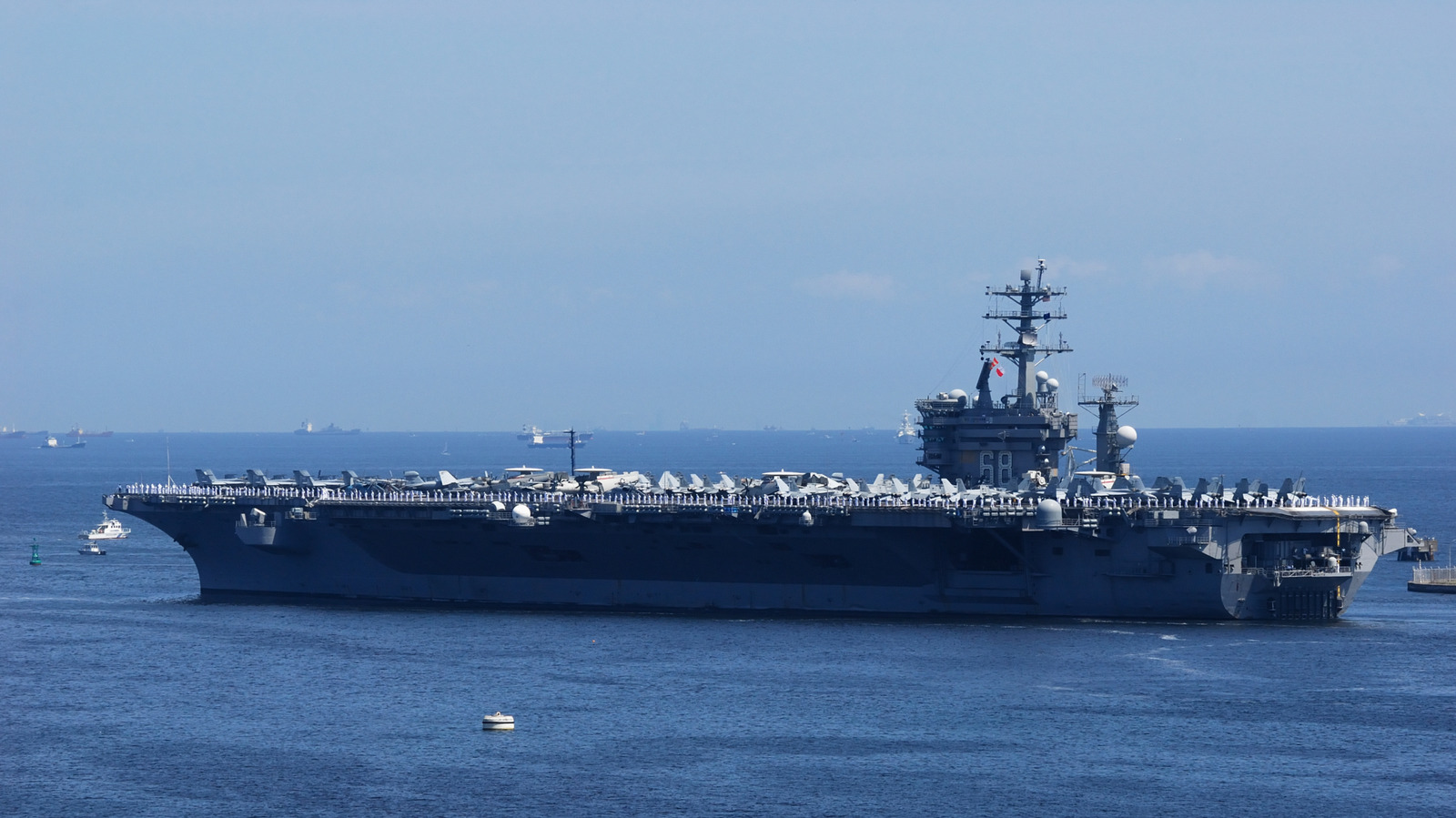
The USS Nimitz, commissioned in 1975 and the oldest active aircraft carrier in the U.S. Navy, will retire after 52 years of service. The ship measures 1,092 feet long, carries a crew of about 5,000, and can operate up to 90 aircraft depending on configuration. Two Westinghouse A4W nuclear reactors power four turbines, enabling speeds up to 30 knots. Nuclear power allows decades of operation before refueling, though the process itself takes years.
Nimitz-class carriers were designed for a 50-year service life. The ship has already exceeded that threshold, but its retirement has been delayed to March 2027 because its replacement, the USS John F. Kennedy, has not yet entered service. U.S. law requires the Navy to maintain a minimum of 11 active aircraft carriers.
The Nimitz became the longest-serving U.S. aircraft carrier in May 2026, surpassing the USS Enterprise. In April 2023, it recorded its 350,000th arrested aircraft landing. More than 200,000 sailors have served aboard over its lifetime.
Before scrapping can begin, the ship must be de-armed, have its nuclear reactors safely shut down and defueled, and have all weapons and harmful materials like lead and asbestos removed. Disassembly will follow years later once the ship is fully inactive and stripped.
The USS John F. Kennedy belongs to the newer Gerald R. Ford class. It uses electromagnetic catapult systems instead of traditional steam catapults, though President Donald Trump ordered later ships of the class to revert to steam. The Kennedy features more advanced radar and combat systems. Its A1B reactors are smaller than the Nimitz's but produce triple the energy output. Operating costs are estimated at $4 billion lower over the ship's life compared to Nimitz-class carriers.