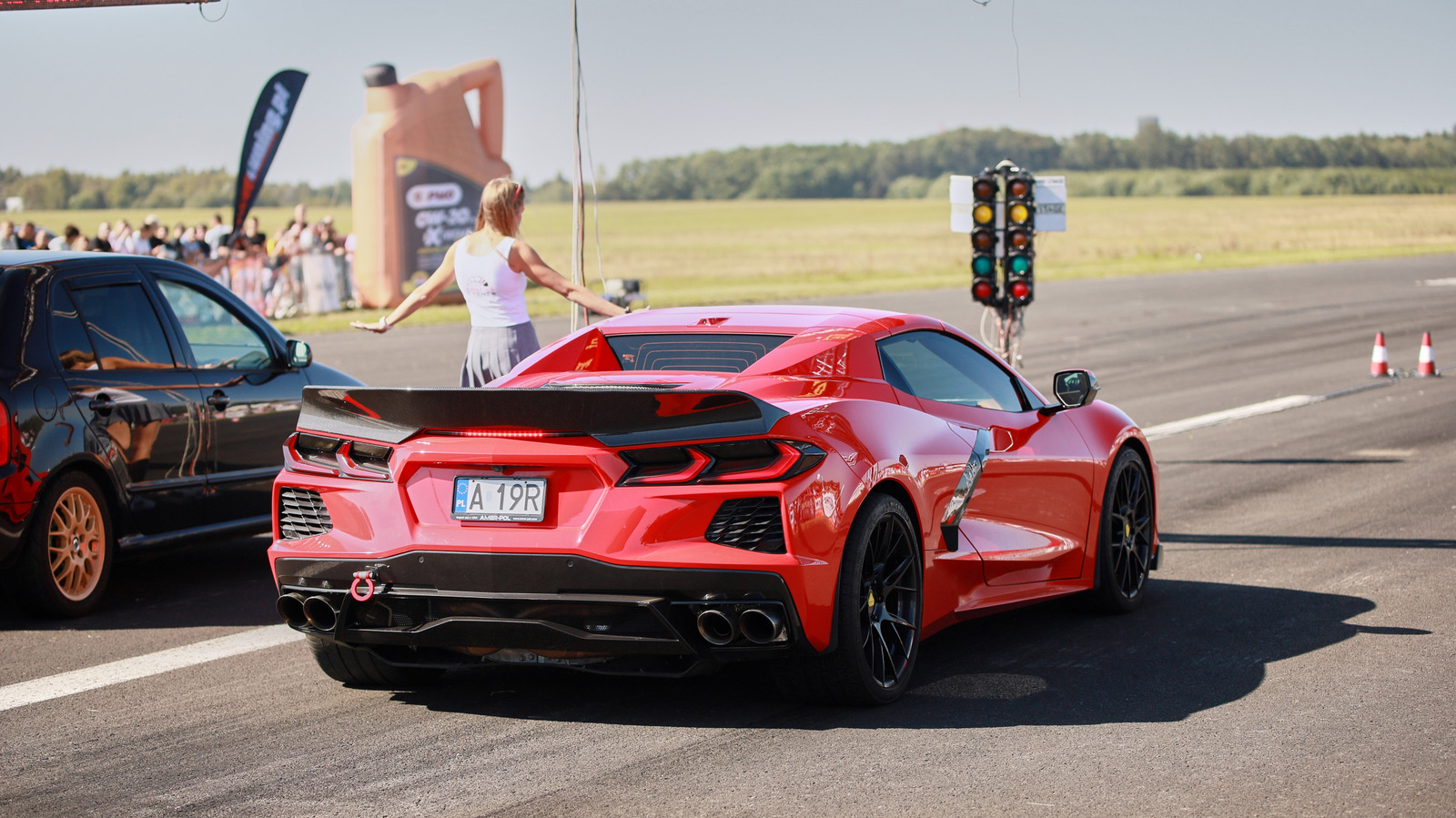
Launch control itself isn't inherently damaging to cars, but repeated full-throttle launches place heavy stress on the drivetrain, clutch, transmission, and axles. Automakers acknowledge this risk through owner's manual warnings and built-in safeguards.
BMW M4 owner's manual states plainly: "The use of Launch Control causes premature component wear." Kia's Stinger manual warns that constant use "can put enormous stress on transmission, engine, and drive shafts." Both companies recommend waiting until the break-in period ends before using the feature.
Manufacturers have engineered limits into their systems. Kia disables launch control when transmission fluid overheats. BMW M restricts repeated launches under certain conditions and caps exhaust temperature to five seconds on the manual M3 and M4. Lexus limits how many times the LFA's launch control can be used, advising owners to "cruise at a normal speed for approximately 10 minutes" between launches. BMW M says the M3 and M4 have "no limitation of the launch control's availability over its lifetime."
Porsche Livermore describes launch control as "engineered for thrills, not daily commutes."
The 2009 Nissan GT-R offers a cautionary example. One owner faced a $20,000 transmission repair bill not covered by warranty. Nissan later released new launch-control software for that generation and reprogrammed the 2010 model to be gentler on the transaxle. By 2011, the GT-R launched at 3,300 rpm using controlled clutch slip.
A tuned GT-R sitting cold at a car meet in Birmingham lost its transmission on launch in 2018. Wheel hop, the violent shudder that occurs when power exceeds tire grip, damages the driveline. Dodge addressed this on the Challenger SRT Demon with Launch Assist, which cuts driveline loads by up to 20%.