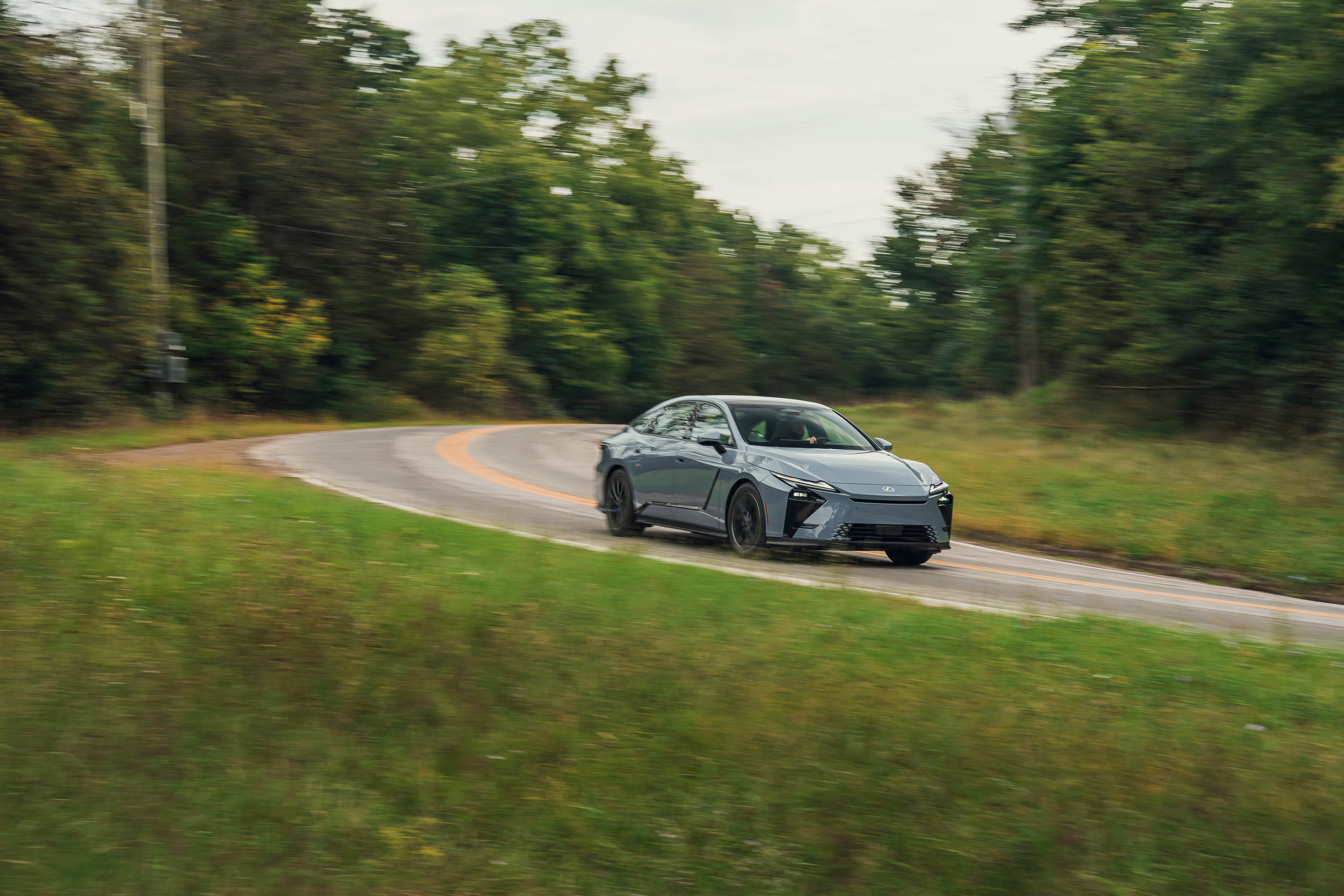
Lexus redesigned the 2026 ES sedan with a longer wheelbase, taller profile, and revamped interior, but preserved the quiet, comfortable driving character that built the model's reputation. The eighth-generation ES350h hybrid produces 244 horsepower, up from the previous ES300h's 215, and reaches 60 mph in 6.6 seconds when equipped with all-wheel drive. That represents a significant improvement over the front-wheel-drive ES300h F Sport's 7.9-second time, despite the new model weighing 352 pounds more at 4145 pounds.
The hybrid pairs a 2.5-liter four-cylinder engine with electric motors and prioritizes electric propulsion more than the outgoing setup. The gas engine stays well isolated from the cabin, producing just 67 decibels at 70 mph. EPA ratings are 46 mpg combined with front-wheel drive and 44 mpg with all-wheel drive, though the test car averaged 37 mpg overall and matched the highway estimate of 42 mpg in real-world testing. A 2019 ES300h achieved 45 mpg in the same highway test.
Suspension tuning emphasizes softness and controlled body motions. The 19-inch all-season tires absorbed road imperfections well, though the sedan posted 0.84 g on the skidpad and required 170 feet to stop from 70 mph. The steering provides satisfactory on-center feel and natural effort buildup.
The cabin features a 14.0-inch touchscreen integrated with fewer buttons than before, but Lexus retained a volume knob and tactile temperature controls plus defrost buttons. Steering-wheel controls are tactile despite appearing touch-sensitive. Climate and seat functions remain conventional.
The ES350h starts at $51,095 for the Premium trim, a $6380 increase over the previous ES300h. Lexus expects the hybrid to account for 80 percent of ES sales in the U.S., making the new electric ES a niche product for now.