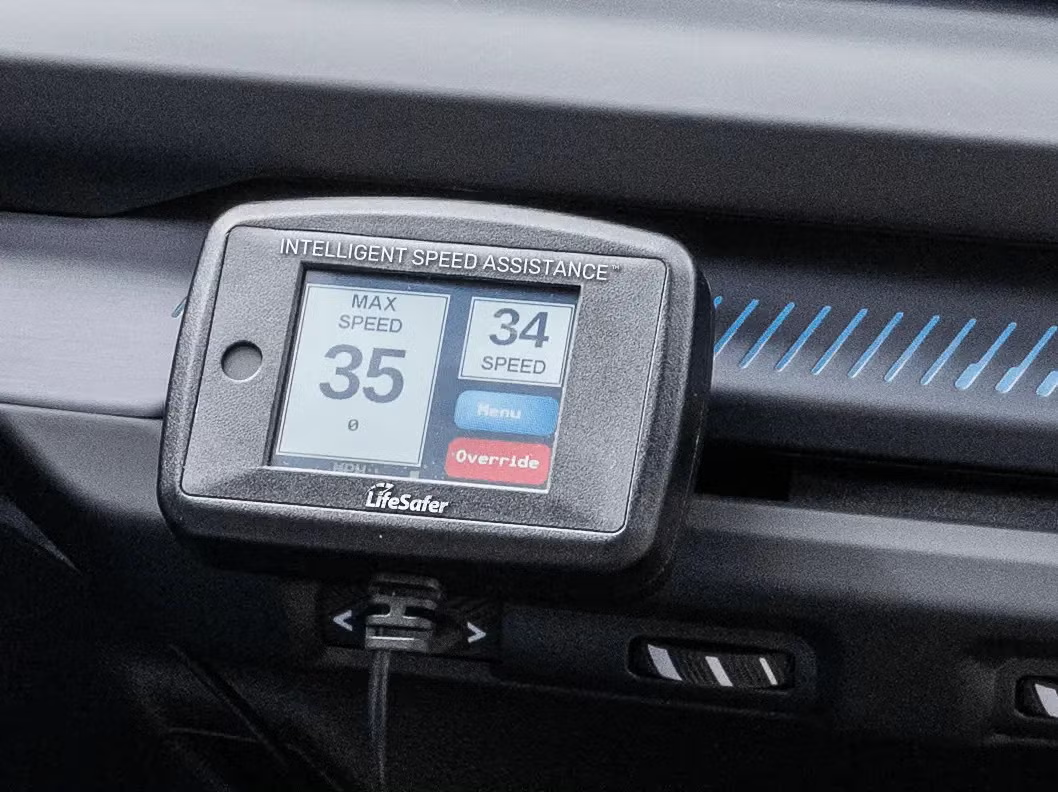
Michael Travars, president of LifeSaver, a company that makes active intelligent speed limiters, said he opposes federal or statewide mandates requiring the devices in all vehicles. "We don't want this in every car. We actually don't want the European mandate of ISA in every single vehicle. There's a freedom of the road culture here. I'm a big believer in that," Travars told Road & Track.
LifeSaver's active ISA systems prevent vehicles from exceeding posted speed limits. The device mounts on the dashboard, connects through the vehicle's OBDII port, and uses GPS data to identify speed limits. It costs around $6 per day to operate and can be overridden. Installation requires individual calibration per vehicle because factors like accelerator pedal wear affect how the system functions.
The company currently targets three customer groups: teens, fleet operators, and drivers convicted of extreme speeding. Virginia became the first state to implement LifeSaver's technology for reckless drivers as of July 2026 through the Commission on Virginia Alcohol Safety Action Program. Travars said seven states—Hawaii, Illinois, Arizona, Maryland, New York, Virginia, and Georgia—have implemented super speeder laws, and roughly 17 states total have contacted LifeSaver about the technology.
Travars envisions these devices as temporary corrective tools, similar to ignition interlock programs for drunk driving. "The goal is to take people who are unsafe drivers, make them safer, and then take them out of the program and restore their right to drive," he said. He supports federal standards for device performance and certification but believes individual states should decide program requirements and eligibility. "At the state level, what kind of program do you want? How long do you want it for? Who goes in it? Let Maryland do Maryland," Travars said.