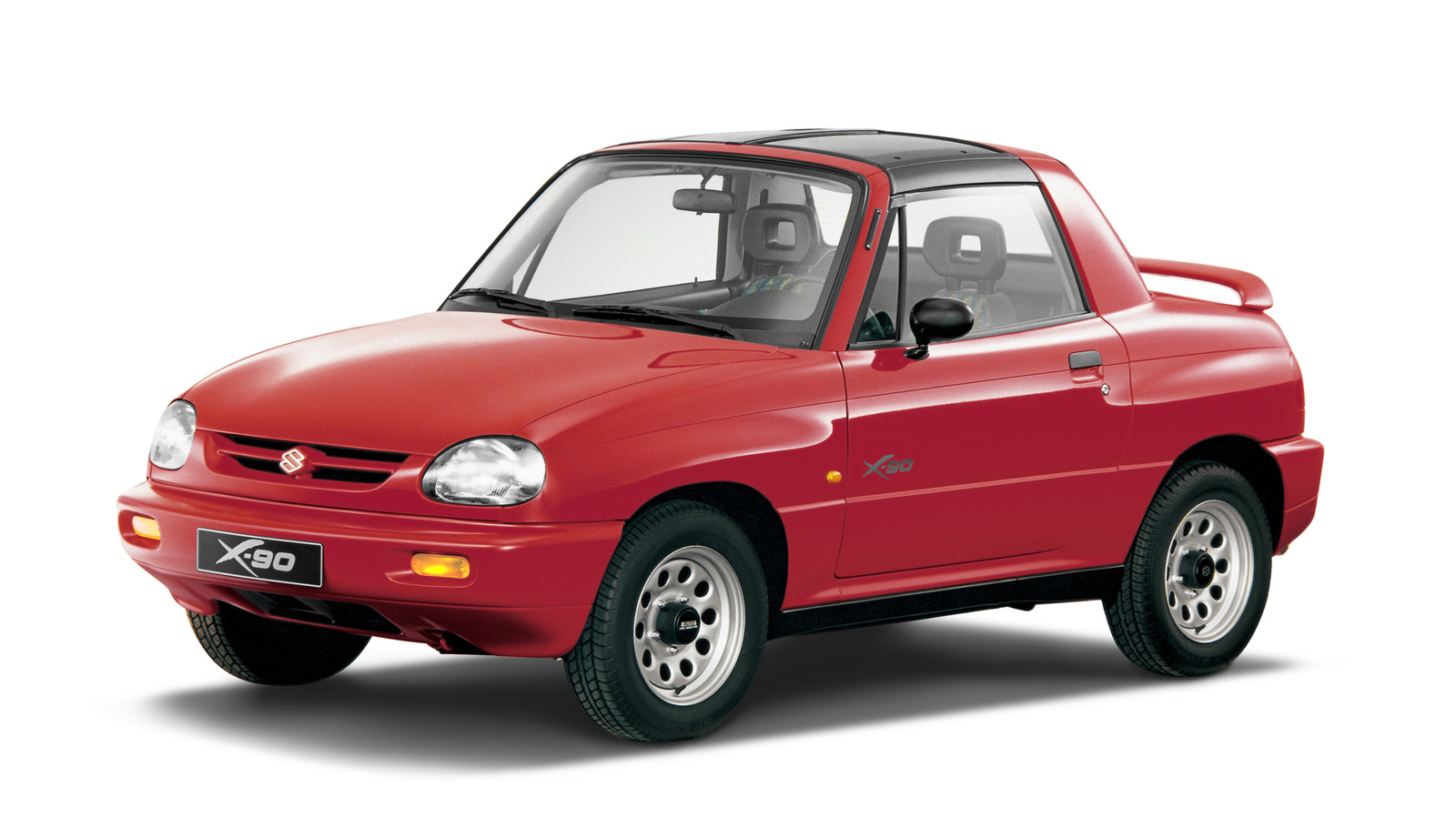
Two-seat SUVs remain extraordinarily rare in the automotive market. The Suzuki X-90 appears to be the only two-seat SUV made for mass production globally. Built from 1996 onwards, the X-90 measured 146 inches long and produced 95 horsepower from a 1.6-liter engine. It featured body-on-frame construction, four-wheel drive, and a live rear axle. Only 7,205 units found buyers in the U.S. over a three-year period, making it a commercial failure despite Suzuki's reputation for capable off-roaders.
Beyond the X-90, two-seat SUVs are one-off oddities or extremely limited production runs. The Sbarro Monster G of 1987 was a single commission built for a wealthy German enthusiast. It combined a Range Rover chassis with a Mercedes 6.3-liter V8 producing 350 horsepower and used wheels taken directly from a Boeing 727 airliner. It also carried a folding motorcycle and portable generator.
The French firm Aixam created the Mega Track, a V12-powered lifted supercar using the engine from a W140 Mercedes S-Class. Measuring 196.85 inches long and weighing over 4,400 pounds, it offered four-wheel drive and adjustable ground clearance. About five or six vehicles were built.
Commercial versions of existing models occasionally qualify as two-seaters. Toyota's current Land Cruiser is sold as a commercial vehicle in some markets with just two front seats and a mesh load area behind them. The Land Rover Defender 90 Hard Top is similarly configured in certain regions. Land Rover Classic also offers a restored Defender 90 Hard Top with a 405-horsepower V8.
The definition itself remains contentious. The Willys Jeep CJ-2A, produced from 1945 to 1949 with over 214,000 units made, could be configured as a two-seater, though few consider it an SUV by modern standards.