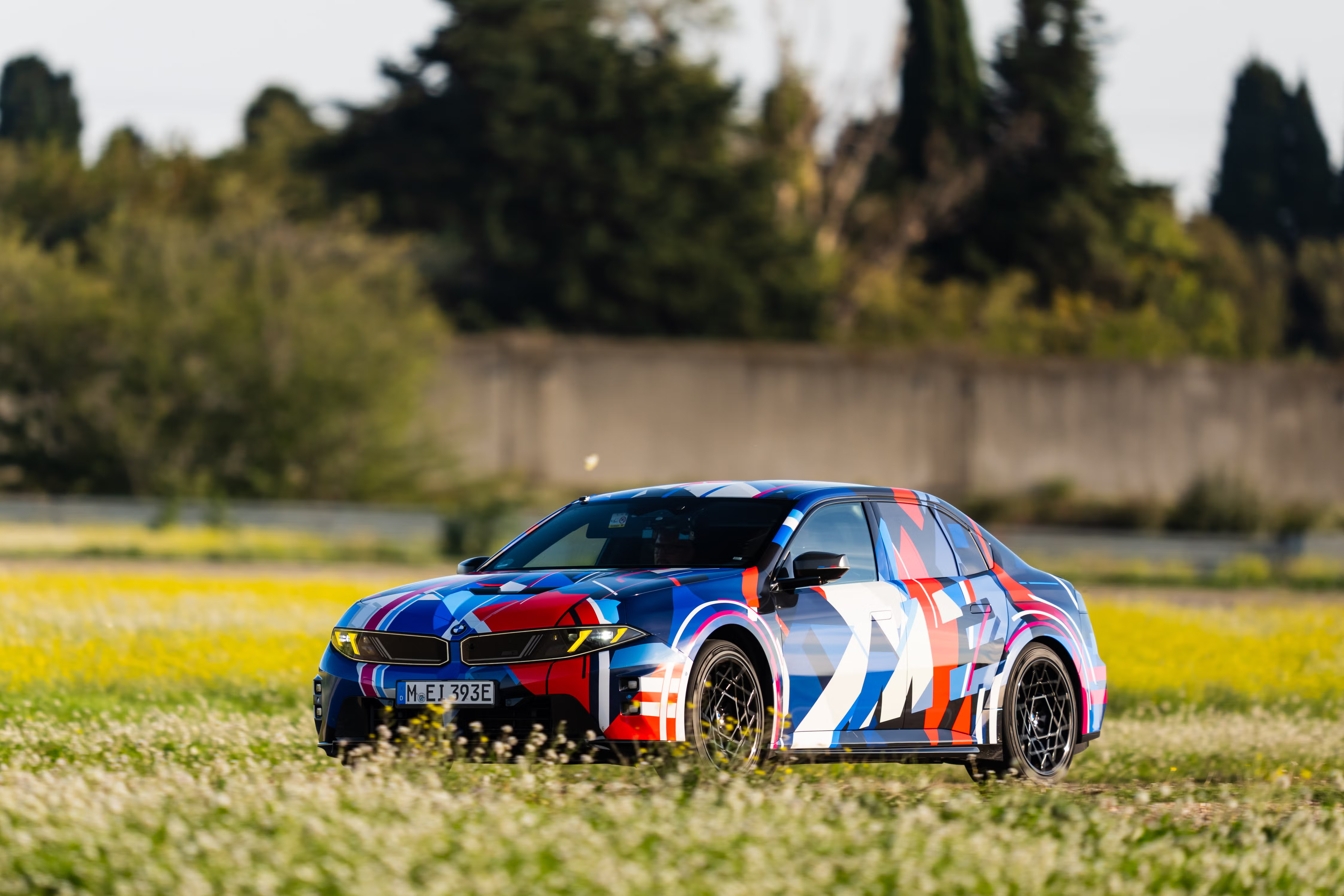
BMW brought a prototype electric M3 to its Miramar proving ground in France, where the car delivered 0-60 mph performance quick enough to enter the two-second club. The EV uses a quad-motor powertrain with one motor driving each wheel, a first in its segment, delivering approximately 838 hp and 885 lb-ft of system output.
The electric M3 rides on Michelin Pilot Sport S 6 tires and features a battery pack with approximately 100 kWh of usable energy, operating at up to 800 volts. BMW predicts an EPA range of 300 miles and peak DC charging speeds around 420 kilowatts. The battery can regenerate energy at rates up to approximately 540 kilowatts.
The car includes a simulated transmission system with six "stages" selectable through paddles or an automatic mode that plays corresponding soundtrack effects, joining Hyundai, Porsche, and Mercedes in offering simulated gears on electric vehicles. A single-speed traditional EV drive mode also exists.
The quad-motor setup eliminates the need for mechanical differentials and clutch packs. Instead, an electronic control system varies torque to each wheel almost instantly, including during regeneration, applying different braking effects to individual wheels. This eliminates response delays inherent in mechanical systems.
The prototype was significantly reinforced compared to the production i3, with additional bracing for suspension subframes, underfloor battery integration plates, a strut brace between front suspension towers, and reinforcement struts in the A-pillars and rear towers.
Parallel development continues on a gasoline-powered M3 with development code G85, likely using a turbocharged inline-six S58 engine with hybrid assistance. That version will almost certainly not match the electric car's performance.
The cabin retained design from the i3 and new 3-series, though the prototype's dashboard remained covered to hide unfinished screen layouts. The car featured an M-specific Panoramic Vision gauge cluster with a rendered rev counter and color-changing shift lights.
During track testing, the M3 felt significantly quicker than the i3 50, with straightline acceleration that did not taper on the handling track even at speeds exceeding 100 mph. The steering felt heavier than the i3 and M350, delivering better tire feedback without steering corruption from front-axle electrical power, even in Comfort mode.