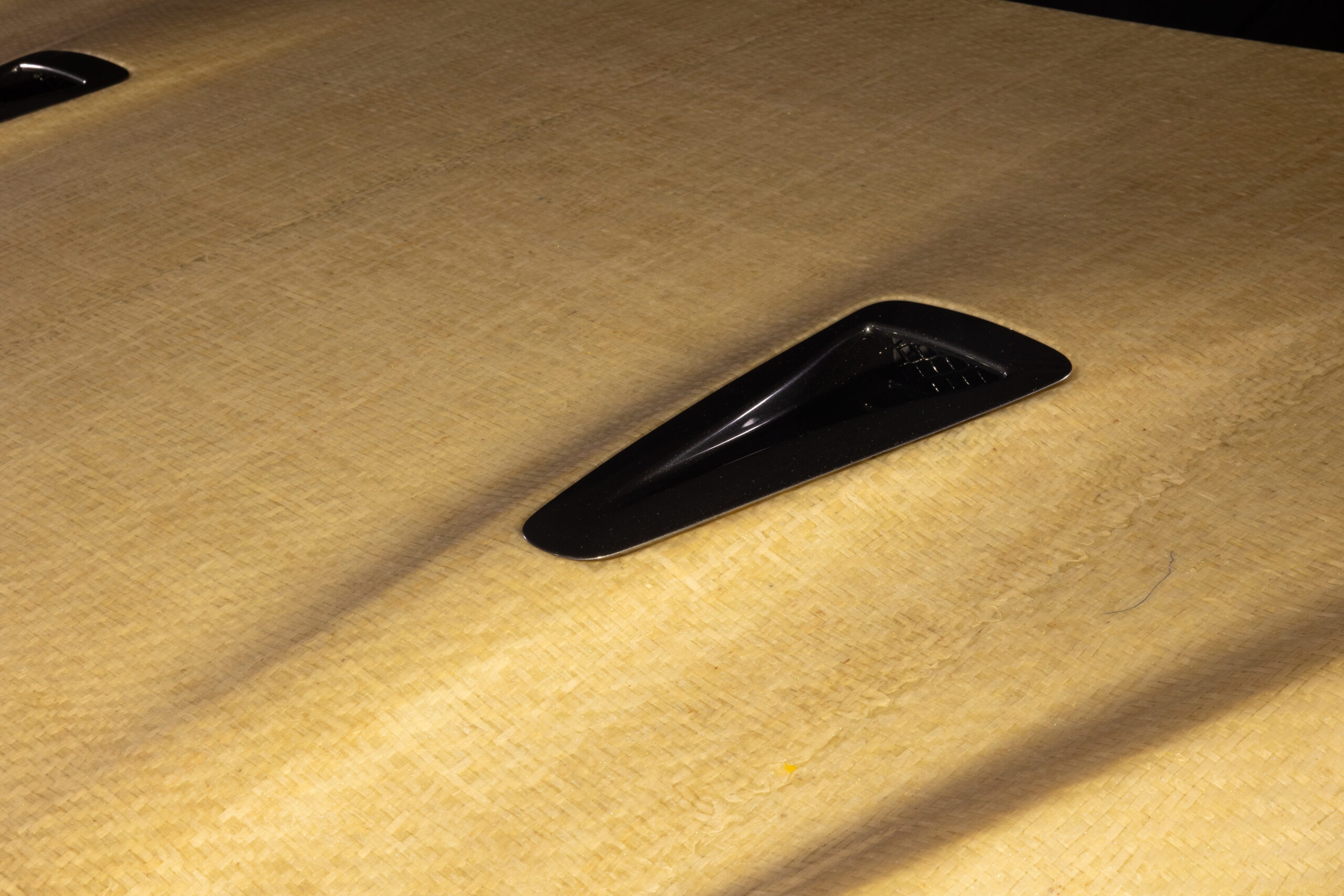
Nissan and Food Reborn have stumbled onto something genuinely clever: a way to turn millions of tonnes of agricultural waste into high-performance automotive materials. The partnership, which has developed exterior body panels from natural fibre-reinforced plastic using pineapple leaf fibres, represents exactly the kind of innovation the industry needs. With more than 50 million tonnes of pineapple leaves discarded worldwide each year, the two companies have identified both an environmental opportunity and a genuine market gap.
The technical credentials are solid. Nissan's internal testing shows the material has higher tensile strength than conventional flax-based natural fibre composites—a meaningful improvement that suggests this isn't just greenwashing. The process itself is elegant: fibres extracted from pineapple leaves are turned into flat yarn, woven into fabric, and used to reinforce the composite. It works, and it performs at a level that matters.
The motorsport-first strategy is particularly astute. Racing categories based on production cars already require natural fibre-reinforced plastics for modified exterior panels, but a shortage of specialist suppliers has pushed up costs and made supply unreliable. This creates a ready market where the material can prove itself in genuinely demanding environments before scaling to consumer vehicles. Motorsport has always been an effective proving ground for new automotive technology.
What's equally notable is how Nissan is approaching commercialisation. Rather than keeping the manufacturing process in-house, Nissan is licensing its know-how to Food Reborn, which will produce the yarn, woven fabric and prepreg needed to make the composite. This move aligns with Nissan's broader push to earn more from its intellectual property—a sensible strategy that also allows Food Reborn to build a specialised supply business.
The panel will be exhibited at the SAMPE Japan Advanced Materials Technology Exhibition at Tokyo Big Sight from 18 to 20 November, giving the automotive industry its first proper look at the technology. The real test now comes in execution. Motorsport adoption would validate the material's performance credentials and build market confidence. If that succeeds, the path to production vehicles becomes considerably clearer. Tackling waste streams while solving genuine supply-chain problems is good business and good engineering. Nissan and Food Reborn deserve credit for seeing both opportunities at once.