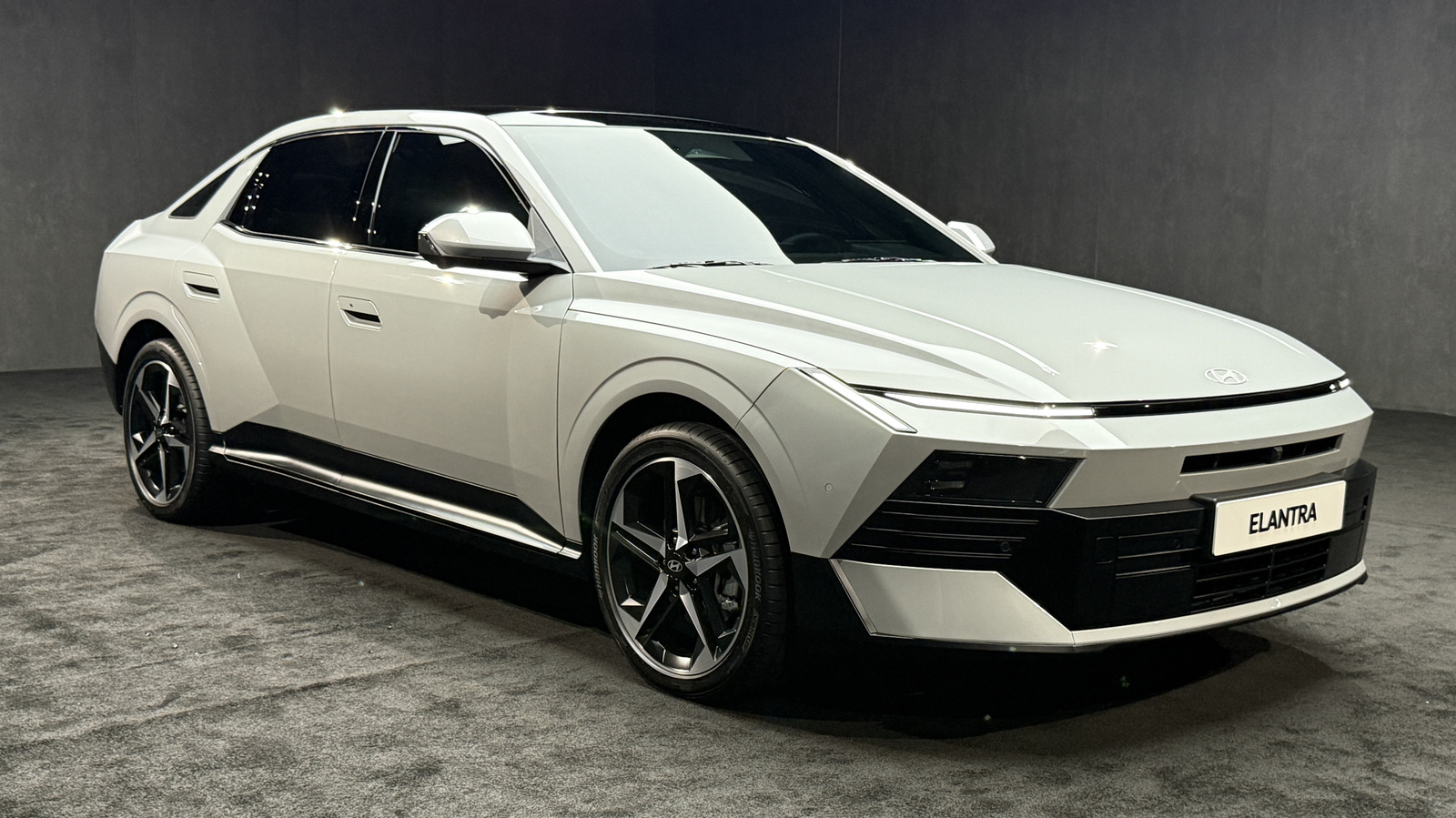
Economy cars have long been treated as temporary transportation solutions—utilitarian appliances destined for the junkyard once their usefulness expires. The 2027 Hyundai Elantra and 2028 Elantra Hybrid challenge this throwaway mentality by delivering design ambition, interior quality, and technology that simply shouldn't exist at this price point. As Olabisi Boyle, Hyundai's Senior VP of product planning and mobility strategy, stated, the company maintains that "affordability is standard"—but the Elantra proves affordability and excellence aren't mutually exclusive.
The numbers speak for themselves. Hyundai stretched the eighth-generation Elantra by 3.4 inches in length and 1.2 inches in width, adding 1.2 inches to the wheelbase while maintaining an impressive 0.26 coefficient of drag. The gas model's 147-horsepower 2.0-liter inline-4 returns up to 35 mpg combined, but the hybrid steals the show: its 155-hp 1.6-liter four-cylinder achieves up to 53 mpg combined—genuinely impressive for a compact sedan. That efficiency comes paired with a Stay mode allowing drivers to run accessories off the 1.49-kWh battery while stationary, a feature that hints at forward-thinking engineering.
What truly separates the Elantra from its forgettable competitors is its interior philosophy. Hyundai's "Curve of Upholstery" design ethos prioritizes comfort and simplicity through carefully chosen materials and solid build quality that feels premium to the touch. The centerpiece is a 12.9-inch infotainment screen paired with a slim 9.9-inch driver display, both running Pleos Connect operating system—making this car a "software-defined vehicle," which Hyundai notes is uncommon for an internal-combustion-powered car. Standard features across all trims include adaptive cruise control, push-button start, and dual wireless 15-watt Qi 2.0 chargers, while the hybrid adds dual-zone climate control from the outset.
The Elantra's design language, drawing from Hyundai's "Art of Steel" aesthetic and the N Vision 74 concept, creates something polarizing yet distinctive—a rare achievement in budget segments dominated by forgettable vehicles. While the Corolla, Civic, and Mazda3 remain solid choices, they lack the design conviction and technological sophistication Hyundai has delivered here. The high-performance N version, already spied, promises even more character.
When the 2027 Elantra hits U.S. dealers in early 2027, it will inevitably face the same casual neglect and eventual scrapping as countless economy cars before it. That would be genuinely unfortunate. Hyundai has proven that budget vehicles don't need to be uninspired or disposable—they can be thoughtfully engineered, beautifully designed, and genuinely nice to live with. The industry should take notice. If the Elantra forces competitors to reconsider their approach to affordable vehicles, everyone wins.