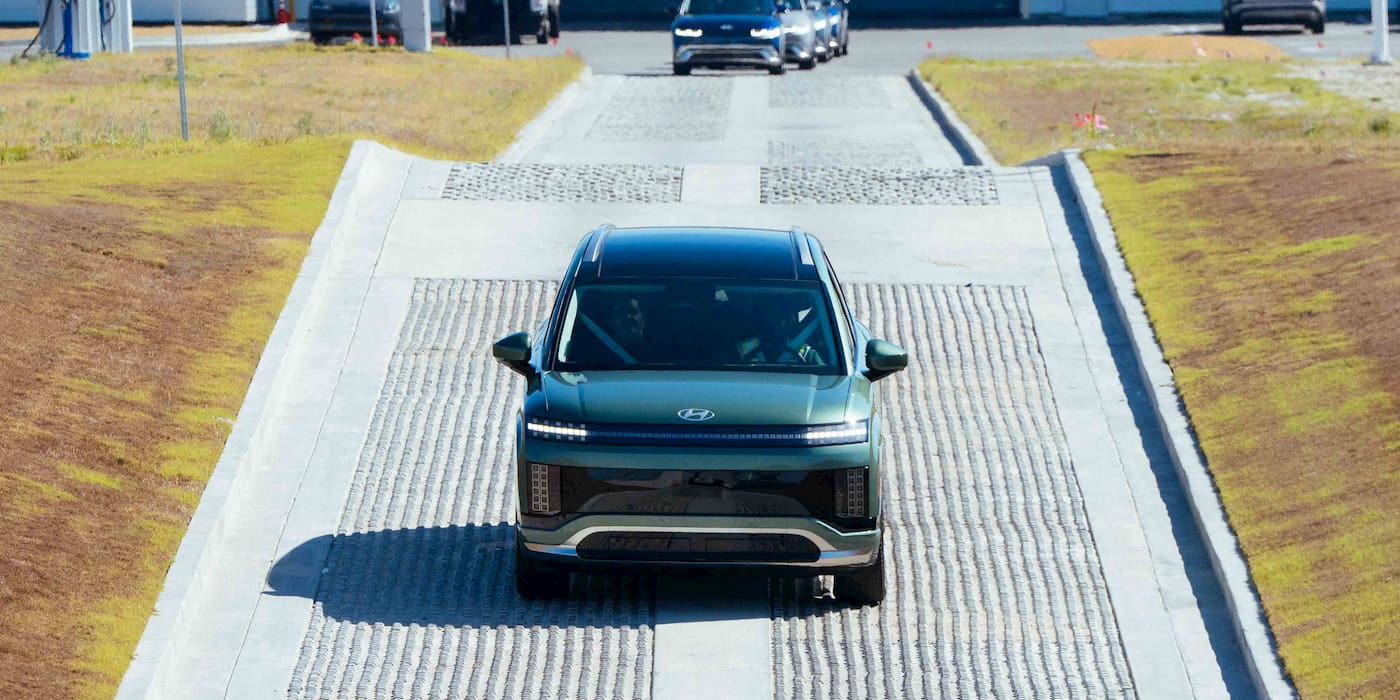
Hyundai activated its $5 billion battery manufacturing facility in Georgia, bringing online capacity to produce batteries for 300,000 electric vehicles annually. The plant's initial output will supply the three-row IONIQ 9, the automaker's flagship three-seat-row EV crossover entering a crowded segment dominated by Tesla Model Y and other competitors.
This facility represents Hyundai's commitment to domestic battery production and vertical integration, reducing reliance on Asian suppliers and securing supply chains ahead of stricter EV adoption mandates. The Georgia location qualifies for federal investment tax credits under the Inflation Reduction Act, lowering production costs and allowing Hyundai to compete on price with established American EV makers.
The timing proves critical. Hyundai and sister brand Kia have accelerated their electrification roadmaps, targeting meaningful EV sales growth through 2030. The IONIQ 9 directly challenges Tesla's Model Y and upcoming models from legacy automakers, all competing for middle-market buyers unwilling to compromise on practicality or range. A three-row configuration addresses a genuine market gap, as most premium EVs stop at five-seat configurations.
Battery production represents the EV industry's most capital-intensive and technically demanding component. By manufacturing cells domestically, Hyundai cuts shipping costs, manages supply disruption risks, and strengthens its margin profile. The 300,000-unit capacity aligns with industry projections showing Hyundai and Kia collectively reaching 1.2 million annual EV sales by 2030, though this target depends on consumer adoption rates and macro economic headwinds affecting EV affordability.
The Georgia plant also signals confidence in the U.S. market despite recent EV sales softening. Ford, General Motors, and Volkswagen similarly invested billions in domestic battery capacity, treating American