# New York City's Forgotten Electric Police Vehicles: A Bizarre Chapter in Urban Enforcement History
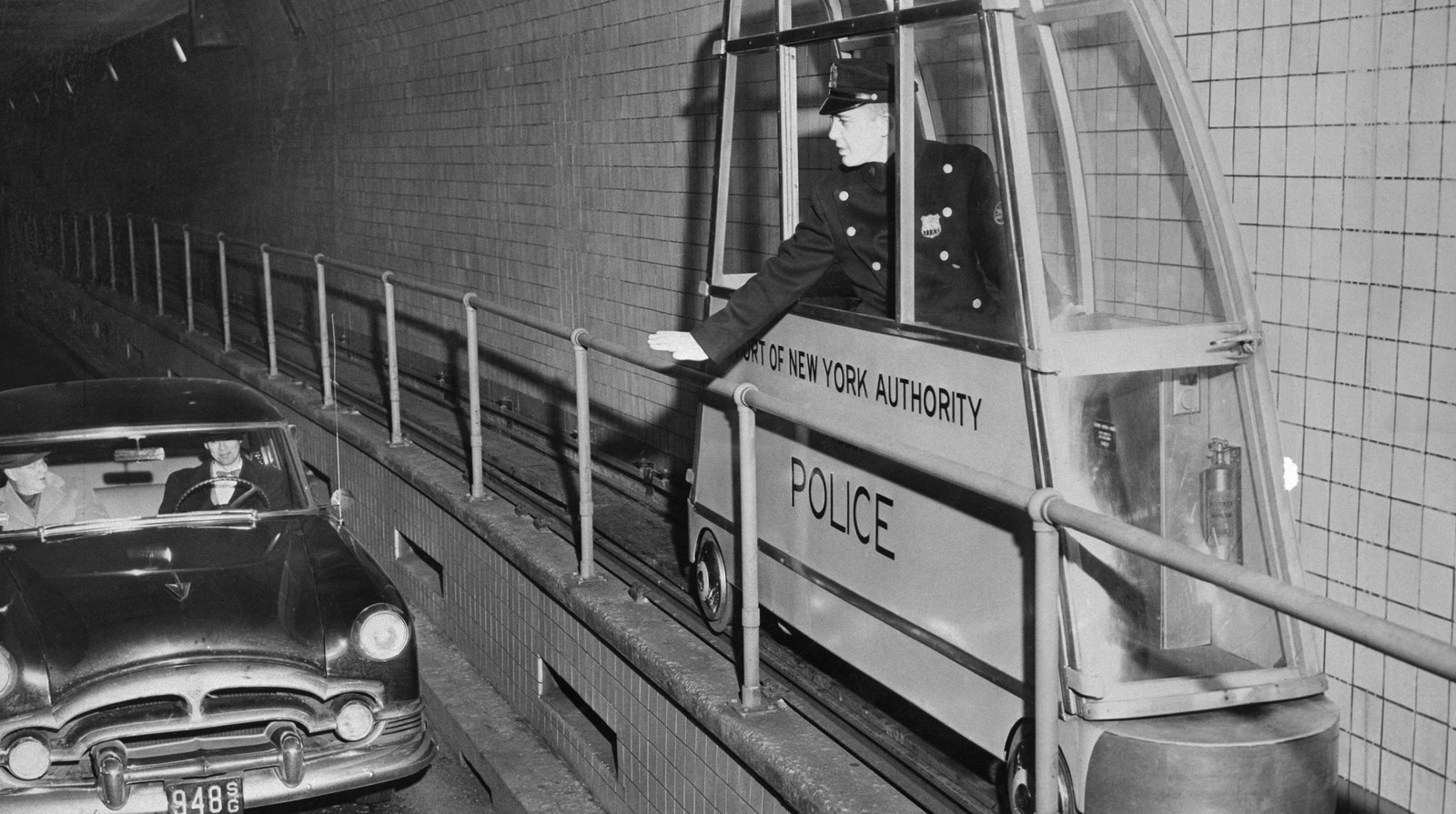
New York City operated a fleet of extraordinarily narrow electric vehicles throughout its tunnel system, a peculiar footnote in both automotive and law enforcement history that persisted until roughly a decade ago. These wafer-thin machines represented an unconventional solution to a specific urban problem: patrolling the confined spaces beneath Manhattan where traditional police cruisers could not fit.
The tunnel patrol vehicles emerged from practical necessity. Manhattan's intricate network of vehicular tunnels, pedestrian passages, and maintenance corridors created enforcement challenges that standard police cars could not address. Officers needed mobile platforms capable of navigating spaces as narrow as 3 to 4 feet in some areas. Traditional squad cars simply would not work. The solution was a custom-built, absurdly compact electric vehicle that sacrificed width for functionality.
These machines resembled motorized cardboard cutouts more than conventional automobiles. The design prioritized extreme narrowness over passenger comfort or conventional safety features. Operators sat essentially in single file, with minimal interior appointments and no room for suspects in custody. The vehicles ran on battery power, an interesting choice for a police application predating the EV revolution of the 2010s. Electric propulsion made sense in underground environments where emissions posed health hazards to tunnel workers and officers. The near-silent operation also reduced noise pollution in the confined spaces.
The NYPD deployed these vehicles through the 1990s and 2000s, using them for routine patrols, maintenance coordination, and emergency response within the tunnel system. Officers became accustomed to the cramped quarters and specialized nature of the work. The vehicles required custom maintenance and had limited cargo capacity, making them strictly functional tools rather than versatile enforcement platforms.
This peculiar fleet lasted until approximately 2015, when the NYPD phased out tunnel patrol in favor of other security measures and infrastructure changes. Advances in tunnel lighting, surveillance systems, and emergency communication equipment reduced the need for constant human patrol. The unusual electric vehicles became redundant, disappearing into obscurity as quickly as they had served.
The tunnel vehicles represent an overlooked intersection of urban infrastructure, police operations, and early electric vehicle adoption. They proved that electric propulsion could serve practical law enforcement purposes decades before Tesla made EVs culturally dominant. They also illustrate how specific urban problems sometimes demand unconventional solutions that major automakers would never produce for mass market consumption.
Today, these machines remain largely forgotten outside niche automotive history circles and NYPD institutional memory. Few photos survive. Fewer vehicles remain. They occupy a strange space in New York City's automotive timeline, proof that the city experimented with electric vehicles and bespoke police equipment long before either concept became trendy. The wafer-thin tunnel patrol cars stand as a reminder that sometimes the most interesting vehicles are the ones nobody remembers.