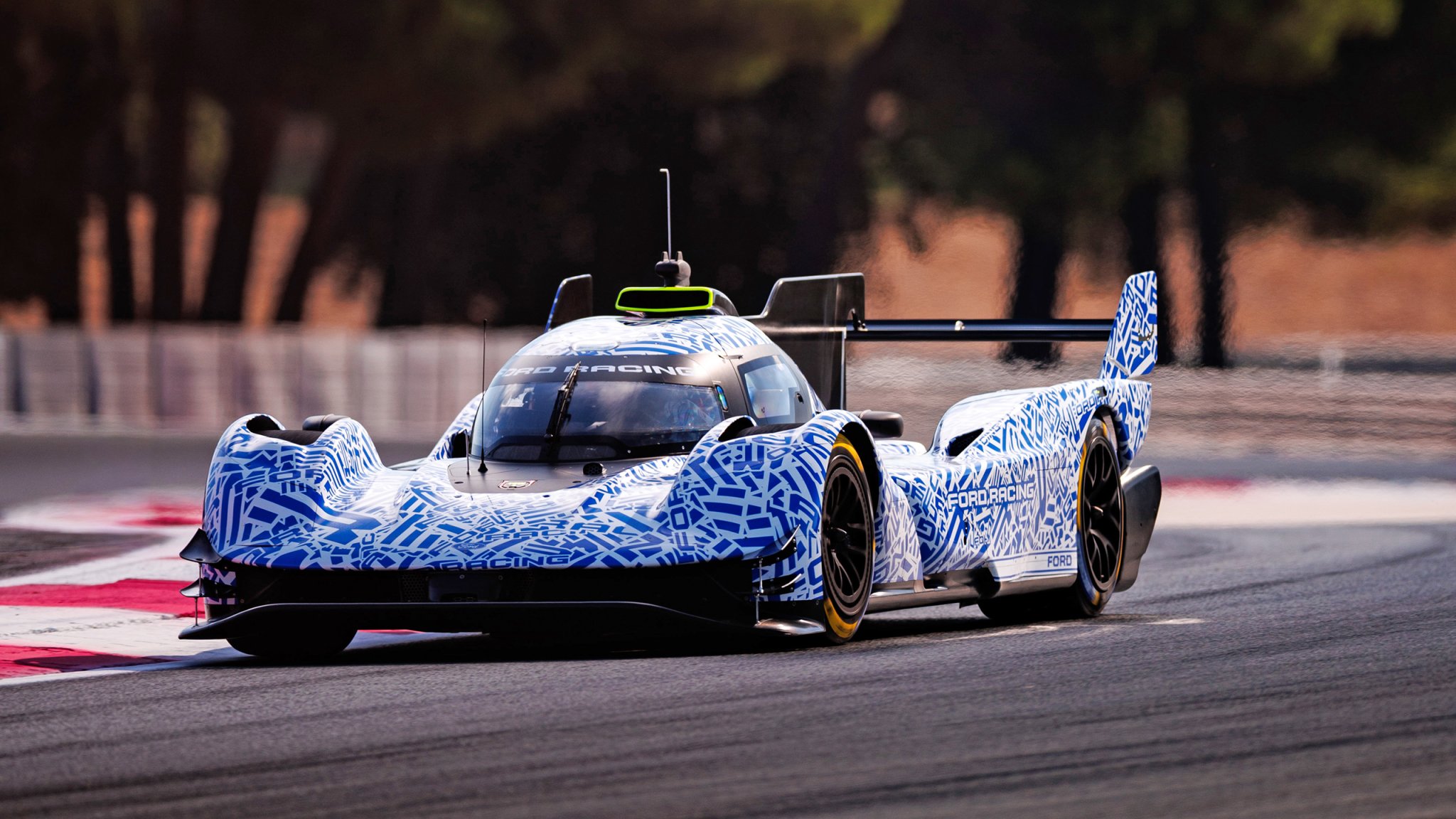
Ford rolled out its first Le Mans prototype in six decades, marking the automaker's return to top-tier endurance racing after a legendary hiatus. The car features a V8 engine and aims to contend for overall victory at next year's 24 Hours of Le Mans, echoing the legacy of Ford's iconic GT40 program that dominated the French circuit in the 1960s.
The prototype completed its first track session, giving fans and competitors their first look and listen to the machine. Ford's entry represents a major commitment to the Hypercar class, the highest tier in international sports car racing under the FIA World Endurance Championship. The V8 powertrain distinguishes Ford's approach from rivals increasingly turning to hybrid systems for efficiency and performance gains.
This move carries genuine historical weight. Ford's GT40 won Le Mans four consecutive years from 1966 to 1969, cementing the Blue Oval's racing pedigree. Returning to Le Mans with a factory-backed prototype after such a long absence signals Ford's ambition to reclaim its standing among the world's elite automotive competitors. The timing aligns with the current golden age of prototype racing, where manufacturers like Ferrari, Toyota, Porsche, and Hypercars entrants from other brands have rekindled interest in the sport's flagship event.
The V8 choice matters. While hybrid powertrains have become standard in modern endurance racing for their efficiency advantages, Ford's decision to stick with a naturally aspirated or turbocharged V8 reflects engineering confidence and the brand's performance DNA. Whether this translates to competitiveness against hybrid rivals remains to be seen.
Next year's Le Mans 24 will test whether Ford can translate historical prestige and modern engineering into podium finishes. The prototype's first lap marks the beginning of a campaign that could reshape the brand