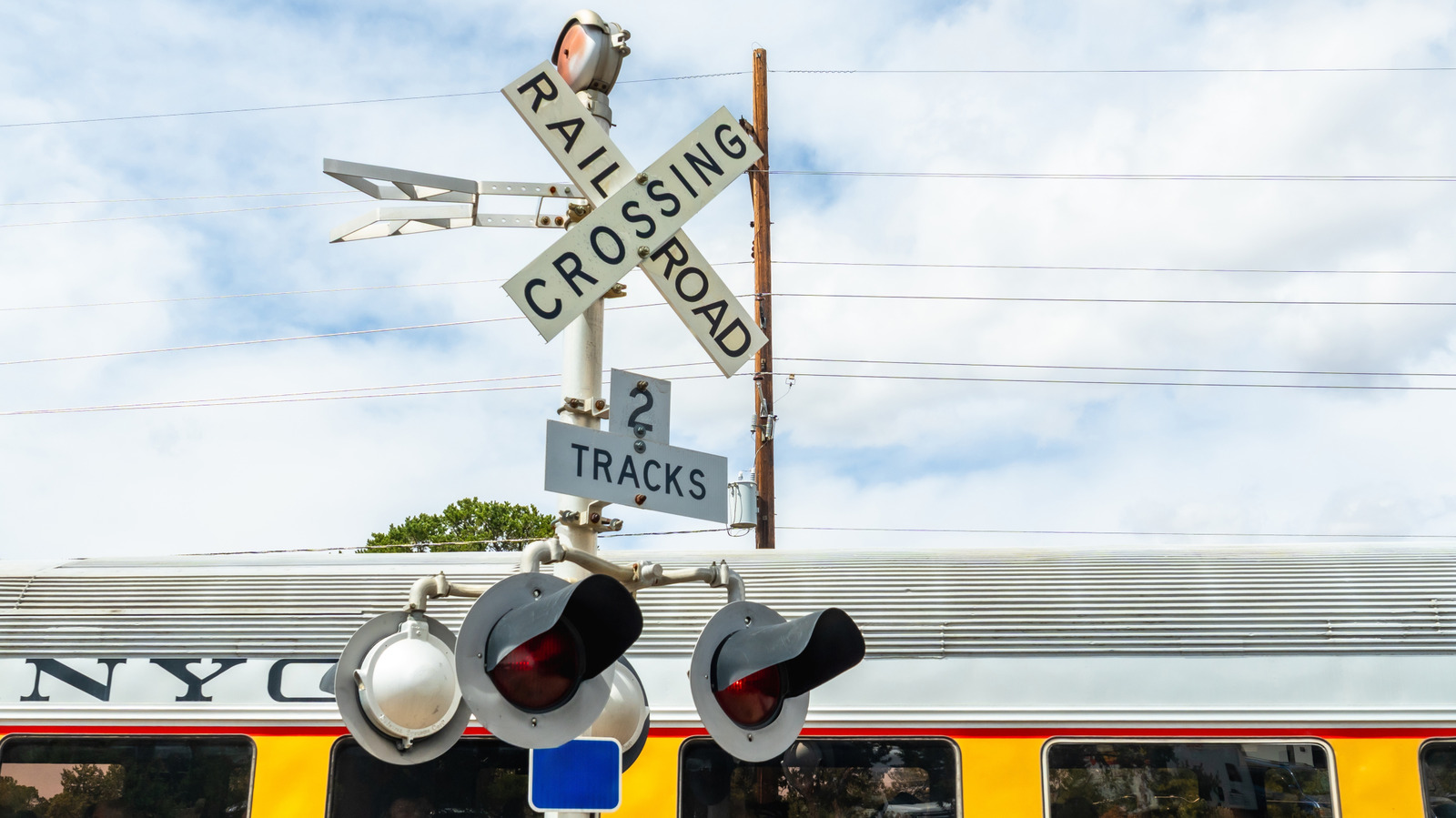
The iconic X-shaped railroad crossing sign, officially called a crossbuck, exists for a practical historical reason rooted in 19th-century rail infrastructure. The X shape serves as a universal visual warning that requires no language or literacy to understand, making it effective across diverse populations and regions.
The crossbuck design emerged because railroads needed a simple, instantly recognizable marker that drivers could spot from a distance while traveling at speed. The two diagonal lines forming the X create a distinctive silhouette that stands out against landscapes and weather conditions. This shape carries no ambiguity. Drivers don't need to read text to grasp the danger ahead.
The crossbuck typically displays the letters "RR" in the center and sometimes includes lights and gates in modern installations. The sign warns of two critical hazards: fast-moving trains and the inherent danger of vehicles and rail traffic sharing the same space. A passenger train traveling at 60 mph covers roughly 88 feet per second. Even freight trains moving at half that speed offer minimal reaction time for motorists.
Federal Railroad Administration standards mandate specific reflectivity and placement guidelines for crossbucks. Most installations feature white backgrounds with black X's and red reflective borders or lights. Rural crossings may use passive signs only, while busier intersections employ flashing lights, gates, and audible warning systems.
The geometry of the X shape also serves a secondary function. The angled lines guide driver attention downward toward the tracks themselves, naturally directing sight lines where the actual hazard exists. This psychological element reinforces the message without requiring conscious thought from drivers.
Modern crossbucks remain largely unchanged from their 1880s origins, a testament to effective design that transcends time. Some drivers accelerate toward crossings when lights activate, a dangerous misconception that these are traffic lights rather than absolute warning devices. The crossbuck communicates one message: stop,